School of Life Sciences, Simon F.S. Li Marine Science Laboratory, State Key Laboratory of Agrobiotechnology, Institute of Environment, Energy and Sustainability, The Chinese University of Hong Kong, Hong Kong, People's Republic of China.
Dovetail Genomics, LLC, Scotts Valley, CA 95066, USA.
Proc Biol Sci. 2023 Oct 25;290(2009):20231563. doi: 10.1098/rspb.2023.1563.
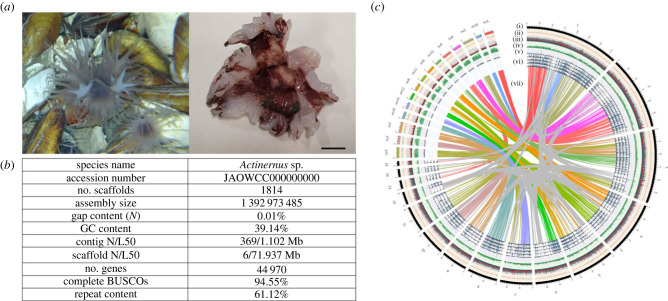
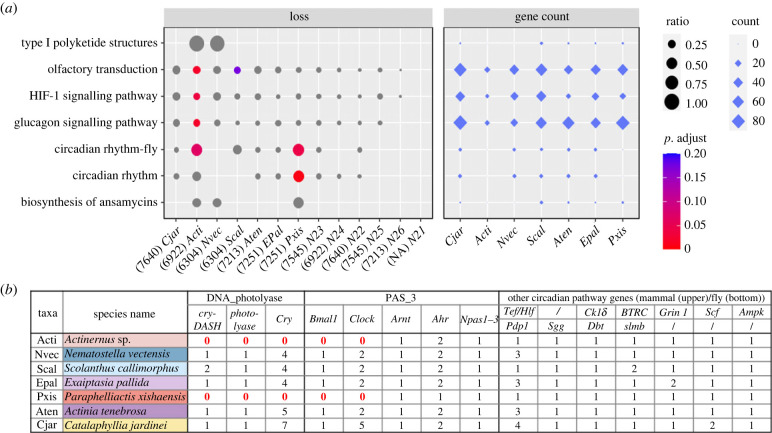
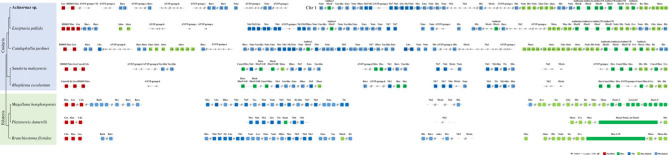
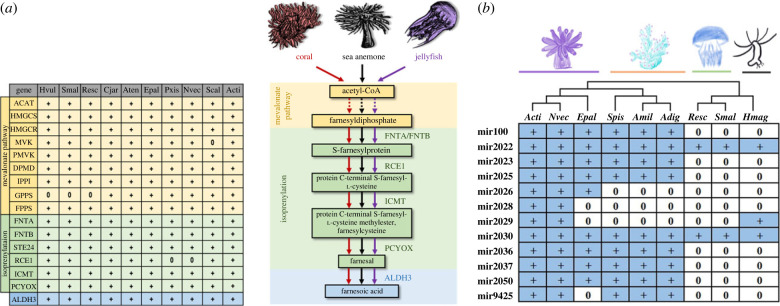
Members of the phylum Cnidaria include sea anemones, corals and jellyfish, and have successfully colonized both marine and freshwater habitats throughout the world. The understanding of how cnidarians adapt to extreme environments such as the dark, high-pressure deep-sea habitat has been hindered by the lack of genomic information. Here, we report the first chromosome-level deep-sea cnidarian genome, of the anemone sp., which was 1.39 Gbp in length and contained 44 970 gene models including 14 806 tRNA genes and 30 164 protein-coding genes. Analyses of homeobox genes revealed the longest chromosome hosts a mega-array of Hox cluster, HoxL, NK cluster and NKL homeobox genes; until now, such an array has only been hypothesized to have existed in ancient ancestral genomes. In addition to this striking arrangement of homeobox genes, analyses of microRNAs revealed cnidarian-specific complements that are distinctive for nested clades of these animals, presumably reflecting the progressive evolution of the gene regulatory networks in which they are embedded. Also, compared with other sea anemones, circadian rhythm genes were lost in sp., which likely reflects adaptation to living in the dark. This high-quality genome of a deep-sea cnidarian thus reveals some of the likely molecular adaptations of this ecologically important group of metazoans to the extreme deep-sea environment. It also deepens our understanding of the evolution of genome content and organization of animals in general and cnidarians in particular, specifically from the viewpoint of key developmental control genes like the homeobox-encoding genes, where we find an array of genes that until now has only been hypothesized to have existed in the ancient ancestor that pre-dated both the cnidarians and bilaterians.
刺胞动物门的成员包括海葵、珊瑚和水母,它们成功地在世界各地的海洋和淡水生境中殖民。由于缺乏基因组信息,人们对刺胞动物如何适应极端环境(如黑暗、高压深海栖息地)的理解受到了阻碍。在这里,我们报告了第一个刺胞动物深海基因组,即 sp. 的染色体水平基因组,长度为 1.39Gbp,包含 44970 个基因模型,包括 14806 个 tRNA 基因和 30164 个蛋白质编码基因。同源盒基因分析揭示了最长的染色体宿主一个超级长的 Hox 簇、HoxL、NK 簇和 NKL 同源盒基因的数组;到目前为止,这种排列仅在古老的祖先基因组中被假设存在。除了这种同源盒基因的惊人排列,miRNA 的分析揭示了刺胞动物特有的互补物,这些互补物是这些动物嵌套进化枝的独特特征,可能反映了它们所嵌入的基因调控网络的渐进进化。此外,与其他海葵相比, sp. 中的生物钟基因丢失了,这可能反映了它们适应生活在黑暗中的能力。这种深海刺胞动物的高质量基因组揭示了这些生态重要的后生动物对极端深海环境的一些可能的分子适应。它还加深了我们对动物,特别是刺胞动物的基因组内容和组织进化的理解,特别是从关键发育控制基因(如同源盒编码基因)的角度来看,我们发现了一系列基因,直到现在,这些基因仅在刺胞动物和两侧对称动物的古老祖先中被假设存在。