Mitin Natalia, Nyrop Kirsten A, Strum Susan L, Knecht Anne, Carey Lisa A, Reeder-Hayes Katherine E, Claire Dees E, Jolly Trevor A, Kimmick Gretchen G, Karuturi Meghan S, Reinbolt Raquel E, Speca JoEllen C, O'Hare Erin A, Muss Hyman B
Sapere Bio, Research Triangle Park, NC, USA.
School of Medicine, University of North Carolina at Chapel Hill, Chapel Hill, NC, USA.
NPJ Breast Cancer. 2022 Sep 8;8(1):103. doi: 10.1038/s41523-022-00473-3.
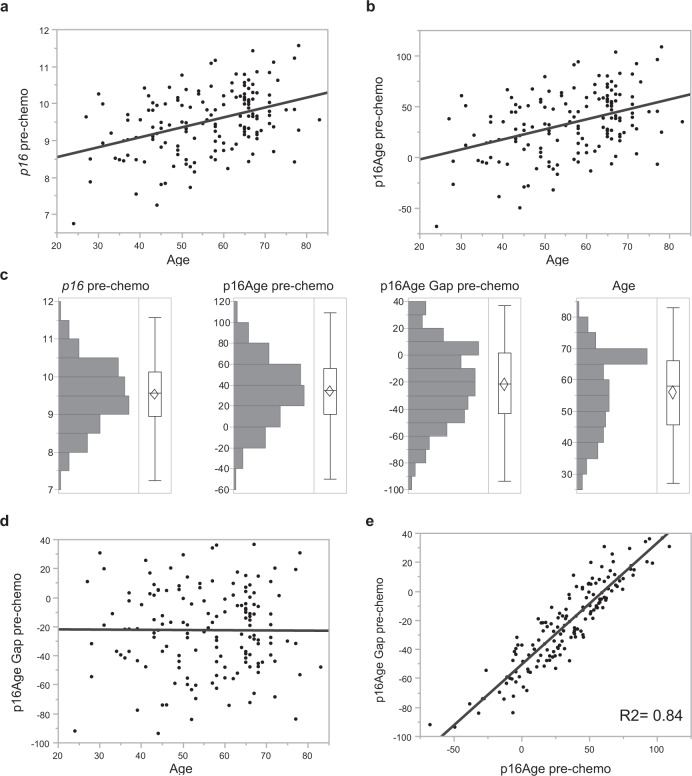
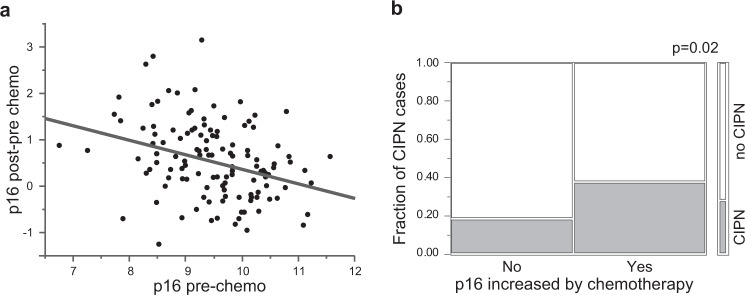
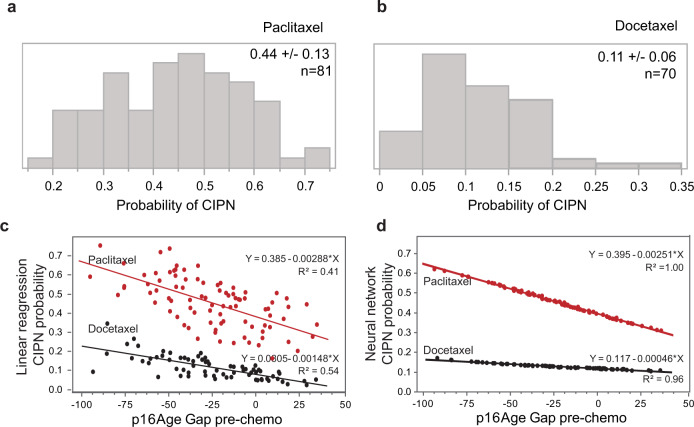
Identifying patients at higher risk of chemotherapy-induced peripheral neuropathy (CIPN) is a major unmet need given its high incidence, persistence, and detrimental effect on quality of life. We determined if the expression of p16, a biomarker of aging and cellular senescence, predicts CIPN in a prospective, multi-center study of 152 participants enrolled between 2014 and 2018. Any women with newly diagnosed Stage I-III breast cancer scheduled to receive taxane-containing chemotherapy was eligible. The primary outcome was development of grade 2 or higher CIPN during chemotherapy graded by the clinician before each chemotherapy cycle (NCI-CTCAE v5 criteria). We measured p16 expression in peripheral blood T cells by qPCR before and at the end of chemotherapy. A multivariate model identified risk factors for CIPN and included taxane regimen type, p16Age Gap, a measure of discordance between chronological age and p16 expression, and p16 expression before chemotherapy. Participants with higher p16Age Gap-higher chronological age but lower p16 expression prior to chemotherapy - were at the highest risk. In addition, higher levels of p16 before treatment, regardless of patient age, conferred an increased risk of CIPN. Incidence of CIPN positively correlated with chemotherapy-induced increase in p16 expression, with the largest increase seen in participants with the lowest p16 expression before treatment. We have shown that p16 expression levels before treatment can identify patients at high risk for taxane-induced CIPN. If confirmed, p16 might help guide chemotherapy selection in early breast cancer.
鉴于化疗引起的周围神经病变(CIPN)发病率高、持续时间长且对生活质量有不利影响,识别CIPN风险较高的患者是一个尚未满足的主要需求。在一项对2014年至2018年招募的152名参与者进行的前瞻性多中心研究中,我们确定衰老和细胞衰老的生物标志物p16的表达是否能预测CIPN。任何新诊断为I-III期乳腺癌且计划接受含紫杉烷化疗的女性均符合条件。主要结局是在每个化疗周期前由临床医生根据NCI-CTCAE v5标准进行分级的化疗期间2级或更高等级CIPN的发生情况。我们在化疗前和化疗结束时通过qPCR测量外周血T细胞中的p16表达。一个多变量模型确定了CIPN的风险因素,包括紫杉烷治疗方案类型、p16年龄差距(一种衡量实际年龄与p16表达不一致程度的指标)以及化疗前的p16表达。p16年龄差距较大(实际年龄较高但化疗前p16表达较低)的参与者风险最高。此外,无论患者年龄如何,治疗前p16水平较高都会增加CIPN的风险。CIPN的发病率与化疗引起的p16表达增加呈正相关,在治疗前p16表达最低的参与者中增加幅度最大。我们已经表明,治疗前的p16表达水平可以识别出紫杉烷诱导的CIPN高风险患者。如果得到证实,p16可能有助于指导早期乳腺癌的化疗选择。