State Key Laboratory of Desert and Oasis Ecology, Xinjiang Institute of Ecology and Geography, Chinese Academy of Sciences, No.818 South Beijing Road, Urumqi, 830011, China.
Xinjiang Key Lab of Conservation and Utilization of Plant Gene Resources, No.818 South Beijing Road, Urumqi, 830011, China.
BMC Genomics. 2022 Sep 8;23(1):643. doi: 10.1186/s12864-022-08868-z.
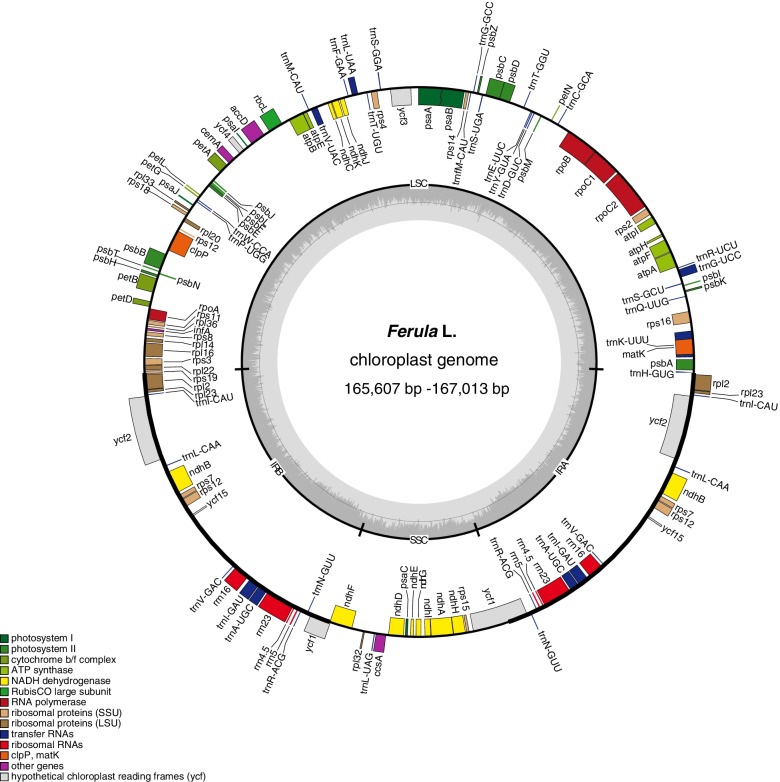
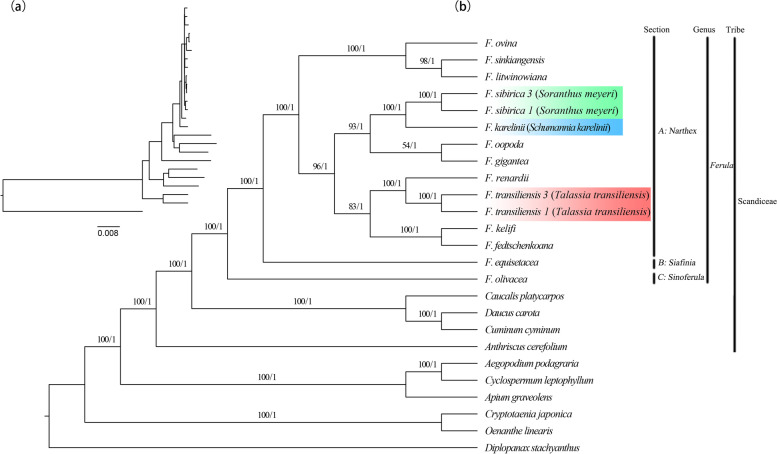
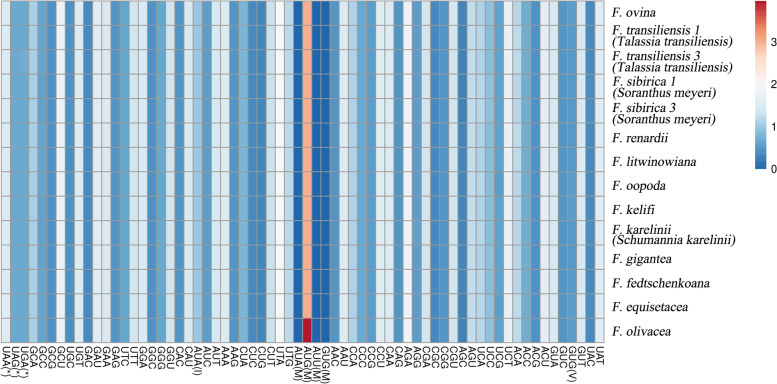
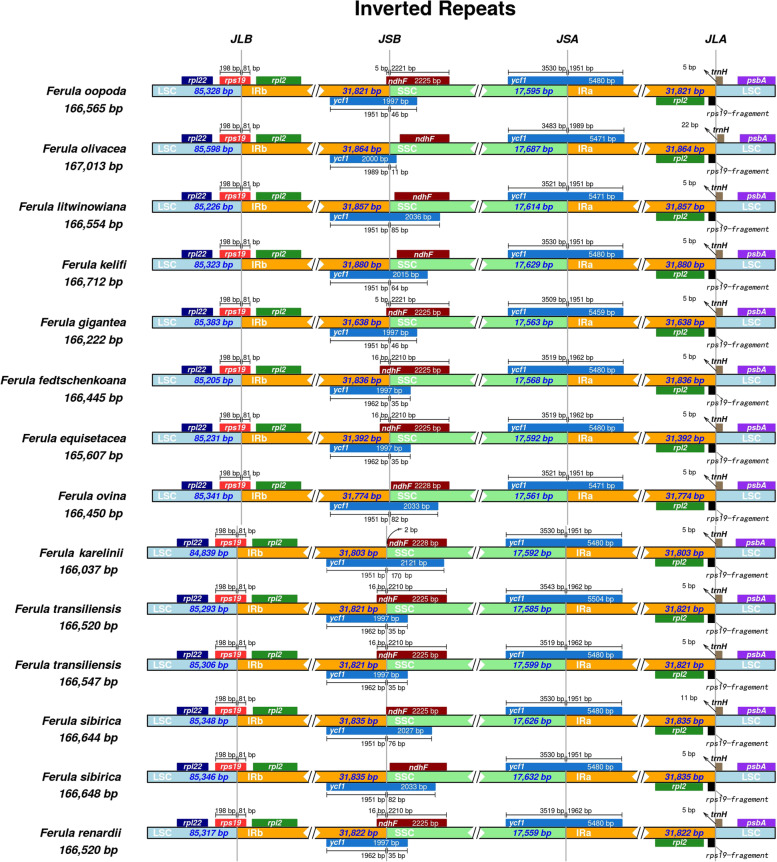
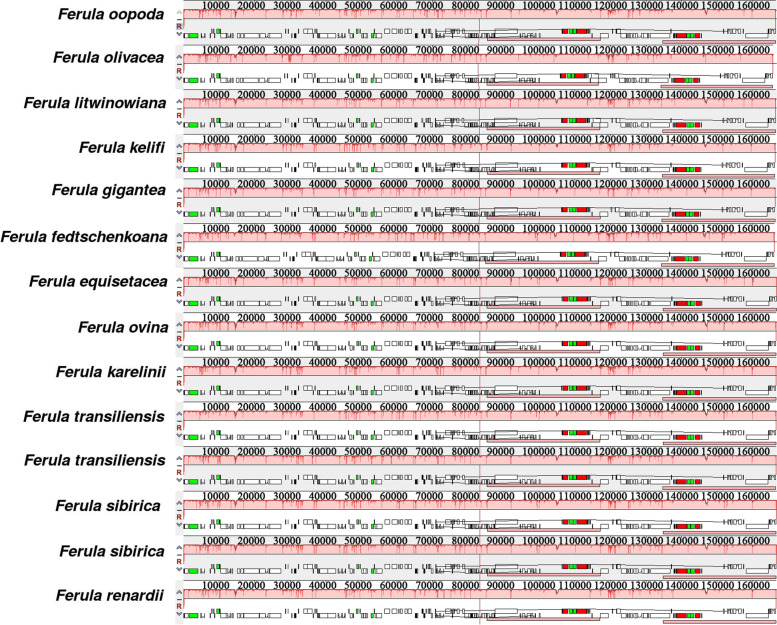
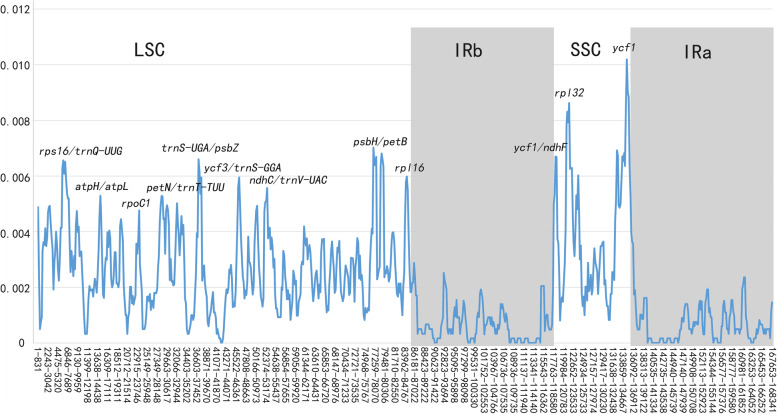
Ferula L. is one of the largest and most taxonomically complicated genera as well as being an important medicinal plant resource in the family Apiaceae. To investigate the plastome features and phylogenetic relationships of Ferula and its neighboring genera Soranthus Ledeb., Schumannia Kuntze., and Talassia Korovin, we sequenced 14 complete plastomes of 12 species. RESULTS: The size of the 14 complete chloroplast genomes ranged from 165,607 to 167,013 base pairs (bp) encoding 132 distinct genes (87 protein-coding, 37 tRNA, and 8 rRNA genes), and showed a typical quadripartite structure with a pair of inverted repeats (IR) regions. Based on comparative analysis, we found that the 14 plastomes were similar in codon usage, repeat sequence, simple sequence repeats (SSRs), and IR borders, and had significant collinearity. Based on our phylogenetic analyses, Soranthus, Schumannia, and Talassia should be considered synonymous with Ferula. Six highly divergent regions (rps16/trnQ-UUG, trnS-UGA/psbZ, psbH/petB, ycf1/ndhF, rpl32, and ycf1) were also detected, which may represent potential molecular markers, and combined with selective pressure analysis, the weak positive selection gene ccsA may be a discriminating DNA barcode for Ferula species.
Plastids contain abundant informative sites for resolving phylogenetic relationships. Combined with previous studies, we suggest that there is still much room for improvement in the classification of Ferula. Overall, our study provides new insights into the plastome evolution, phylogeny, and taxonomy of this genus.
阿魏属是伞形科中最大、分类最复杂的属之一,也是重要的药用植物资源。为了研究阿魏属及其近缘属(包括山芫荽属、鞘菝葜属和新疆阿魏属)的质体特征和系统发育关系,我们对 12 种 14 个完整质体基因组进行了测序。结果:14 个完整叶绿体基因组的大小范围为 165607 至 167013bp,编码 132 个独特的基因(87 个蛋白编码、37 个 tRNA 和 8 个 rRNA 基因),呈现出典型的四分体结构,具有一对反向重复(IR)区。基于比较分析,我们发现这 14 个质体在密码子使用、重复序列、简单重复序列(SSR)和 IR 边界上具有相似性,且具有显著的共线性。基于我们的系统发育分析,山芫荽属、鞘菝葜属和新疆阿魏属应被视为与阿魏属同义。还检测到六个高度分化的区域(rps16/trnQ-UUG、trnS-UGA/psbZ、psbH/petB、ycf1/ndhF、rpl32 和 ycf1),它们可能代表潜在的分子标记,结合选择压力分析,弱正选择基因 ccsA 可能是阿魏属物种的鉴别 DNA 条形码。结论:质体含有丰富的信息位点,可用于解决系统发育关系。结合之前的研究,我们认为阿魏属的分类仍有很大的改进空间。总的来说,我们的研究为该属的质体进化、系统发育和分类学提供了新的见解。