Center for Plant Science Innovation, University of Nebraska-Lincoln, Lincoln, USA.
Department of Agronomy and Horticulture, University of Nebraska-Lincoln, Lincoln, USA.
BMC Plant Biol. 2022 Sep 9;22(1):433. doi: 10.1186/s12870-022-03823-2.
Access to biologically available nitrogen is a key constraint on plant growth in both natural and agricultural settings. Variation in tolerance to nitrogen deficit stress and productivity in nitrogen limited conditions exists both within and between plant species. However, our understanding of changes in different phenotypes under long term low nitrogen stress and their impact on important agronomic traits, such as yield, is still limited.
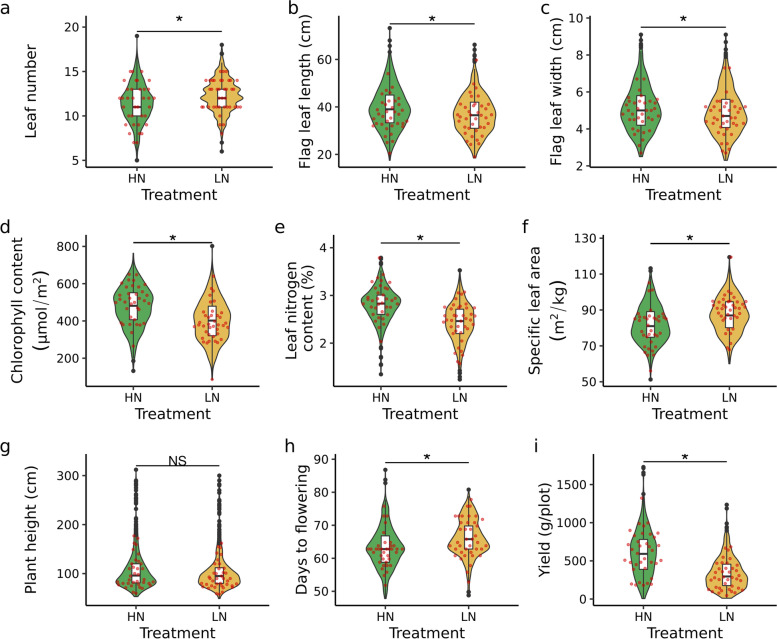
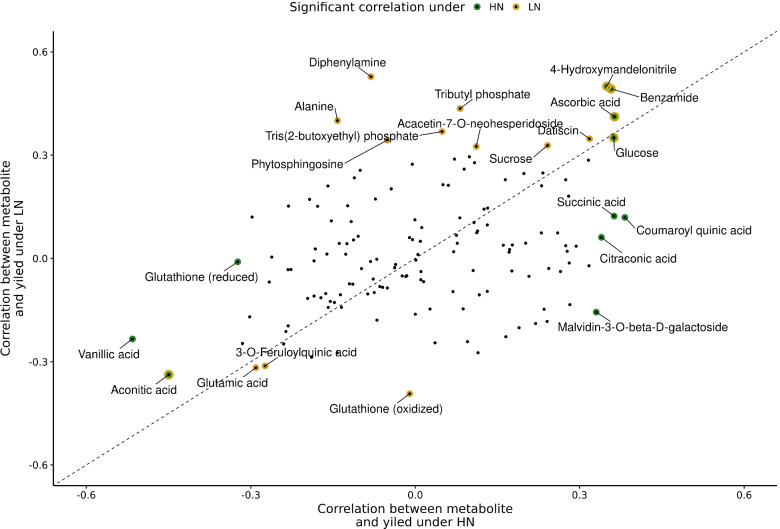
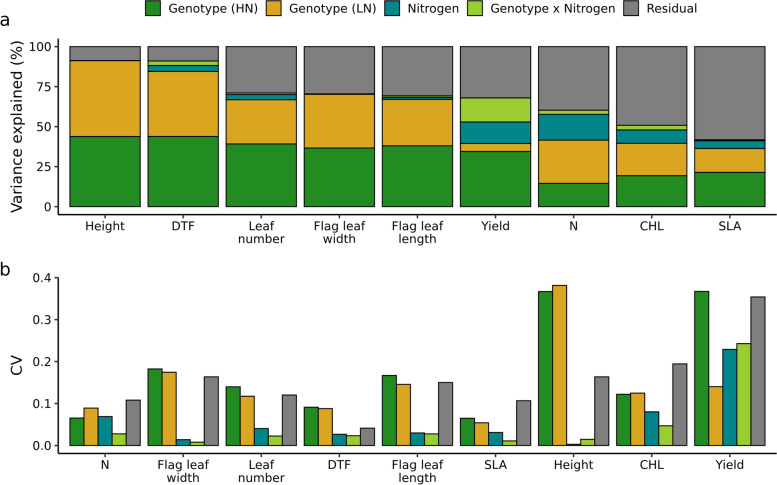
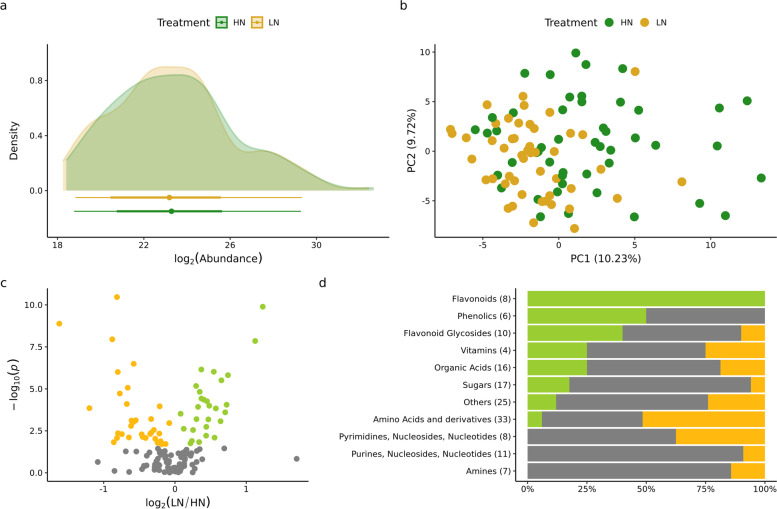
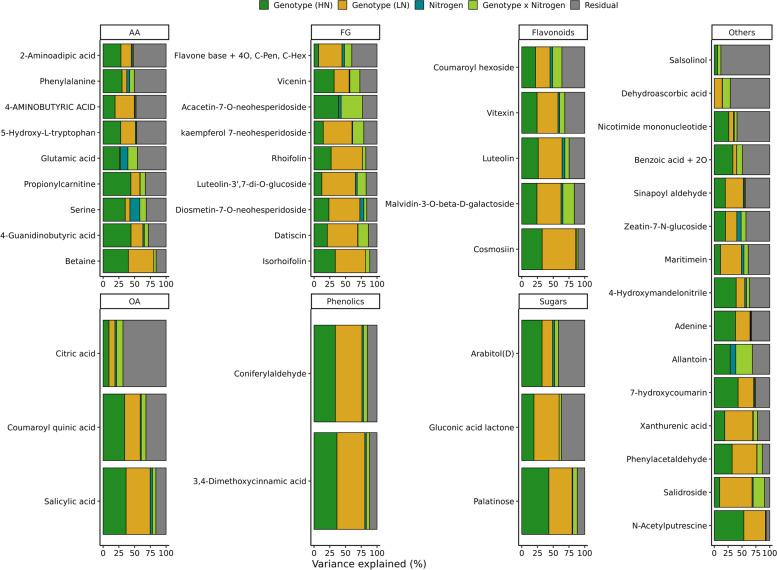
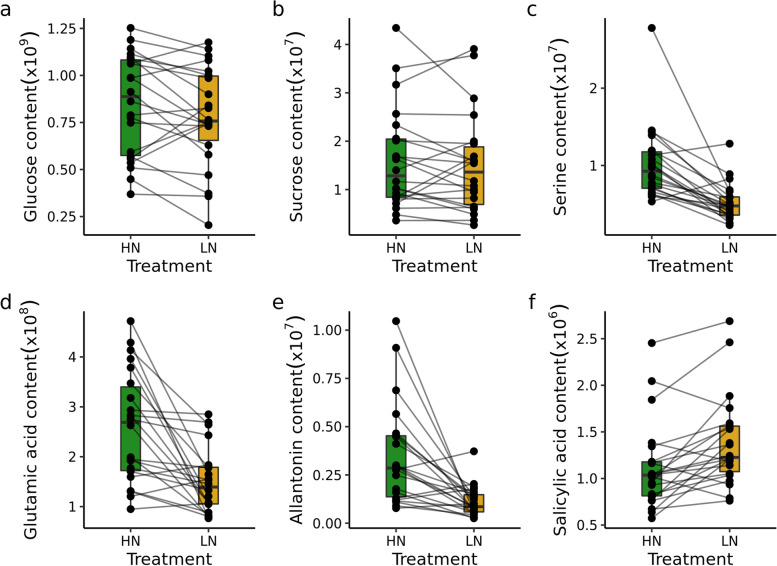
Here we quantified variation in the metabolic, physiological, and morphological responses of a sorghum association panel assembled to represent global genetic diversity to long term, nitrogen deficit stress and the relationship of these responses to grain yield under both conditions. Grain yield exhibits substantial genotype by environment interaction while many other morphological and physiological traits exhibited consistent responses to nitrogen stress across the population. Large scale nontargeted metabolic profiling for a subset of lines in both conditions identified a range of metabolic responses to long term nitrogen deficit stress. Several metabolites were associated with yield under high and low nitrogen conditions.
Our results highlight that grain yield in sorghum, unlike many morpho-physiological traits, exhibits substantial variability of genotype specific responses to long term low severity nitrogen deficit stress. Metabolic response to long term nitrogen stress shown higher proportion of variability explained by genotype specific responses than did morpho-pysiological traits and several metabolites were correlated with yield. This suggest, that it might be possible to build predictive models using metabolite abundance to estimate which sorghum genotypes will exhibit greater or lesser decreases in yield in response to nitrogen deficit, however further research needs to be done to evaluate such model.
在自然和农业环境中,生物可利用氮的获取是植物生长的关键限制因素。在氮亏缺胁迫和氮限制条件下,植物物种内和物种间都存在对氮亏缺胁迫的耐受性和生产力的差异。然而,我们对长期低氮胁迫下不同表型的变化及其对重要农艺性状(如产量)的影响的理解仍然有限。
在这里,我们量化了一个高粱关联群体的代谢、生理和形态响应的变化,该群体代表了全球遗传多样性,以应对长期氮亏缺胁迫,并在这两种条件下研究这些响应与籽粒产量的关系。籽粒产量表现出显著的基因型与环境互作,而许多其他形态和生理特性在整个群体中对氮胁迫表现出一致的响应。对两种条件下的一部分系进行大规模非靶向代谢 profiling 鉴定了一系列对长期氮亏缺胁迫的代谢响应。几种代谢物与高氮和低氮条件下的产量有关。
我们的研究结果表明,高粱的籽粒产量与许多形态生理特性不同,表现出对长期低严重氮亏缺胁迫的基因型特异性响应的显著可变性。长期氮胁迫的代谢响应比形态生理特性显示出更高比例的基因型特异性响应的可变性,并且有几种代谢物与产量相关。这表明,使用代谢物丰度构建预测模型来估计哪些高粱基因型在氮亏缺胁迫下产量下降的幅度更大或更小,可能是可行的,然而,需要进一步的研究来评估这种模型。