Laboratory for Oral Molecular Biology, Department of Orthodontics and Dentofacial Orthopedics, University of Bern, Bern, Switzerland.
Division of Pediatric Surgery, Department of Pediatrics, University Hospital of Geneva, Geneva, Switzerland.
Stem Cell Res Ther. 2022 Sep 8;13(1):469. doi: 10.1186/s13287-022-03154-x.
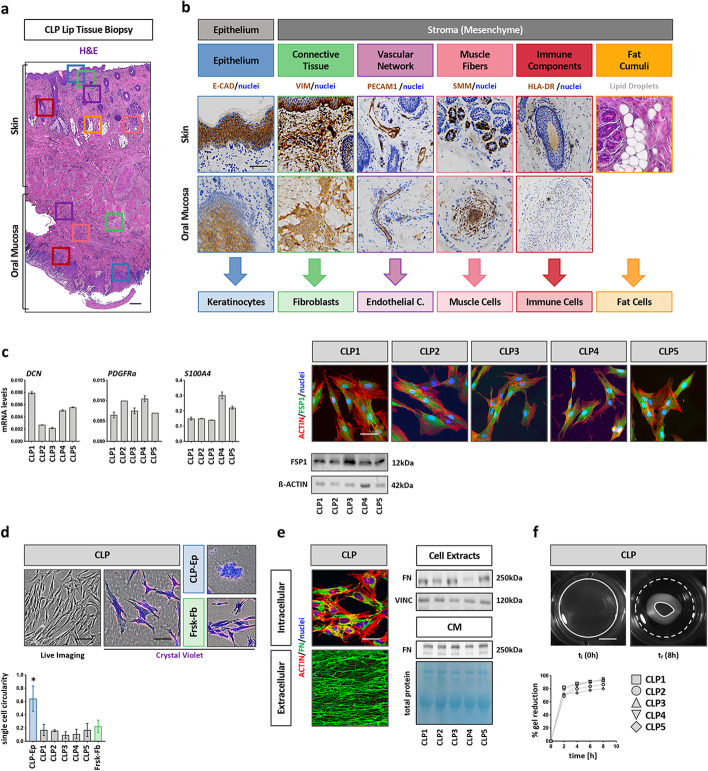
Regularly discarded lip tissue obtained from corrective surgeries to close the cleft lip represents an easily accessible and rich source for the isolation of primary fibroblasts. Primary fibroblasts have been described to show compelling similarities to mesenchymal stem cells (MSCs). Hence, cleft lip and palate (CLP) lip-derived fibroblasts could be thought as an intriguing cell source for personalized regenerative therapies in CLP-affected patients.
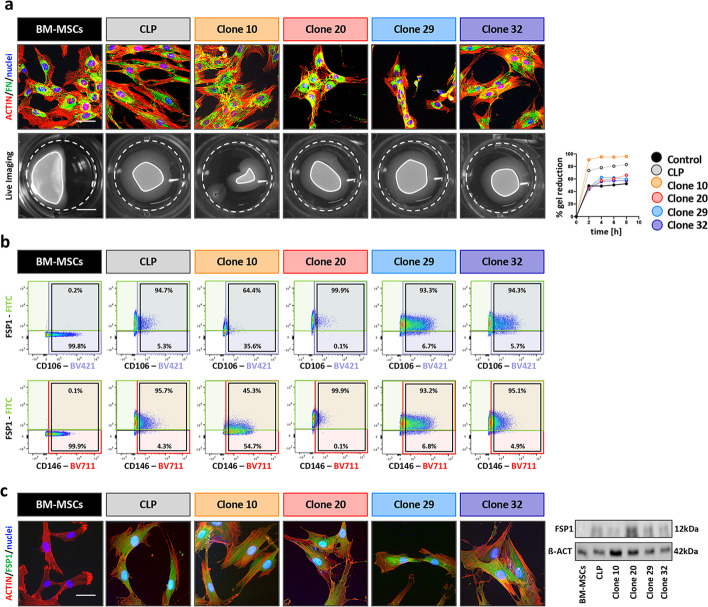
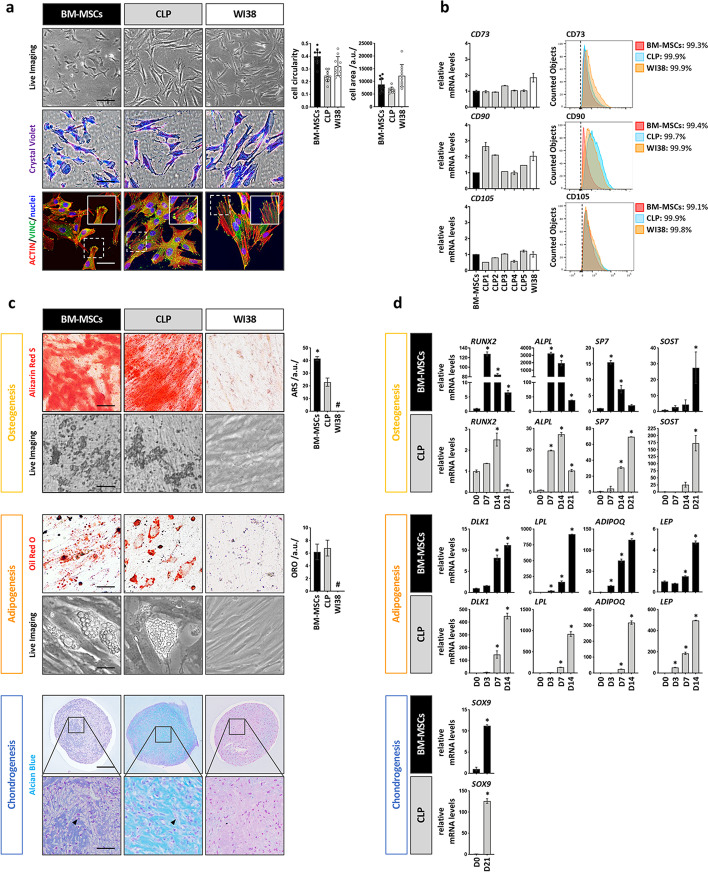
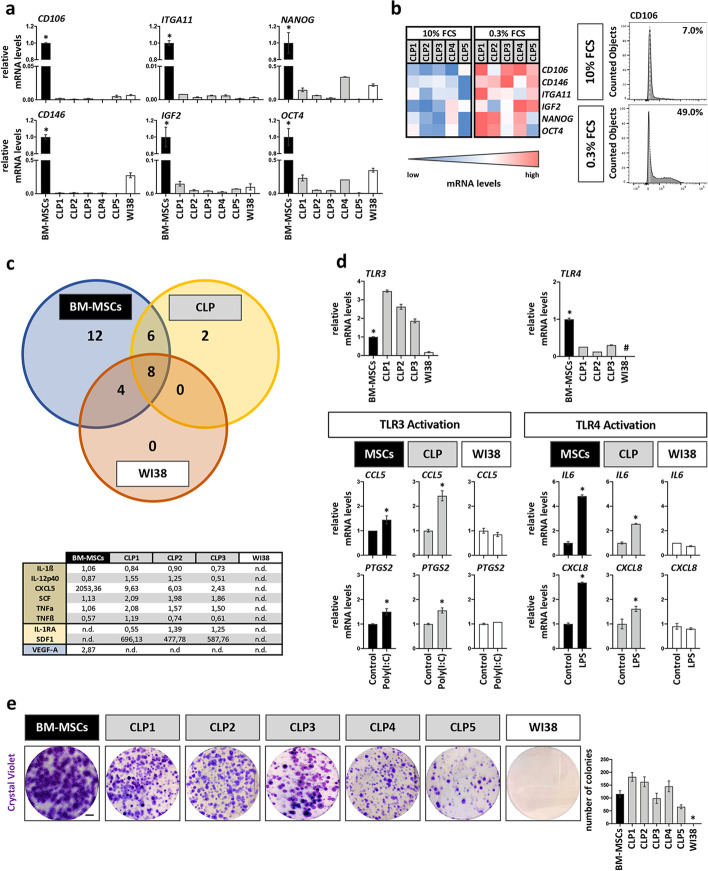
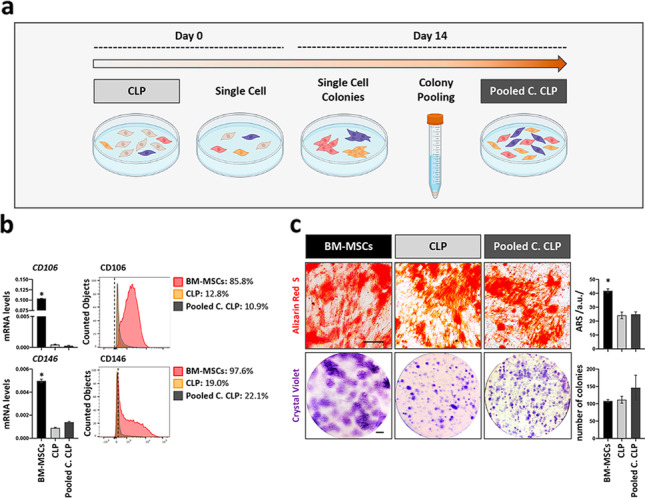
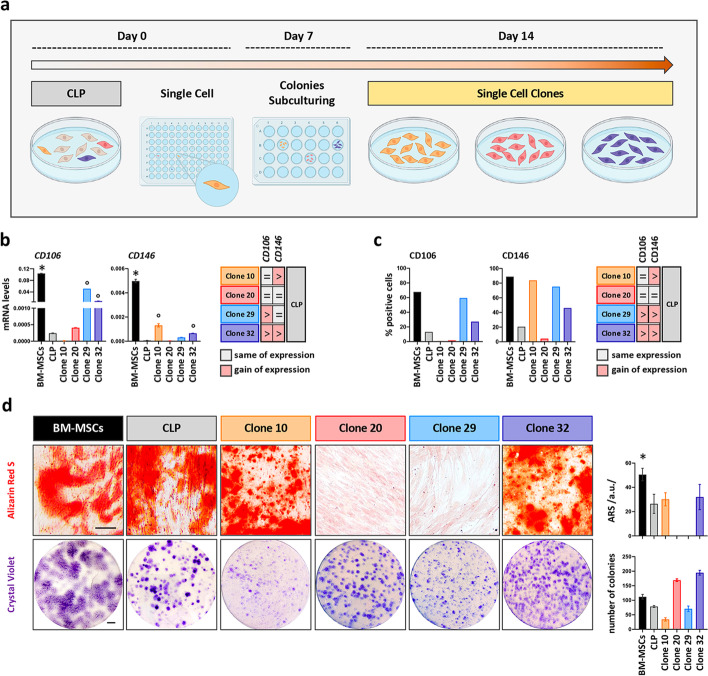
Initially, we thoroughly characterized the fibroblastic nature of the lip-derived mesenchymal outgrowths by molecular and functional assays. Next, we compared their phenotype and genotype to that of bone marrow-mesenchymal stem cells (BM-MSCs) and of human lung-derived fibroblasts WI38, by assessing their morphology, surface marker expression, trilineage differentiation potential, colony-forming (CFU) capacity, and immunomodulation property. Finally, to better decipher the heterogeneity of our CLP cultures, we performed a single cell clonal analysis and tested expanded clones for surface marker expression, as well as osteogenic and CFU potential.
We identified intriguingly similar phenotypic and genotypic properties between CLP lip fibroblasts and BM-MSCs, which makes them distinct from WI38. Furthermore, our own data in combination with the complex anatomy of the lip tissue indicated heterogeneity in our CLP cultures. Using a clonal analysis, we discovered single cell-derived clones with increased levels of the MSC markers CD106 and CD146 and clones with variabilities in their commitment to differentiate into bone-forming cells and in their potential to form single cell-derived colonies. However, we were not able to gain clones possessing superior MSC-like capacities when compared to the heterogeneous parental CLP population. Additionally, all clones could still generate contractile forces and retained robust levels of the fibroblast specific marker FSP1, which was not detectable in BM-MSCs.
Our results suggest that we isolate heterogeneous populations of fibroblasts from discarded CLP lip tissue, which show a prominently multipotent character in their entirety avoiding the need for elaborate subpopulation selections in vitro. These findings suggest that CLP lip fibroblasts might be a novel potential cell source for personalized regenerative medicine of clinical benefit for CLP patients.
从修复唇裂的矫形手术中经常丢弃的唇部组织是一种容易获得的丰富的原代成纤维细胞分离来源。原代成纤维细胞已被描述为与间充质干细胞(MSCs)具有很强的相似性。因此,唇裂腭裂(CLP)唇衍生的成纤维细胞可以被认为是 CLP 患者个性化再生治疗的一个有趣的细胞来源。
最初,我们通过分子和功能测定方法彻底表征了唇衍生间充质外生的成纤维细胞特性。接下来,我们通过评估其形态、表面标记物表达、三系分化潜能、集落形成(CFU)能力和免疫调节特性,将其表型和基因型与骨髓间充质干细胞(BM-MSCs)和人肺衍生成纤维细胞 WI38 进行比较。最后,为了更好地阐明我们的 CLP 培养物的异质性,我们进行了单细胞克隆分析,并测试了扩增的克隆的表面标记物表达以及成骨和成 CFU 潜能。
我们发现 CLP 唇成纤维细胞和 BM-MSCs 之间具有引人注目的相似表型和基因型特性,这使它们与 WI38 不同。此外,我们自己的数据结合唇组织的复杂解剖结构表明我们的 CLP 培养物存在异质性。通过克隆分析,我们发现具有 MSC 标记物 CD106 和 CD146 水平增加的单细胞衍生克隆,以及在分化为成骨细胞的能力和形成单细胞衍生克隆的潜力方面存在变异性的克隆。然而,与异质的亲本 CLP 群体相比,我们未能获得具有优越 MSC 样能力的克隆。此外,所有克隆仍然能够产生收缩力,并保持高水平的成纤维细胞特异性标记物 FSP1,而在 BM-MSCs 中则无法检测到。
我们的结果表明,我们从废弃的 CLP 唇组织中分离出异质的成纤维细胞群体,这些细胞在整体上表现出明显的多能性特征,避免了在体外进行复杂的亚群选择的需要。这些发现表明,CLP 唇成纤维细胞可能是一种新的潜在细胞来源,用于个性化再生医学,为 CLP 患者带来临床益处。