Xiong Lin, Pei Jie, Wang Xingdong, Guo Shaoke, Guo Xian, Yan Ping
Animal Science Department, Lanzhou Institute of Husbandry and Pharmaceutical Sciences, Chinese Academy of Agricultural Sciences, Lanzhou 730050, China.
Key Laboratory of Animal Genetics and Breeding on Tibetan Plateau, Ministry of Agriculture and Rural Affairs, Lanzhou 730050, China.
Foods. 2022 Aug 26;11(17):2582. doi: 10.3390/foods11172582.
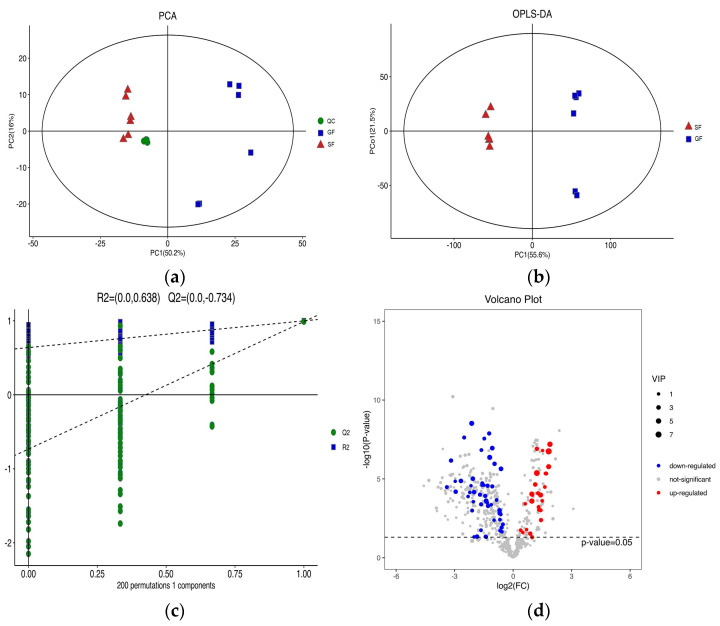
The differences of fatty acids in yak's meat under graze feeding (GF) and stall feeding (SF) regimes and the regulation mechanism of the feeding system on the fatty acids content in yak 's meat was explored in this study. First, the fatty acids in yak's longissimus dorsi (LD) muscle were detected by gas liquid chromatography (GLC). Compared with GF yaks, the absolute content of ΣSFAs, ΣMUFAs, ΣUFAs, ΣPUFAs and Σn-6PUFAs in SF yak's LD were higher, whereas Σn-3PUFAs was lower; the relative content of ΣMUFAs, ΣPUFAs, Σn-3PUFAs and ΣUFAs in SF yak's LD were lower, whereas ΣSFAs was higher. The GF yak's meat is healthier for consumers. Further, the transcriptomic and lipidomics profiles in yak's LD were detected by mRNA-Sequencing (mRNA-Seq) and ultra-high performance liquid chromatography-mass spectrometry (UHPLC-MS), respectively. The integrated transcriptomic and lipidomics analysis showed the differences in fatty acids were caused by the metabolism of fatty acids, amino acids, carbohydrates and phospholipids, and were mainly regulated by the , , , , and genes in the PPAR signaling pathway. Moreover, the gene was the candidate gene for the high content of ΣMUFA, and was the candidate gene for the high content of Σn-3PUFAs and the healthier ratio of Σn-6/Σn-3PUFAs in yak meat. This study provides a guidance to consumers in the choice of yak's meat, and also established a theoretical basis for improving yak's meat quality.
本研究探讨了放牧饲养(GF)和舍饲(SF)模式下牦牛肉中脂肪酸的差异以及饲养系统对牦牛肉脂肪酸含量的调控机制。首先,采用气相色谱法(GLC)检测牦牛背最长肌(LD)中的脂肪酸。与放牧饲养的牦牛相比,舍饲牦牛LD中饱和脂肪酸总量(ΣSFAs)、单不饱和脂肪酸总量(ΣMUFAs)、不饱和脂肪酸总量(ΣUFAs)、多不饱和脂肪酸总量(ΣPUFAs)和n-6多不饱和脂肪酸总量(Σn-6PUFAs)的绝对含量较高,而n-3多不饱和脂肪酸总量(Σn-3PUFAs)较低;舍饲牦牛LD中ΣMUFAs、ΣPUFAs、Σn-3PUFAs和ΣUFAs的相对含量较低,而ΣSFAs较高。放牧饲养的牦牛肉对消费者更健康。此外,分别采用mRNA测序(mRNA-Seq)和超高效液相色谱-质谱联用(UHPLC-MS)检测牦牛LD中的转录组和脂质组图谱。转录组和脂质组的综合分析表明,脂肪酸的差异是由脂肪酸、氨基酸、碳水化合物和磷脂的代谢引起的,主要受PPAR信号通路中的 、 、 、 、 和 基因调控。此外, 基因是牦牛肉中ΣMUFA含量高的候选基因, 是牦牛肉中Σn-3PUFAs含量高以及Σn-6/Σn-3PUFAs比例更健康的候选基因。本研究为消费者选择牦牛肉提供了指导,也为改善牦牛肉品质奠定了理论基础。