Department of Clinical Biochemistry, Copenhagen University Hospital-Rigshospitalet, 2100 Copenhagen, Denmark.
Department of Clinical Medicine, Faculty of Health and Medical Sciences, University of Copenhagen, 2200 Copenhagen, Denmark.
Int J Mol Sci. 2022 Aug 29;23(17):9777. doi: 10.3390/ijms23179777.
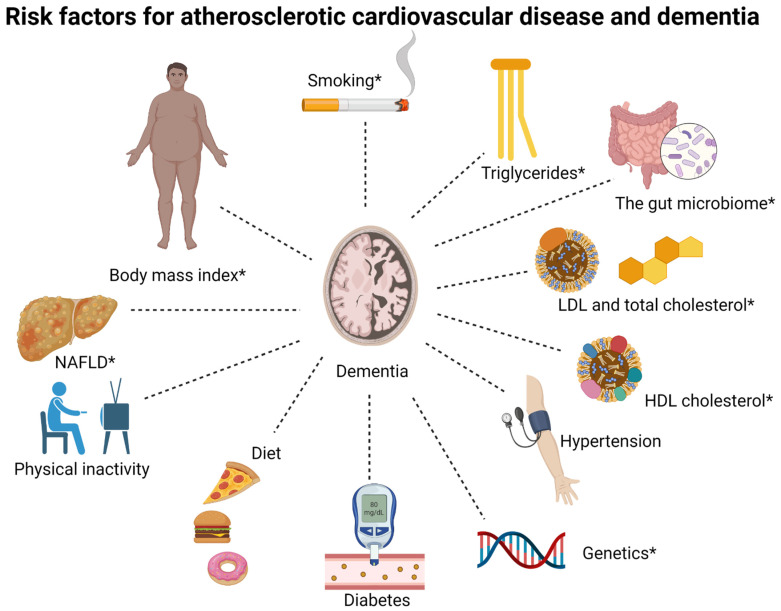
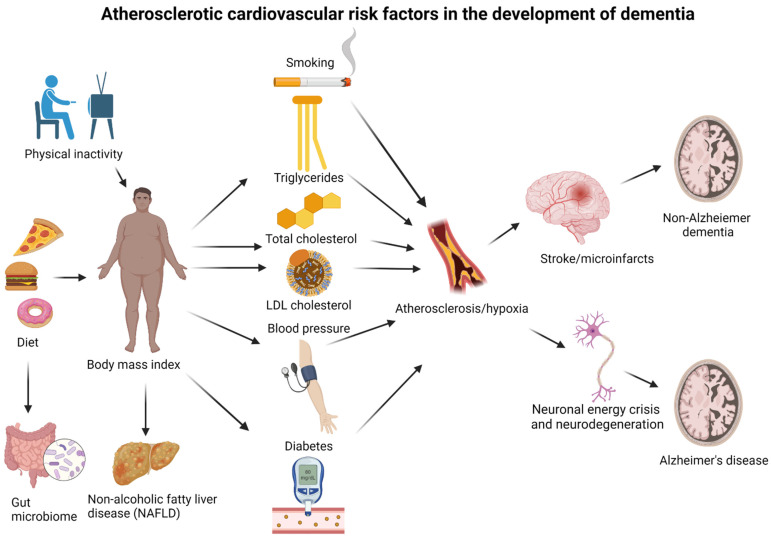
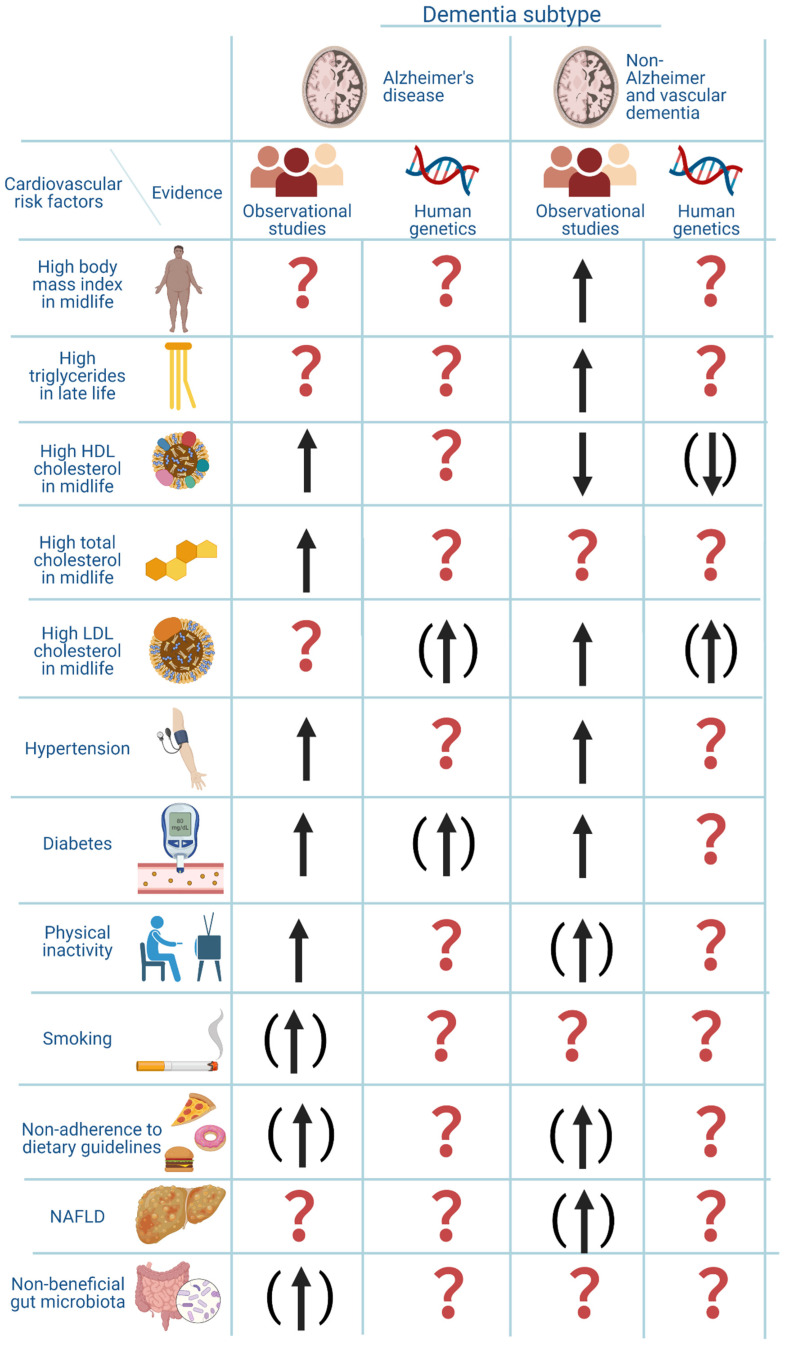
Alzheimer's disease is the most common form of dementia, and the prodromal phases of Alzheimer's disease can last for decades. Vascular dementia is the second most common form of dementia and is distinguished from Alzheimer's disease by evidence of previous stroke or hemorrhage and current cerebrovascular disease. A compiled group of vascular-related dementias (vascular dementia and unspecified dementia) is often referred to as non-Alzheimer dementia. Recent evidence indicates that preventing dementia by lifestyle interventions early in life with a focus on reducing cardiovascular risk factors is a promising strategy for reducing future risk. Approximately 40% of dementia cases is estimated to be preventable by targeting modifiable, primarily cardiovascular risk factors. The aim of this review is to describe the association between risk factors for atherosclerotic cardiovascular disease and the risk of Alzheimer's disease and non-Alzheimer dementia by providing an overview of the current evidence and to shed light on possible shared pathogenic pathways between dementia and cardiovascular disease. The included risk factors are body mass index (BMI); plasma triglyceride-, high-density lipoprotein (HDL) cholesterol-, low-density lipoprotein (LDL) cholesterol-, and total cholesterol concentrations; hypertension; diabetes; non-alcoholic fatty liver disease (NAFLD); physical inactivity; smoking; diet; the gut microbiome; and genetics. Furthermore, we aim to disentangle the difference between associations of risk factors in midlife as compared with in late life.
阿尔茨海默病是最常见的痴呆症类型,其前驱期可长达数十年。血管性痴呆是第二常见的痴呆症类型,其特征是有既往卒中或出血病史以及当前的脑血管疾病。一组由血管因素引起的痴呆症(血管性痴呆和未特指的痴呆症)通常被称为非阿尔茨海默痴呆症。最近的证据表明,通过生活方式干预,在生命早期就针对心血管危险因素进行预防,从而预防痴呆症,这是降低未来风险的一个很有前途的策略。据估计,通过针对可改变的主要心血管危险因素,约 40%的痴呆病例是可以预防的。本综述的目的是通过概述当前的证据,描述动脉粥样硬化性心血管疾病风险因素与阿尔茨海默病和非阿尔茨海默痴呆症风险之间的关系,并阐明痴呆症和心血管疾病之间可能存在的共同发病途径。纳入的风险因素包括体重指数(BMI);血浆甘油三酯、高密度脂蛋白(HDL)胆固醇、低密度脂蛋白(LDL)胆固醇和总胆固醇浓度;高血压;糖尿病;非酒精性脂肪性肝病(NAFLD);身体活动不足;吸烟;饮食;肠道微生物组;和遗传因素。此外,我们旨在厘清中年和晚年风险因素关联之间的差异。