Institute of Physiology, Medical University Innsbruck, 6020 Innsbruck, Austria.
Division Physiology, Department of Pharmacology, Physiology and Microbiology, Karl Landsteiner University of Health Sciences, 3500 Krems, Austria.
Int J Mol Sci. 2022 Aug 31;23(17):9885. doi: 10.3390/ijms23179885.
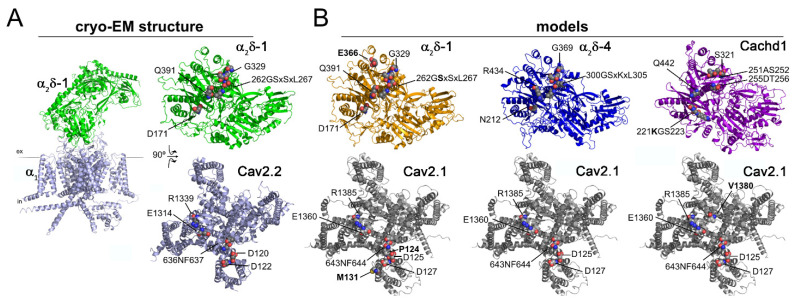
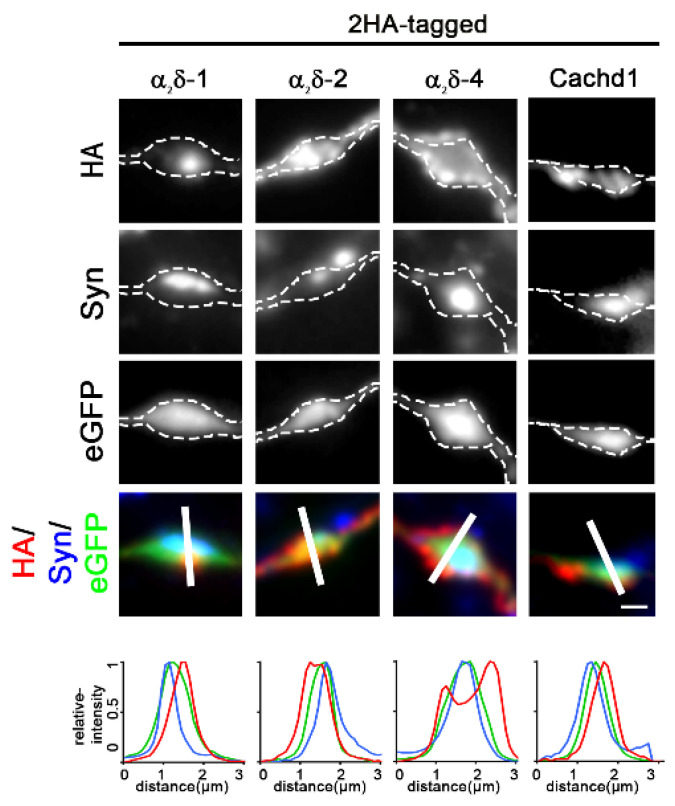
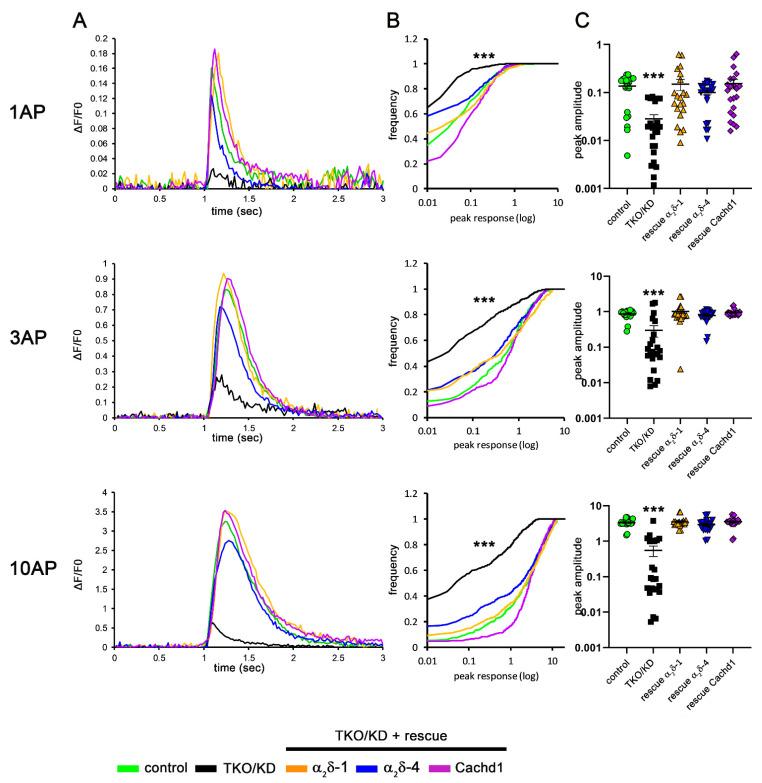
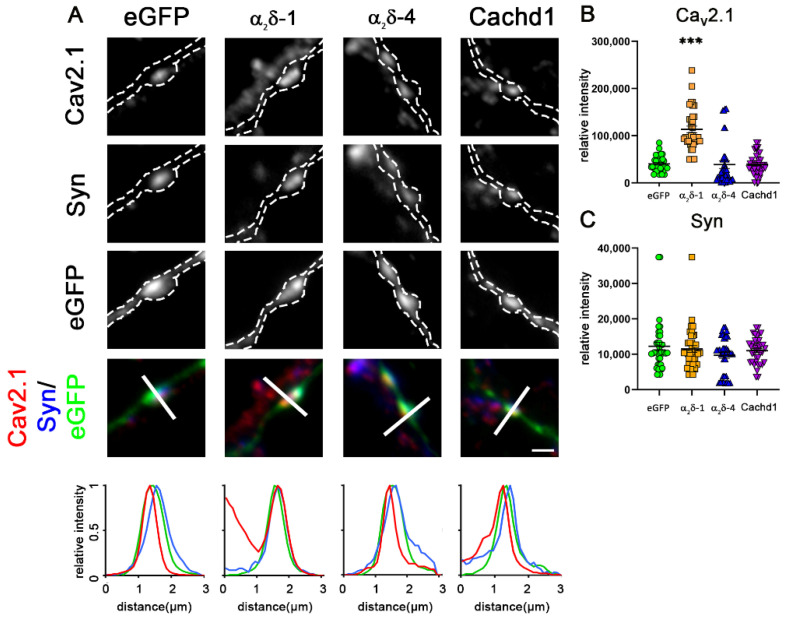
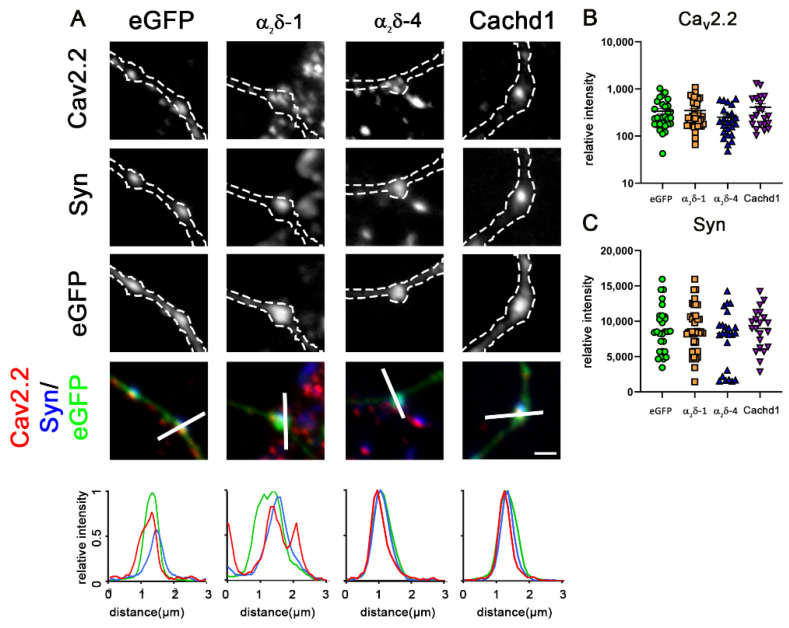
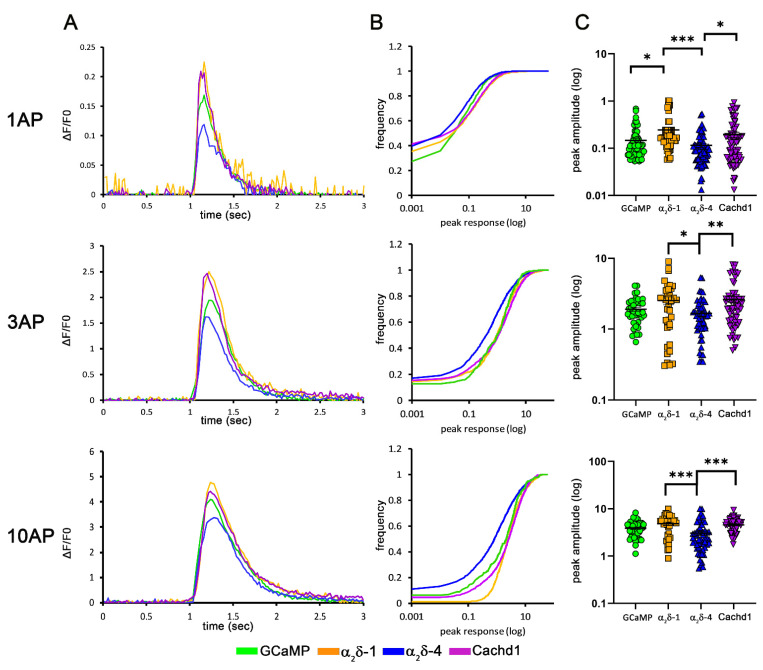
The αδ auxiliary subunits of voltage-gated calcium channels (VGCC) were traditionally regarded as modulators of biophysical channel properties. In recent years, channel-independent functions of these subunits, such as involvement in synapse formation, have been identified. In the central nervous system, αδ isoforms 1, 2, and 3 are strongly expressed, regulating glutamatergic synapse formation by a presynaptic mechanism. Although the αδ-4 isoform is predominantly found in the retina with very little expression in the brain, it was recently linked to brain functions. In contrast, Cachd1, a novel αδ-like protein, shows strong expression in brain, but its function in neurons is not yet known. Therefore, we aimed to investigate the presynaptic functions of αδ-4 and Cachd1 by expressing individual proteins in cultured hippocampal neurons. Both αδ-4 and Cachd1 are expressed in the presynaptic membrane and could rescue a severe synaptic defect present in triple knockout/knockdown neurons that lacked the αδ-1-3 isoforms (αδ TKO/KD). This observation suggests that presynaptic localization and the regulation of synapse formation in glutamatergic neurons is a general feature of αδ proteins. In contrast to this redundant presynaptic function, αδ-4 and Cachd1 differentially regulate the abundance of presynaptic calcium channels and the amplitude of presynaptic calcium transients. These functional differences may be caused by subtle isoform-specific differences in α-αδ protein-protein interactions, as revealed by structural homology modelling. Taken together, our study identifies both αδ-4 and Cachd1 as presynaptic regulators of synapse formation, differentiation, and calcium channel functions that can at least partially compensate for the loss of αδ-1-3. Moreover, we show that regulating glutamatergic synapse formation and differentiation is a critical and surprisingly redundant function of αδ and Cachd1.
电压门控钙通道 (VGCC) 的 αδ 辅助亚基传统上被认为是调节生物物理通道特性的调节剂。近年来,这些亚基的通道独立功能,如参与突触形成,已经被确定。在中枢神经系统中,αδ 同种型 1、2 和 3 表达强烈,通过突触前机制调节谷氨酸能突触形成。虽然 αδ-4 同种型主要存在于视网膜中,在大脑中表达很少,但它最近与大脑功能有关。相比之下,一种新型的 αδ 样蛋白 Cachd1 在大脑中表达强烈,但它在神经元中的功能尚不清楚。因此,我们旨在通过在培养的海马神经元中表达单个蛋白来研究 αδ-4 和 Cachd1 的突触前功能。αδ-4 和 Cachd1 均表达在突触前膜中,并能挽救缺乏 αδ-1-3 同种型的三敲除/敲低神经元中存在的严重突触缺陷(αδ TKO/KD)。这一观察结果表明,αδ 蛋白在谷氨酸能神经元中的突触前定位和突触形成的调节是一种普遍特征。与这种冗余的突触前功能相反,αδ-4 和 Cachd1 可调节突触前钙通道的丰度和突触前钙瞬变的幅度。这些功能差异可能是由 α-αδ 蛋白-蛋白相互作用的微妙同种型特异性差异引起的,这是通过结构同源建模揭示的。总之,我们的研究确定了 αδ-4 和 Cachd1 作为突触形成、分化和钙通道功能的突触前调节剂,它们至少可以部分补偿 αδ-1-3 的缺失。此外,我们表明,调节谷氨酸能突触形成和分化是 αδ 和 Cachd1 的一个关键且令人惊讶的冗余功能。