Interdisciplinary Research Program of Bioinformatics and Longevity Science, Pusan National University, 2, Busandaehak-ro 63beon-gil, Geumjeong-gu, Busan 46241, Korea.
Department of Pharmacy, College of Pharmacy, Pusan National University, 2, Busandaehak-ro 63beon-gil, Geumjeong-gu, Busan 46241, Korea.
Int J Mol Sci. 2022 Sep 2;23(17):10032. doi: 10.3390/ijms231710032.
Circadian rhythm is associated with the aging process and sex differences; however, how age and sex can change circadian regulation systems remains unclear. Thus, we aimed to evaluate age- and sex-related changes in gene expression and identify sex-specific target molecules that can regulate aging.
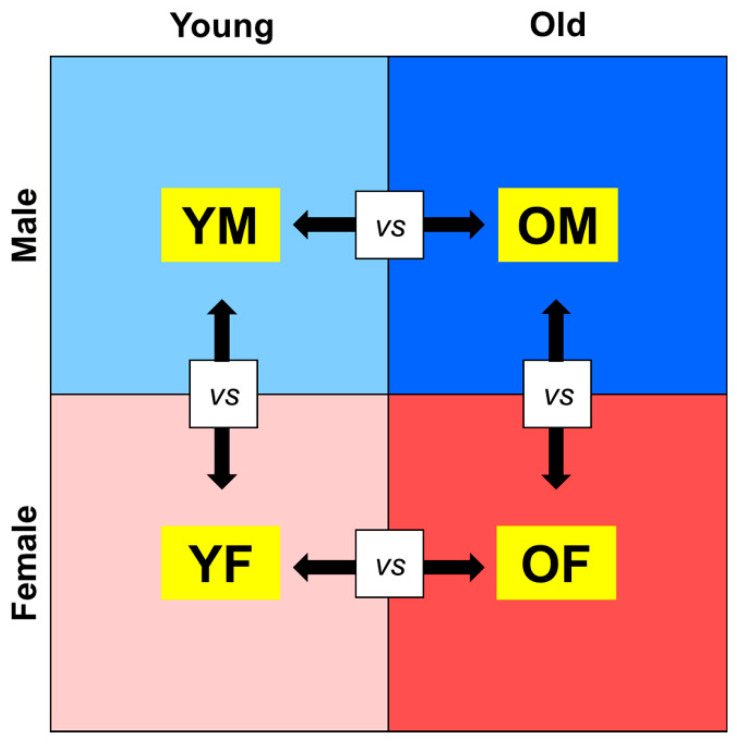
Rat livers were categorized into four groups, namely, young male, old male, young female, and old female, and the expression of several genes involved in the regulation of the circadian rhythm was confirmed by in silico and in vitro studies.
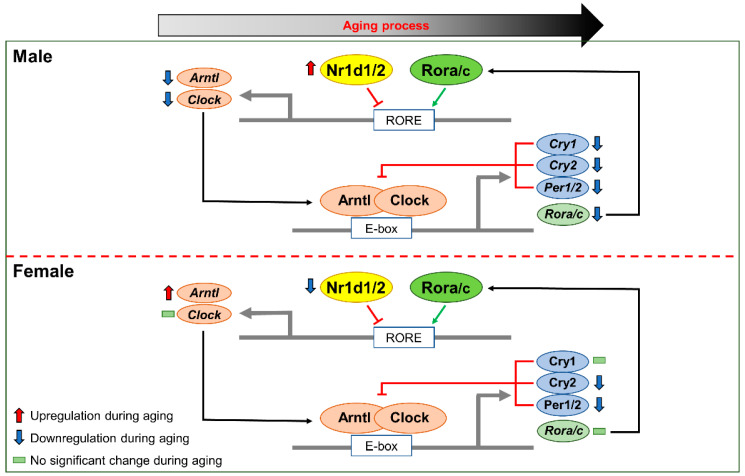
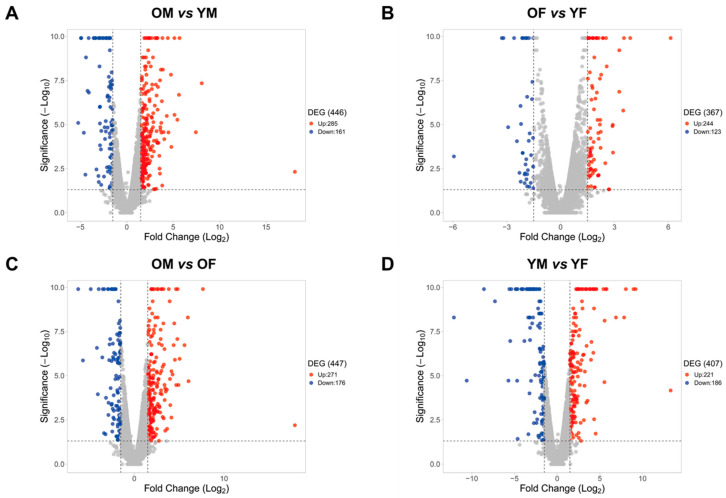
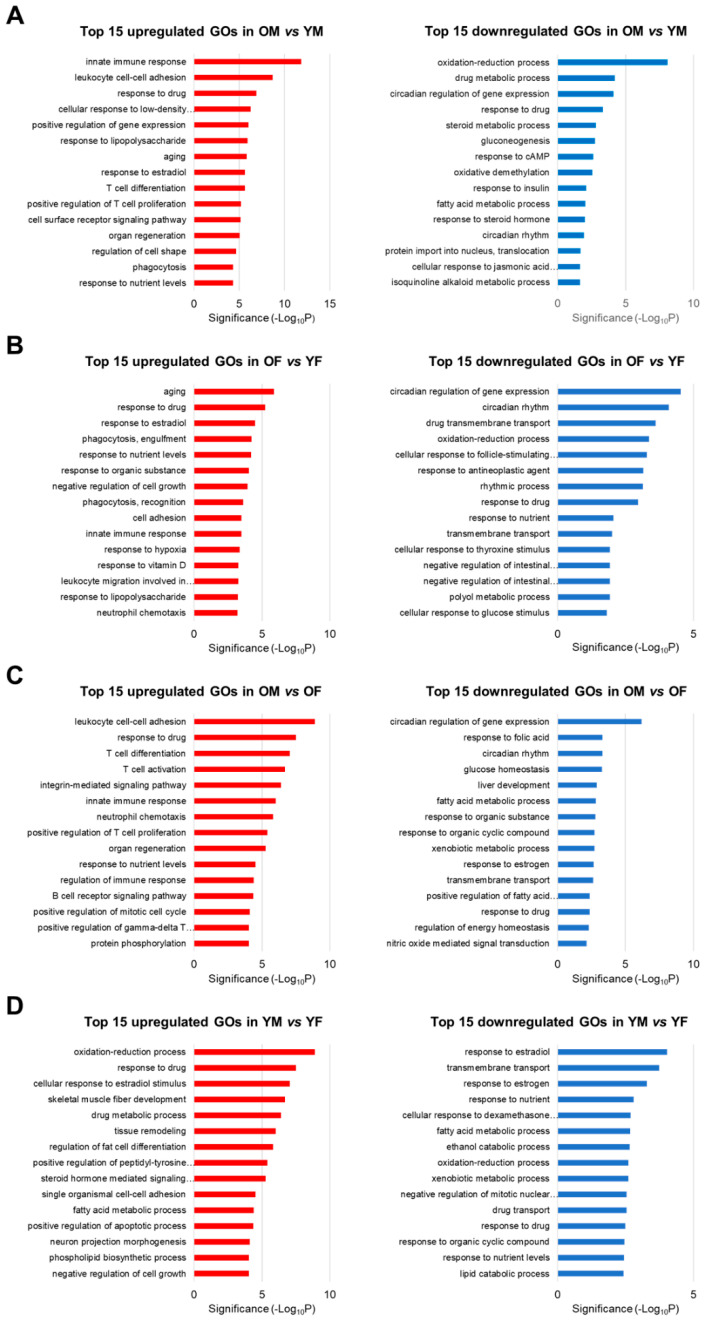
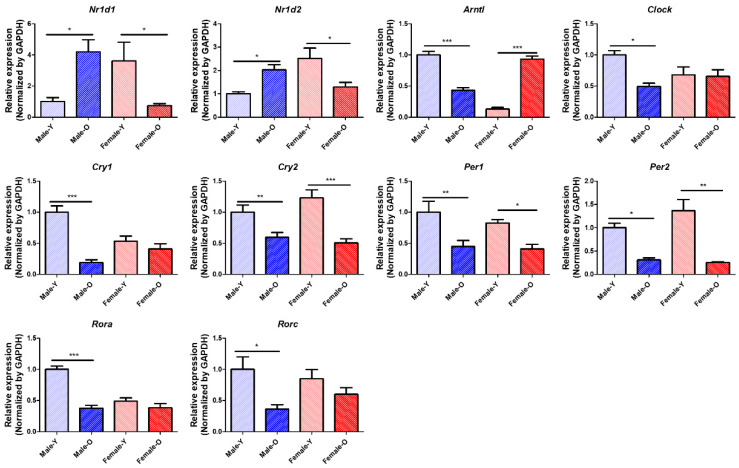
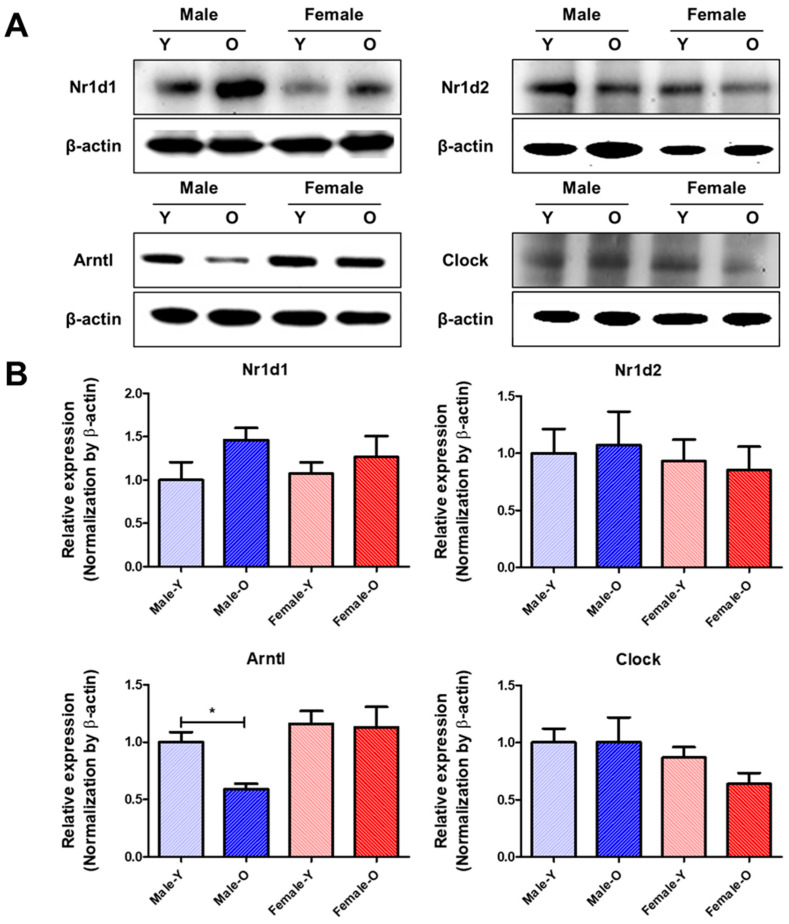
Gene Ontology and the Kyoto Encyclopedia of Genes and Genomes pathway enrichment analyses showed that the expression of genes related to circadian rhythms changed more in males than in females during liver aging. In addition, differentially expressed gene analysis and quantitative real-time polymerase chain reaction/western blotting analysis revealed that expression was upregulated in males during liver aging. Furthermore, the expression of other circadian genes, such as and , decreased in males during liver aging; however, these genes showed various gene expression patterns in females during liver aging.
Age-related elevation of Nr1d1/2 downregulates the expression of other circadian genes in males, but not females, during liver aging. Consequently, age-related upregulation of Nr1d1/2 may play a more crucial role in the change in circadian rhythms in males than in females during liver aging.
昼夜节律与衰老过程和性别差异有关;然而,年龄和性别如何改变昼夜调节系统尚不清楚。因此,我们旨在评估基因表达的年龄和性别相关变化,并确定可以调节衰老的性别特异性靶分子。
将大鼠肝脏分为四组,即年轻雄性、年老雄性、年轻雌性和年老雌性,并通过计算机模拟和体外研究证实了几种参与昼夜节律调节的基因的表达。
基因本体论和京都基因与基因组百科全书通路富集分析表明,在肝脏衰老过程中,雄性中与昼夜节律相关的基因表达变化大于雌性。此外,差异表达基因分析和定量实时聚合酶链反应/蛋白质印迹分析表明,Nr1d1/2 在雄性肝脏衰老过程中上调。此外,其他昼夜节律基因,如 Per1 和 Per2,在雄性肝脏衰老过程中表达下降;然而,这些基因在雌性肝脏衰老过程中表现出不同的基因表达模式。
Nr1d1/2 的年龄相关上调在雄性肝脏衰老过程中下调其他昼夜节律基因的表达,但在雌性中则不然。因此,Nr1d1/2 的年龄相关上调在雄性肝脏衰老过程中昼夜节律变化中可能比雌性中发挥更重要的作用。