Innominato Pasquale F, Cailliez Valérie, Allard Marc-Antoine, Lopez-Ben Santiago, Ferrero Alessandro, Marques Hugo, Hubert Catherine, Giuliante Felice, Pereira Fernando, Cugat Esteban, Mirza Darius F, Costa-Maia Jose, Serrablo Alejandro, Lapointe Real, Dopazo Cristina, Tralhao Jose, Kaiser Gernot, Chen Jinn-Shiun, Garcia-Borobia Francisco, Regimbeau Jean-Marc, Skipenko Oleg, Lin Jen-Kou, Laurent Christophe, Opocher Enrico, Goto Yuichi, Chibaudel Benoist, de Gramont Aimery, Adam René
Oncology Department, Ysbyty Gwynedd, Betsi Cadwaladr University Health Board, Bangor LL57 2PW, UK.
Cancer Research Centre, Warwick Medical School, University of Warwick, Coventry CV4 7AL, UK.
Cancers (Basel). 2022 Sep 5;14(17):4340. doi: 10.3390/cancers14174340.
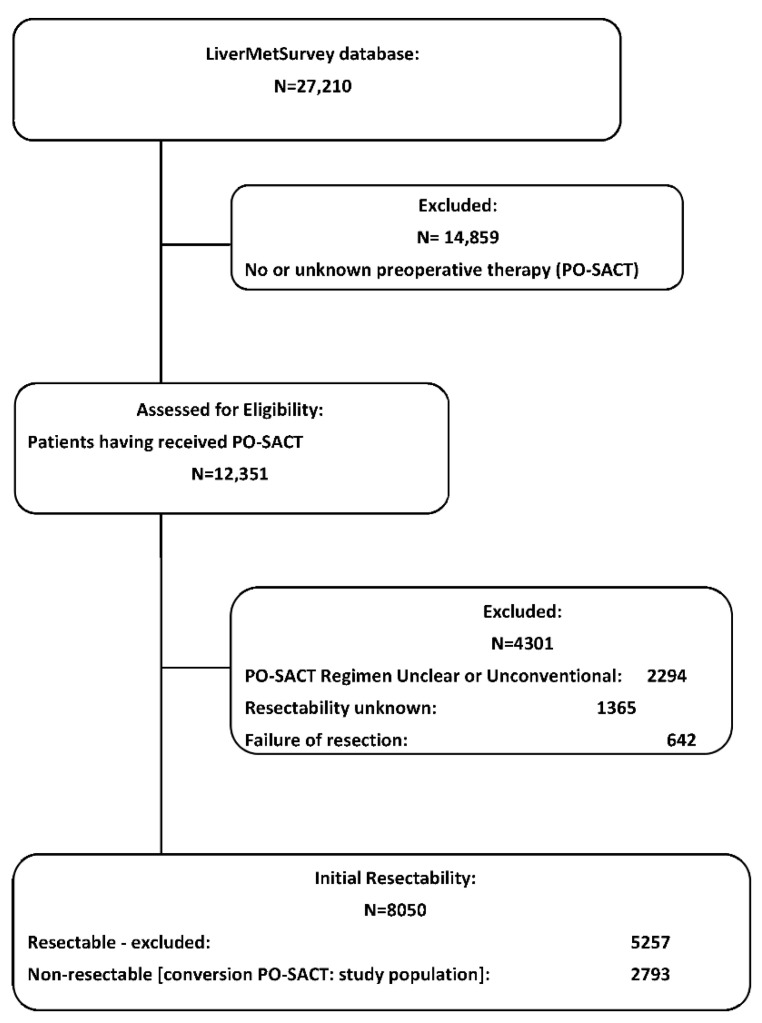
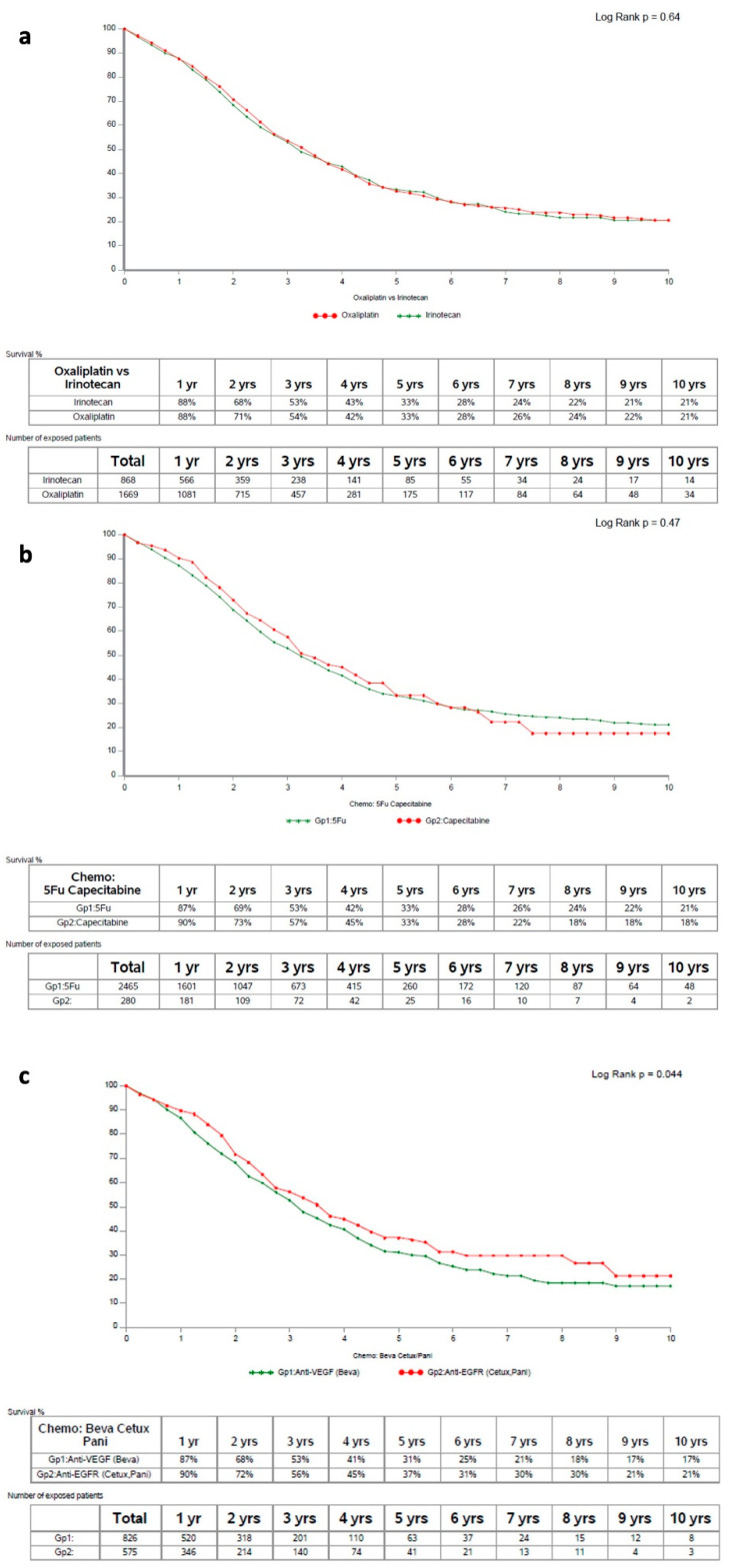
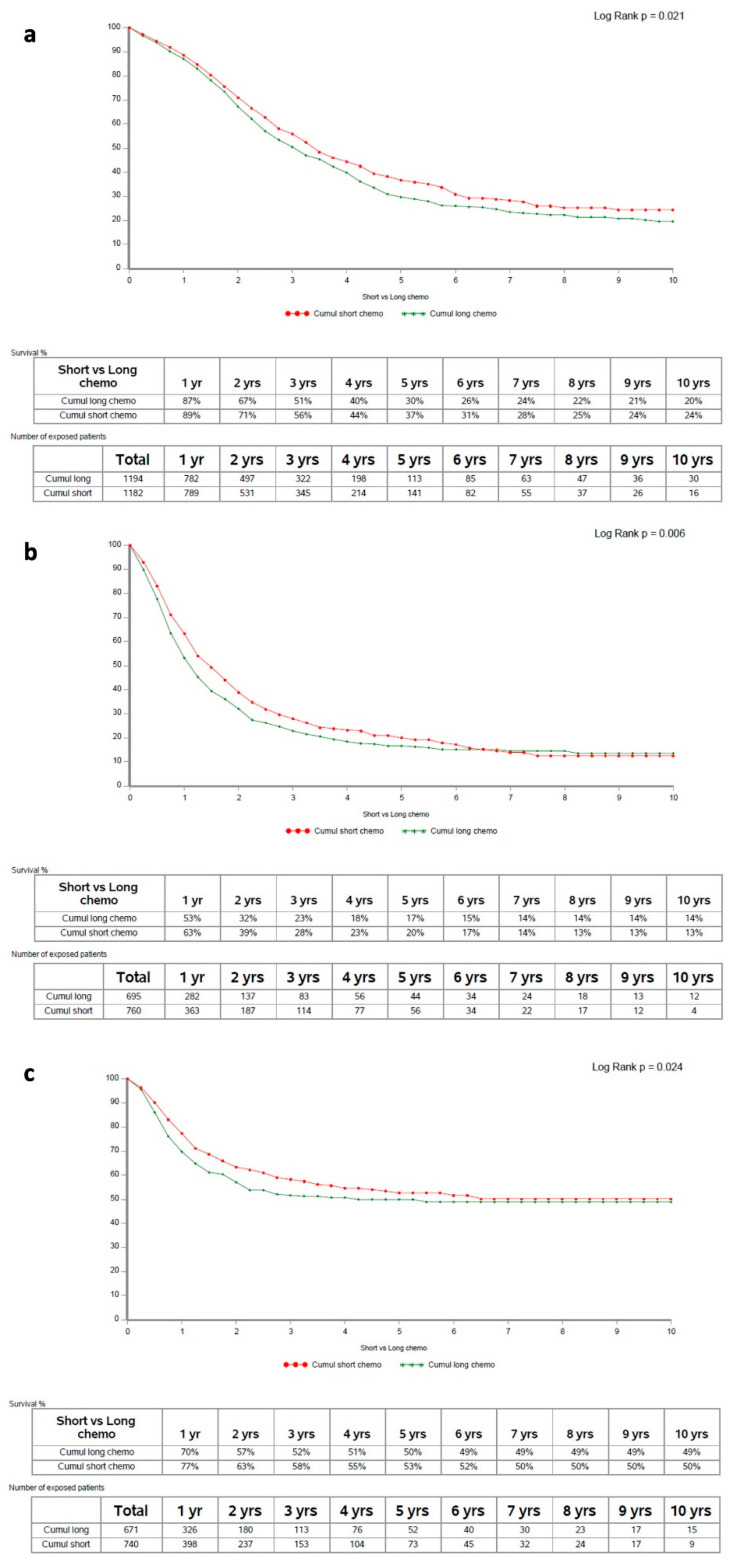
Background: Prognostic factors have been extensively reported after resection of colorectal liver metastases (CLM); however, specific analyses of the impact of preoperative systemic anticancer therapy (PO-SACT) features on outcomes is lacking. Methods: For this real-world evidence study, we used prospectively collected data within the international surgical LiverMetSurvey database from all patients with initially-irresectable CLM. The main outcome was Overall Survival (OS) after surgery. Disease-free (DFS) and hepatic-specific relapse-free survival (HS-RFS) were secondary outcomes. PO-SACT features included duration (cumulative number of cycles), choice of the cytotoxic backbone (oxaliplatin- or irinotecan-based), fluoropyrimidine (infusional or oral) and addition or not of targeted monoclonal antibodies (anti-EGFR or anti-VEGF). Results: A total of 2793 patients in the database had received PO-SACT for initially irresectable diseases. Short (<7 or <13 cycles in 1st or 2nd line) PO-SACT duration was independently associated with longer OS (HR: 0.85 p = 0.046), DFS (HR: 0.81; p = 0.016) and HS-RFS (HR: 0.80; p = 0.05). All other PO-SACT features yielded basically comparable results. Conclusions: In this international cohort, provided that PO-SACT allowed conversion to resectability in initially irresectable CLM, surgery performed as soon as technically feasible resulted in the best outcomes. When resection was achieved, our findings indicate that the choice of PO-SACT regimen had a marginal if any, impact on outcomes.
结直肠癌肝转移(CLM)切除术后的预后因素已有广泛报道;然而,术前全身抗癌治疗(PO-SACT)特征对预后影响的具体分析尚缺乏。方法:对于这项真实世界证据研究,我们使用了国际外科肝脏转移瘤调查数据库中前瞻性收集的所有初始不可切除CLM患者的数据。主要结局是术后总生存期(OS)。无病生存期(DFS)和肝脏特异性无复发生存期(HS-RFS)为次要结局。PO-SACT特征包括疗程(累积周期数)、细胞毒性主干药物的选择(基于奥沙利铂或伊立替康)、氟嘧啶(静脉输注或口服)以及是否添加靶向单克隆抗体(抗EGFR或抗VEGF)。结果:数据库中共有2793例患者因初始不可切除疾病接受了PO-SACT。短疗程(一线或二线<7或<13个周期)的PO-SACT与更长的OS(HR:0.85,p = 0.046)、DFS(HR:0.81;p = 0.016)和HS-RFS(HR:0.80;p = 0.05)独立相关。所有其他PO-SACT特征产生的结果基本相当。结论:在这个国际队列中,前提是PO-SACT能使初始不可切除的CLM转化为可切除,在技术可行时尽早进行手术可获得最佳预后。当实现切除时,我们的研究结果表明PO-SACT方案的选择对预后的影响甚微(如果有影响的话)。