Australian Institute for Suicide Research and Prevention, Griffith University, Brisbane 4122, Australia.
Slovene Center for Suicide Research, Primorska University, 6000 Koper, Slovenia.
Int J Environ Res Public Health. 2022 Aug 28;19(17):10709. doi: 10.3390/ijerph191710709.
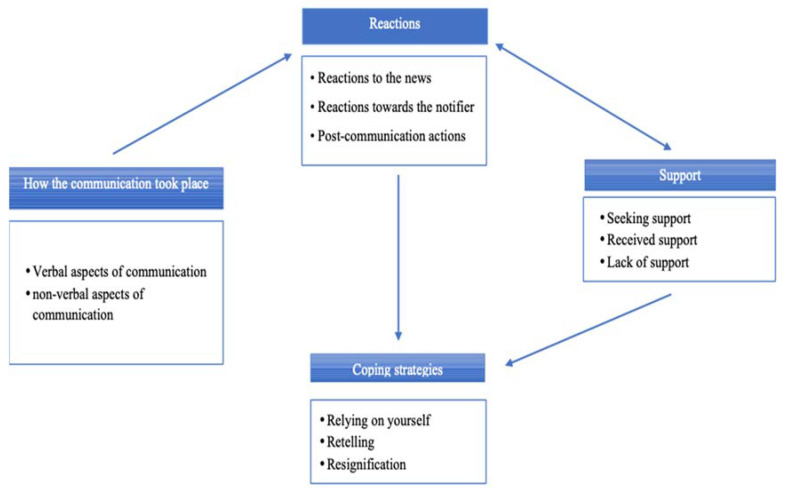
(1) Background: The loss of a significant person can be especially traumatic when death comes without warning and is due to causes such as suicide, murder and accidents. The way an individual is informed about the loss can affect the way of adapting to the loss and the quality of life of survivors. Communication modalities of the notifier may deeply influence the bereavement process. Aim: The present investigation aimed to explore the experience of those who received communication of such a type of death by a professional figure. (2) Method: Snowball sampling was used to recruit the participants to this qualitative study. Social networks, word of mouth and researchers' acquaintances were used, including clients of the NGO De Leo Fund. A total of 52 Italian people (eight males and forty four females, mean age = 49.44; SD = 14.23) who received notification of the death of a loved one by police officers or by health professionals participated in the study. Deaths involved cases of suicide, murder, road accident and mountain accident. (3) Results: The following four key themes were identified: (a) how the communication took place; (b) reactions; (c) support; and (d) coping strategies. Only 22 participants reported having received clear information about the dynamics of what happened; the rest of the sample obtained only poor or ambiguous information. The majority of participants sought or received informal support from family and friends immediately after notification; however, some participants experienced a total lack of support. The opportunity to see the body of the loved one for the last farewell, when denied, caused discomfort in recipients of the news. (4) Conclusions: Even the impactful notification of a traumatic death such as suicide or road accident can be mitigated by the appropriate behaviour and attitude of notifiers, who should always avoid providing generic or ambiguous information about what happened. The notification process should not end with the simple transmission of the communication, but should also look at the following phases by including referral to supportive networks or bereavement services, aimed at assisting individuals in the immediate aftermath but also in the long term.
(1) 背景:当死亡毫无预兆地发生,且死因是自杀、谋杀和意外等情况时,失去重要的人可能会特别痛苦。通知者通知的方式会影响幸存者适应丧亲之痛的方式和生活质量。通知者的沟通方式可能会深刻影响丧亲过程。目的:本研究旨在探索那些通过专业人士收到此类死亡通知的人的经历。(2) 方法:采用滚雪球抽样招募参与这项定性研究的参与者。利用社会网络、口碑和研究人员的熟人关系,包括非政府组织 De Leo 基金的客户。共有 52 名意大利人(8 名男性和 44 名女性,平均年龄=49.44;SD=14.23)参与了这项研究,他们收到了警察或卫生专业人员通知亲人死亡的消息。涉及的死亡事件包括自杀、谋杀、道路事故和山地事故。(3) 结果:确定了以下四个关键主题:(a) 沟通是如何进行的;(b) 反应;(c) 支持;和(d) 应对策略。只有 22 名参与者报告说收到了关于所发生事情的动态的明确信息;其余的样本只收到了较差或模糊的信息。大多数参与者在接到通知后立即从家人和朋友那里获得或寻求非正式支持;然而,一些参与者完全没有得到支持。如果没有机会最后一次见到亲人的遗体,这会让收到消息的人感到不适。(4) 结论:即使是对自杀或道路事故等创伤性死亡的影响较大的通知,也可以通过通知者的适当行为和态度来减轻,通知者应始终避免提供关于所发生事情的一般性或模糊信息。通知过程不应随着简单的信息传递而结束,还应包括转介到支持网络或丧亲服务,旨在帮助个人在即时和长期内。