Zhu Jian, Barber Gary, Sun Xichen
Tech Center, Stellantis North America, Auburn Hills, MI 48326, USA.
Department of Mechanical Engineering, Oakland University, Rochester, MI 48309, USA.
Materials (Basel). 2022 Sep 1;15(17):6066. doi: 10.3390/ma15176066.
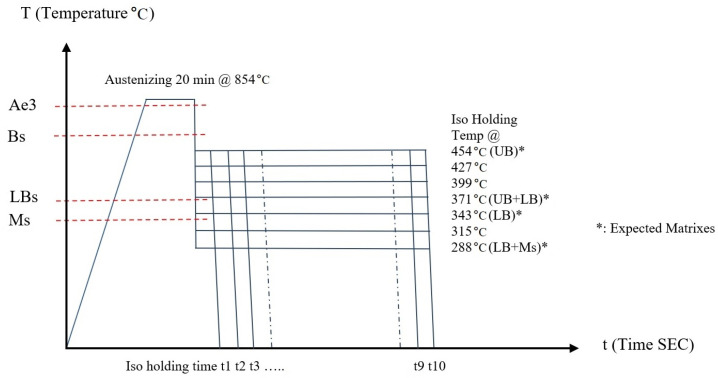
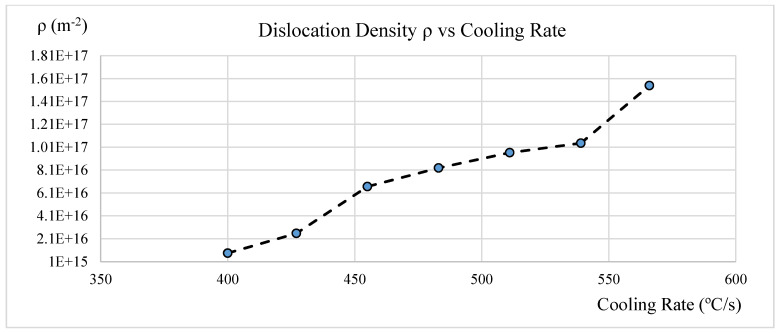
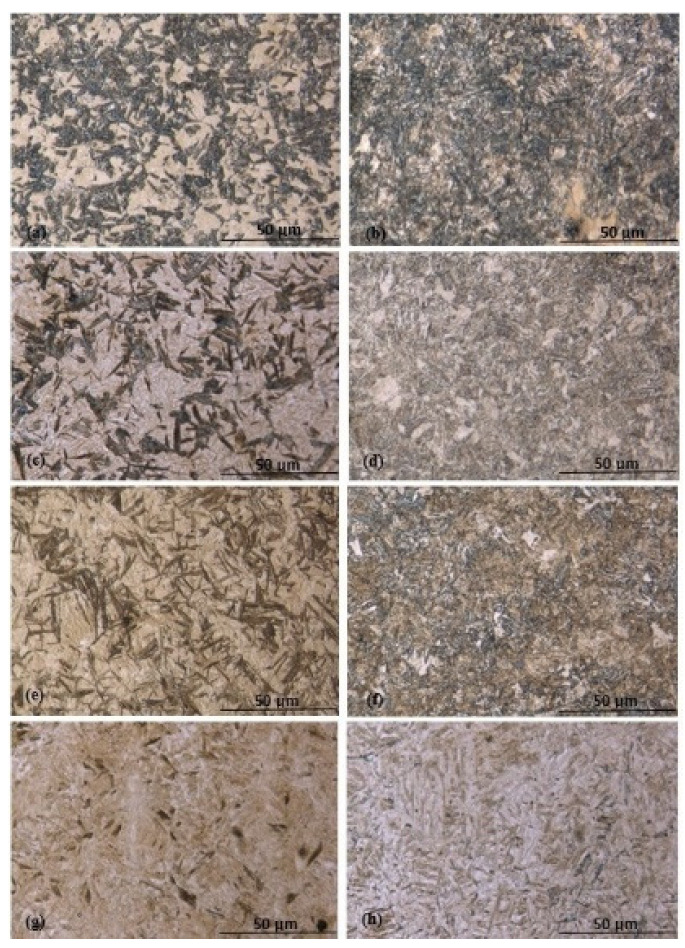
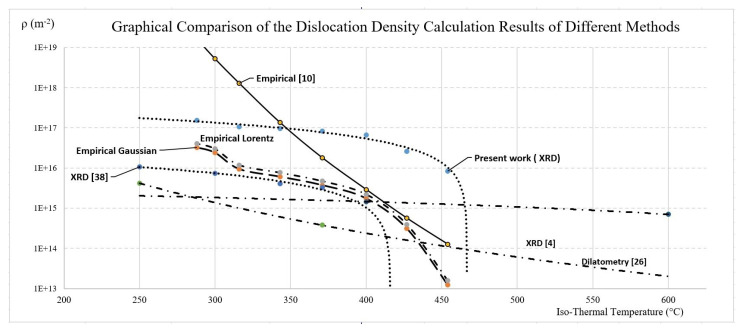
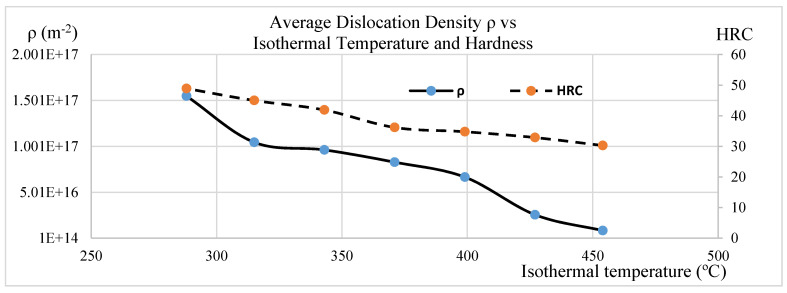
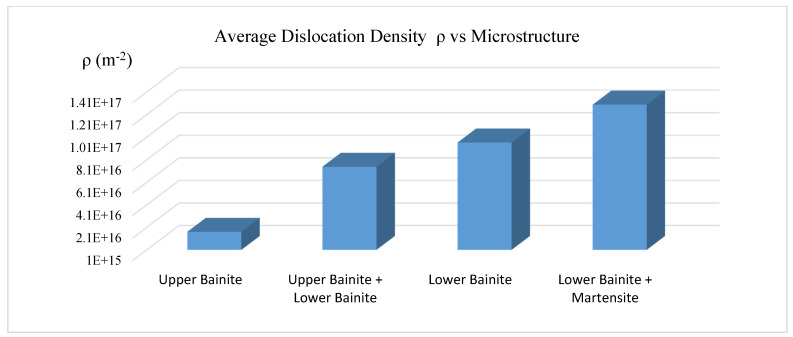
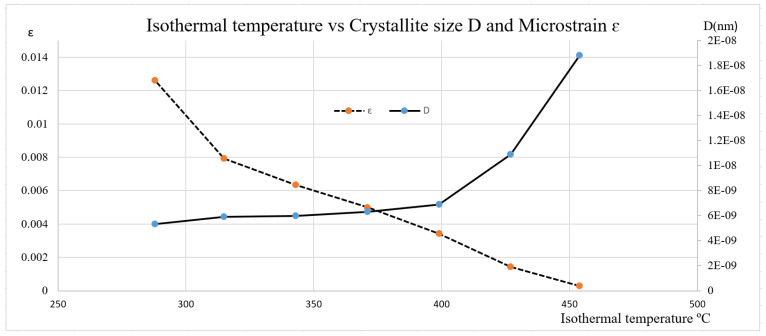
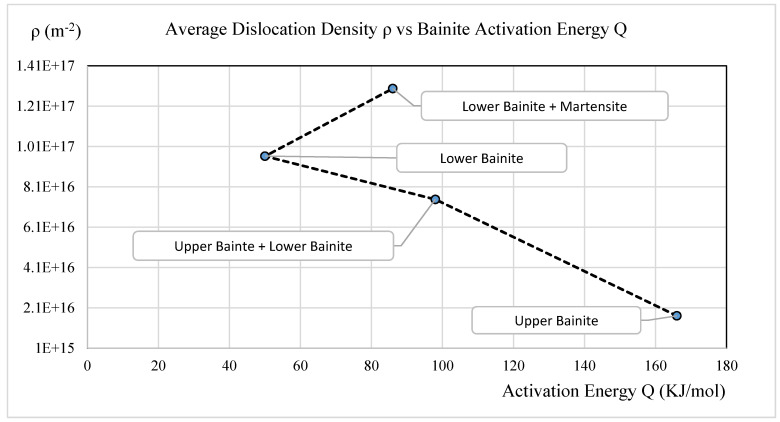
To relate the bainitic microstructures to the mechanical properties of steel, the average dislocation density needs to be determined. Using X-ray diffraction and diffraction line broadening analysis, this research quantifies the average dislocation density in the four bainite phase matrices, (upper bainite, upper and lower bainite mixture, lower bainite, lower bainite and martensite mixture), which are transformed in a wide range of isothermal temperatures. The effects of isothermal temperatures on the average dislocation density are assessed for different thermal dynamic driving forces in terms of activation energy and cooling rate. It is found that as isothermal holding temperature is increased, the dislocation density in the bainite matrix decreases from 1.55 × 10 to 8.33 × 10 (m) due to the reduction in the plastic deformation in the austenite in the transformation. At the same time, the activation energy required decreases only after passing the martensite and lower bainite mixed phase. A new method for better estimating the average dislocation density in bainitic steel is also proposed.
为了将贝氏体微观组织与钢的力学性能联系起来,需要确定平均位错密度。本研究利用X射线衍射和衍射线宽化分析,对在广泛等温温度范围内转变得到的四种贝氏体相基体(上贝氏体、上贝氏体与下贝氏体混合物、下贝氏体、下贝氏体与马氏体混合物)中的平均位错密度进行了量化。从激活能和冷却速率方面评估了等温温度对不同热动力学驱动力下平均位错密度的影响。研究发现,随着等温保温温度升高,由于转变过程中奥氏体塑性变形的减少,贝氏体基体中的位错密度从1.55×10降至8.33×10(m)。同时,仅在经过马氏体与下贝氏体混合相之后,所需的激活能才会降低。还提出了一种更好地估算贝氏体钢平均位错密度的新方法。