Endocrine Research Unit, Division of Endocrinology, Department of Internal Medicine, Mayo Clinic, Rochester, MN 55905, USA.
Department of Physical Therapy, School of Health Professions, Concordia University of Wisconsin, Mequon, WI 53097, USA.
Nutrients. 2022 Aug 27;14(17):3537. doi: 10.3390/nu14173537.
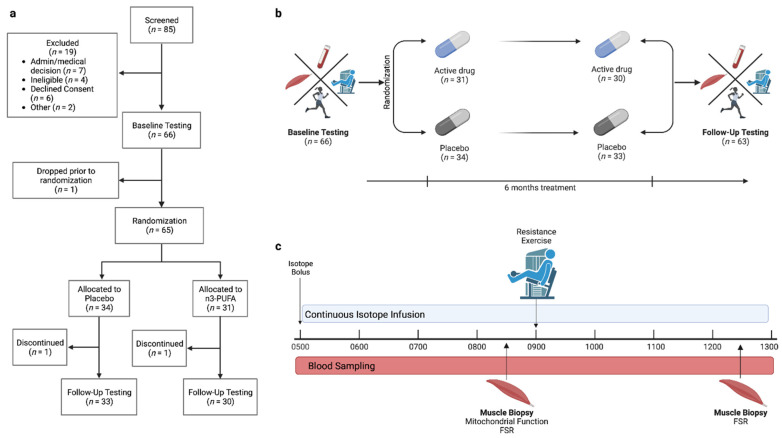
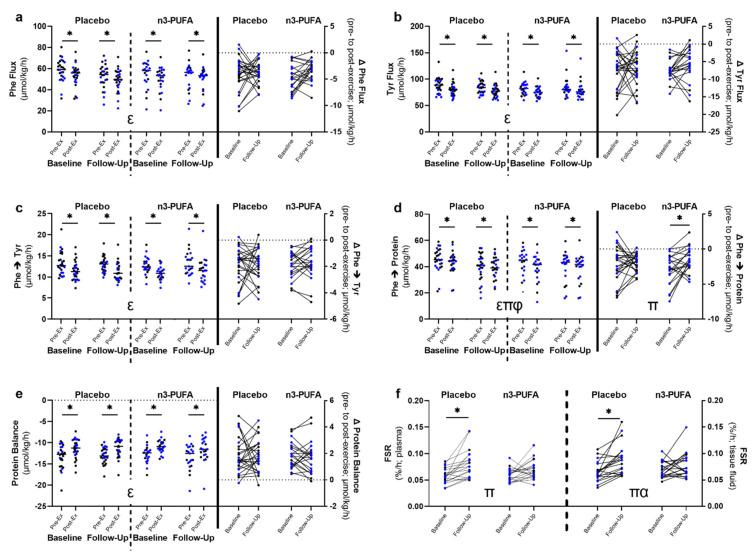
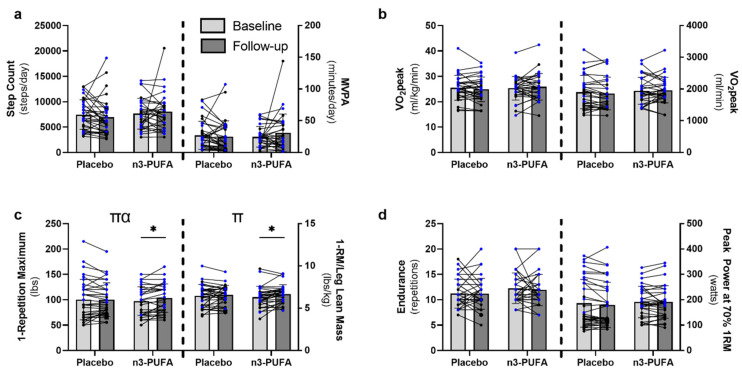
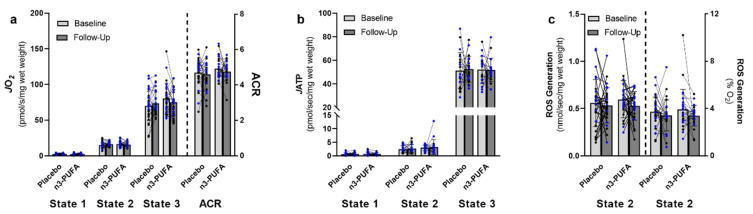
Skeletal muscle is critical for maintaining mobility, independence, and metabolic health in older adults. However, a common feature of aging is the progressive loss of skeletal muscle mass and function, which is often accompanied by mitochondrial impairments, oxidative stress, and insulin resistance. Exercise improves muscle strength, mitochondrial health, and cardiorespiratory fitness, but older adults often exhibit attenuated anabolic responses to acute exercise. Chronic inflammation associated with aging may contribute to this "anabolic resistance" and therapeutic interventions that target inflammation may improve exercise responsiveness. To this end, we conducted a randomized controlled trial to determine the effect of 6 months of dietary omega-3 polyunsaturated fatty acids (n3-PUFA) supplementation on skeletal muscle function (mass, strength), mitochondrial physiology (respiration, ATP production, ROS generation), and acute exercise responsiveness at the level of the muscle (fractional synthesis rate) and the whole-body (amino acid kinetics) in healthy older adults. When compared with a corn oil placebo ( = 33; 71.5 ± 4.8 years), older adults treated with 4 g/day n3-PUFA ( = 30; 71.4 ± 4.5 years) exhibited modest but significant increases in muscle strength (3.1 ± 14.7% increase in placebo vs. 7.5 ± 14.1% increase in n3-PUFA; = 0.039). These improvements in muscle strength with n3-PUFA supplementation occurred in the absence of any effects on mitochondrial function and a minor attenuation of the acute response to exercise compared to placebo. Together, these data suggest modest benefits of dietary n3-PUFAs to muscle function in healthy older adults. Future studies may elucidate whether n3-PUFA supplementation improves the exercise response in elderly individuals with co-morbidities, such as chronic inflammatory disease or sarcopenia.
骨骼肌对于维持老年人的活动能力、独立性和代谢健康至关重要。然而,衰老的一个共同特征是骨骼肌质量和功能的逐渐丧失,这通常伴随着线粒体损伤、氧化应激和胰岛素抵抗。运动可以提高肌肉力量、线粒体健康和心肺适应能力,但老年人通常对急性运动表现出较弱的合成代谢反应。与衰老相关的慢性炎症可能导致这种“合成代谢抵抗”,针对炎症的治疗干预可能会改善运动反应。为此,我们进行了一项随机对照试验,以确定 6 个月的饮食 ω-3 多不饱和脂肪酸(n3-PUFA)补充对健康老年人骨骼肌功能(质量、力量)、线粒体生理学(呼吸、ATP 产生、ROS 生成)以及肌肉水平(合成率分数)和全身(氨基酸动力学)的急性运动反应的影响。与玉米油安慰剂( = 33;71.5 ± 4.8 岁)相比,接受 4 g/天 n3-PUFA 治疗的老年人( = 30;71.4 ± 4.5 岁)肌肉力量有适度但显著的增加(安慰剂组增加 3.1 ± 14.7%,n3-PUFA 组增加 7.5 ± 14.1%; = 0.039)。n3-PUFA 补充对肌肉力量的这些改善是在没有任何对线粒体功能的影响的情况下发生的,与安慰剂相比,对运动的急性反应略有减弱。这些数据表明,饮食中 n3-PUFA 对健康老年人的肌肉功能有适度的益处。未来的研究可能会阐明 n3-PUFA 补充是否可以改善患有慢性炎症性疾病或肌少症等合并症的老年人的运动反应。