Ruscio Institute for Functional Medicine, Austin, TX 94596, USA.
Nova Institute for Health, Baltimore, MD 21231, USA.
Nutrients. 2022 Aug 30;14(17):3572. doi: 10.3390/nu14173572.
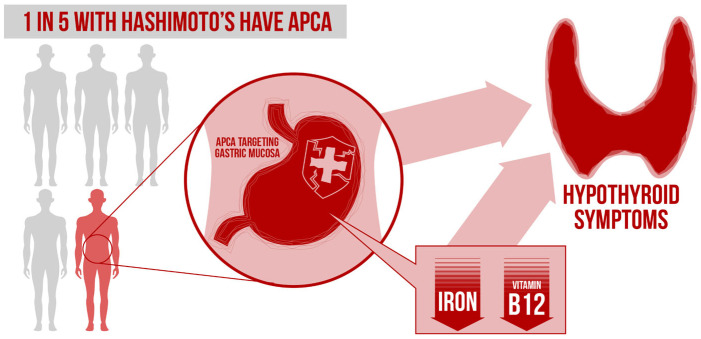
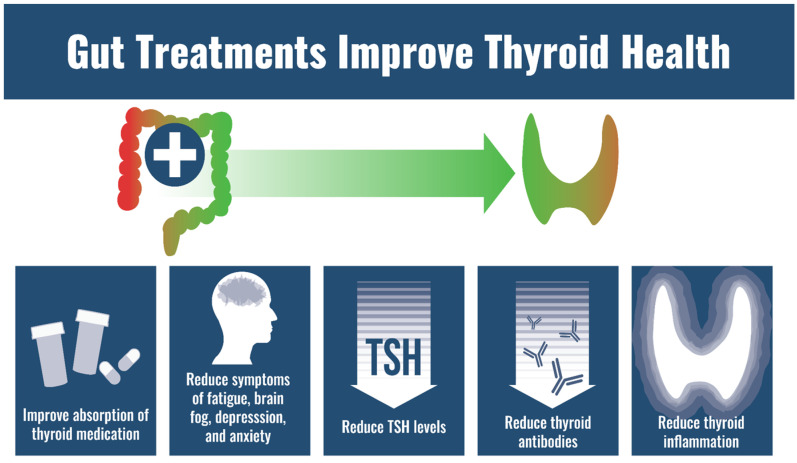
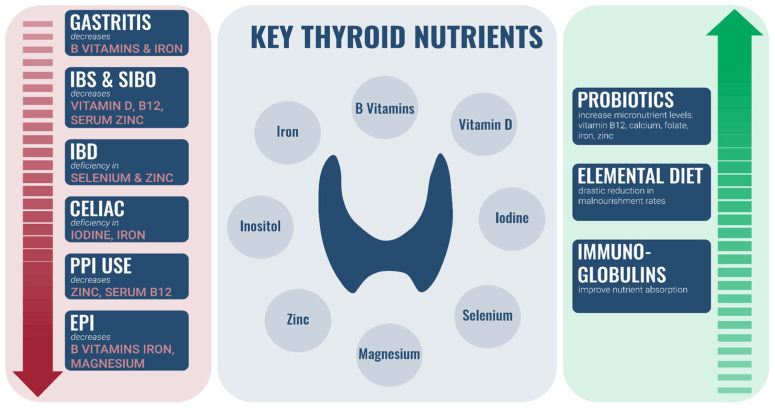
Currently, there is a lack of understanding of why many patients with thyroid dysfunction remain symptomatic despite being biochemically euthyroid. Gastrointestinal (GI) health is imperative for absorption of thyroid-specific nutrients as well as thyroid function directly. This comprehensive narrative review describes the impact of what the authors have conceptualized as the "nutrient-GI-thyroid axis". Compelling evidence reveals how gastrointestinal health could be seen as the epicenter of thyroid-related care given that: (1) GI conditions can lower thyroid-specific nutrients; (2) GI care can improve status of thyroid-specific nutrients; (3) GI conditions are at least 45 times more common than hypothyroidism; (4) GI care can resolve symptoms thought to be from thyroid dysfunction; and (5) GI health can affect thyroid autoimmunity. A new appreciation for GI health could be the missing link to better nutrient status, thyroid status, and clinical care for those with thyroid dysfunction.
目前,人们对于为什么许多甲状腺功能障碍的患者尽管生化上甲状腺功能正常,但仍有症状存在,缺乏了解。胃肠道(GI)健康对于甲状腺特异性营养素的吸收以及甲状腺功能的直接发挥至关重要。本综述全面描述了作者所提出的“营养素-GI-甲状腺轴”的影响。有说服力的证据表明,鉴于以下几点,胃肠道健康可以被视为与甲状腺相关护理的中心环节:(1)胃肠道疾病可能会降低甲状腺特异性营养素的水平;(2)胃肠道护理可以改善甲状腺特异性营养素的状态;(3)胃肠道疾病的发生频率至少比甲状腺功能减退症高 45 倍;(4)胃肠道护理可以缓解被认为与甲状腺功能障碍有关的症状;(5)胃肠道健康会影响甲状腺自身免疫。对胃肠道健康的新认识可能是改善甲状腺功能障碍患者的营养状态、甲状腺功能和临床护理的缺失环节。