Science and Technology Innovation Center, Hunan University of Chinese Medicine, Changsha 410208, China.
Institute of Chinese Materia Medica, Hunan Academy of Chinese Medicine, Changsha 410013, China.
Molecules. 2022 Aug 23;27(17):5360. doi: 10.3390/molecules27175360.
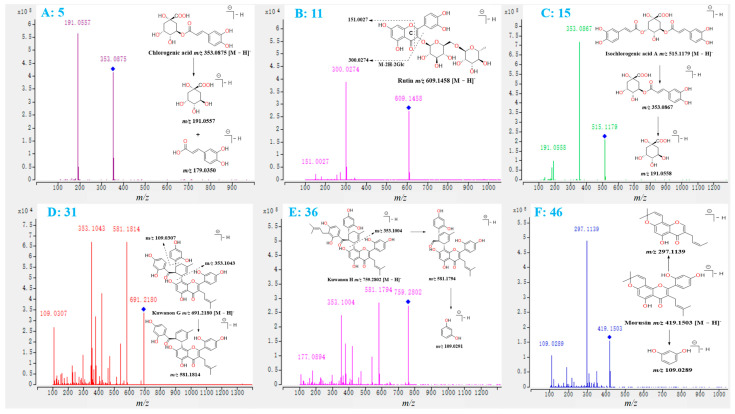
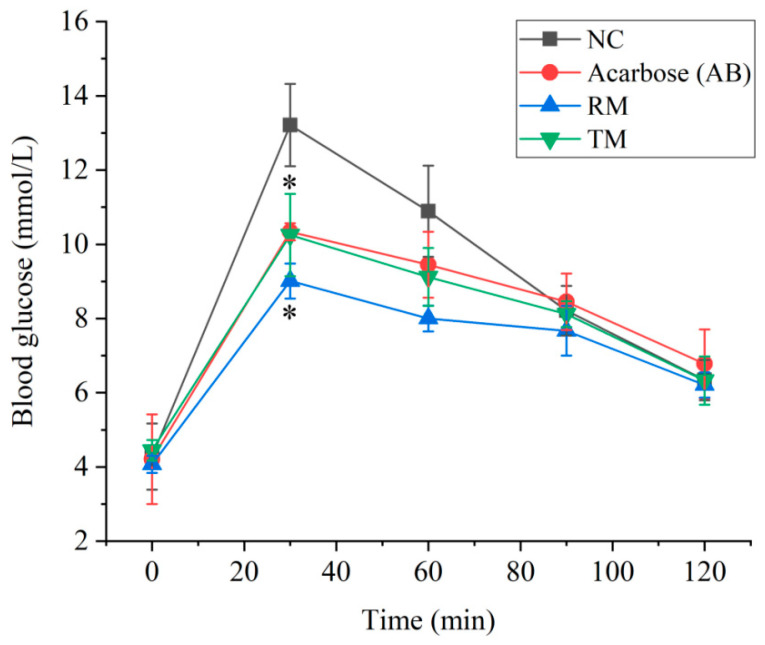
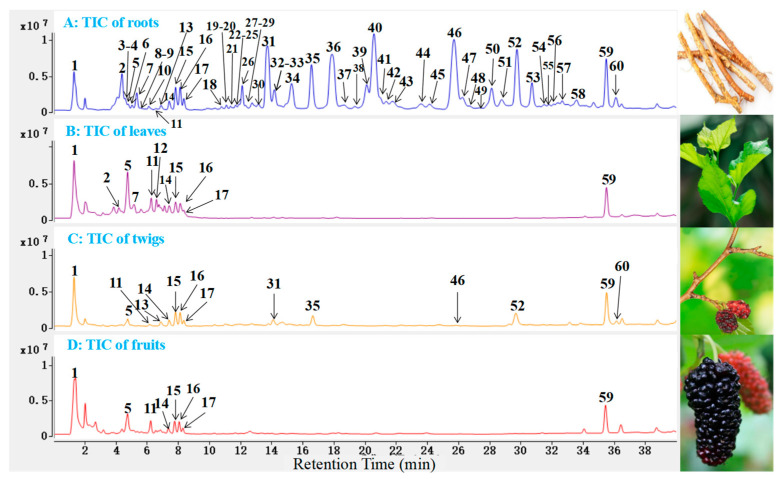
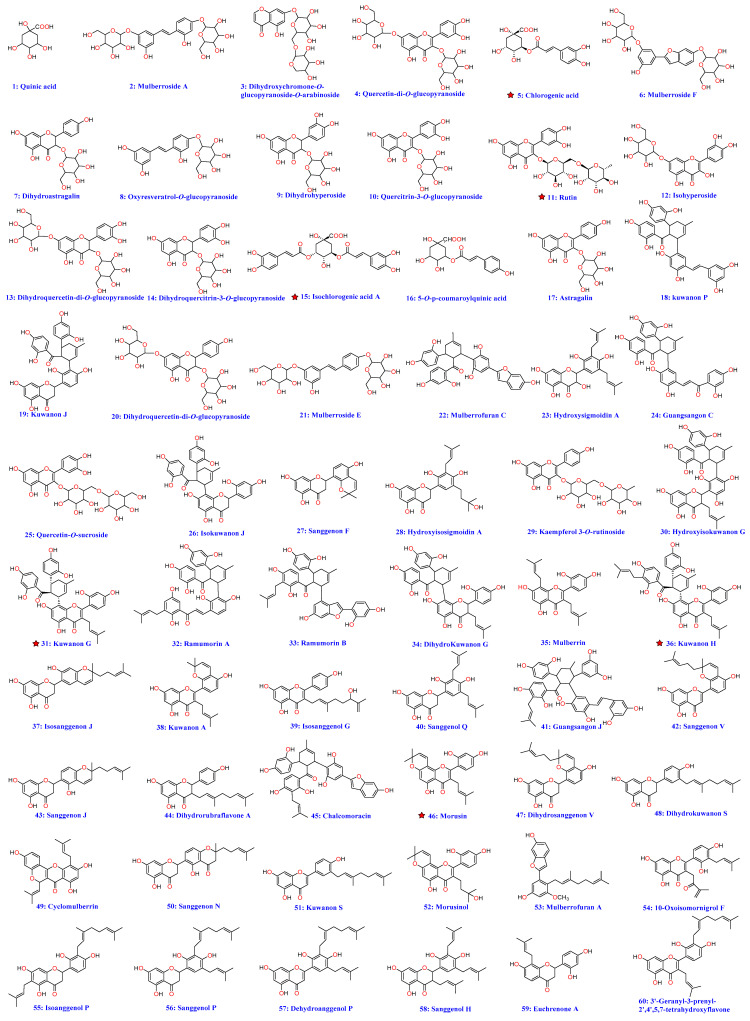
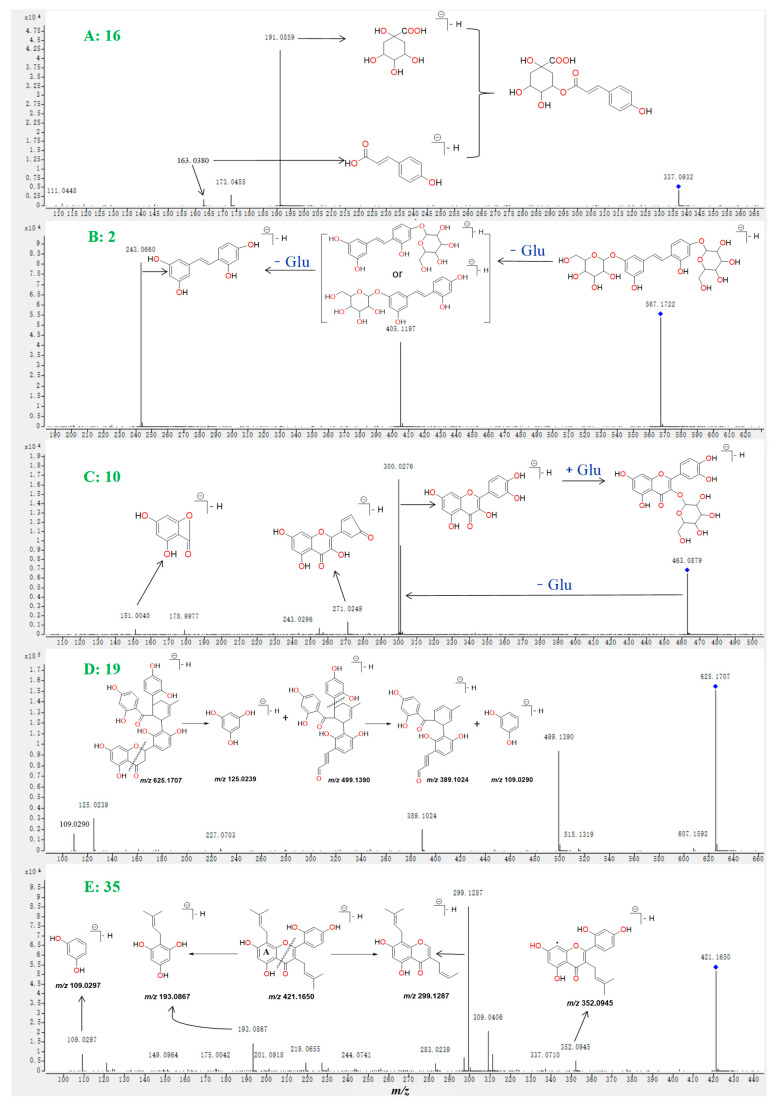
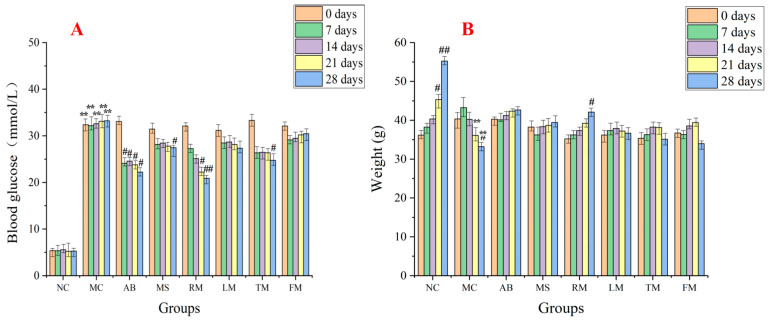
L. is used in traditional Chinese medicine for its anti-diabetic activity; however, the part of the hypoglycemic activity and related active metabolites are still not fully clarified. In this study, the metabolites in the roots, leaves, twigs, and fruits extracts (70% ethanol extracts) were systematically identified, and their hypoglycemic activity was evaluated by the high-fat diet/streptozotocin-induced 2 diabetes mellitus (T2D) mouse model. A total of 60 high-level compounds, including 16 polyphenols, 43 flavonoids, and one quinic acid, were identified by high-performance liquid chromatography/quadrupole time-of-flight mass spectrometry (HPLC-Q-TOF-MS) combined with the fragmentation pathways of standards and the self-established database. Among them, 23 metabolites were reported for the first time from this plant. In contrast to the extracts of leaves and fruits, the extracts of roots and twigs displayed significant hypoglycemic activity The glycemia was significantly reduced from 32.08 ± 1.27 to 20.88 ± 1.82 mmol/L and from 33.32 ± 1.98 to 24.74 ± 1.02 mmol/L, respectively, after 4 weeks of treatment with roots and twigs extracts. Compound (morusin), which is a high-level component identified from the extracts of roots, also displayed significant activity in decreasing the blood glucose level of T2D mice reduced from 31.45 ± 1.23 to 23.45 ± 2.13 mmol/L. In addition, the extracts of roots and twigs displayed significant activity in reducing postprandial glycemia. This work marks the first comparison of the metabolites and hypoglycemic activity of roots, leaves, twigs, and fruits extracts, and provides a foundation for further development of extracts as anti-diabetic drugs.
L. 在传统中药中用于其抗糖尿病活性;然而,降糖活性和相关的活性代谢物的部分仍未完全阐明。在这项研究中,系统地鉴定了根、叶、枝和果实提取物(70%乙醇提取物)中的代谢物,并通过高脂肪饮食/链脲佐菌素诱导的 2 型糖尿病(T2D)小鼠模型评估了它们的降血糖活性。通过高效液相色谱/四极杆飞行时间质谱(HPLC-Q-TOF-MS)结合标准的裂解途径和自建数据库,共鉴定出 60 种高水平化合物,包括 16 种多酚、43 种类黄酮和 1 种奎宁酸。其中,23 种代谢物为该植物首次报道。与叶和果实提取物相比,根和枝提取物显示出显著的降血糖活性,分别使血糖从 32.08 ± 1.27mmol/L 降至 20.88 ± 1.82mmol/L 和从 33.32 ± 1.98mmol/L 降至 24.74 ± 1.02mmol/L,连续治疗 4 周后。从根提取物中鉴定出的高水平成分化合物 (morusin) 也显著降低了 T2D 小鼠的血糖水平,从 31.45 ± 1.23mmol/L 降至 23.45 ± 2.13mmol/L。此外,根和枝提取物在降低餐后血糖方面也表现出显著的活性。这项工作标志着首次对根、叶、枝和果实提取物的代谢物和降血糖活性进行比较,为进一步开发根提取物作为抗糖尿病药物提供了基础。