Interdisciplinary Graduate Program in Neuroscience, Carver College of Medicine, University of Iowa, Iowa City, IA, United States.
Department of Neurology, Carver College of Medicine, University of Iowa, Iowa City, IA, United States.
Front Neural Circuits. 2022 Aug 23;16:983211. doi: 10.3389/fncir.2022.983211. eCollection 2022.
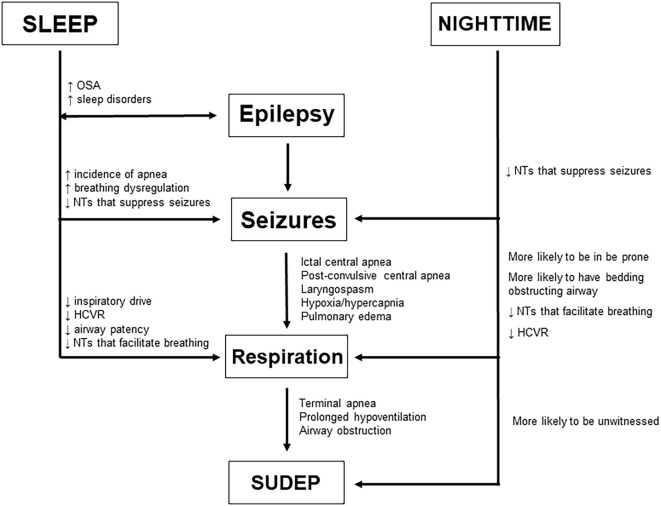
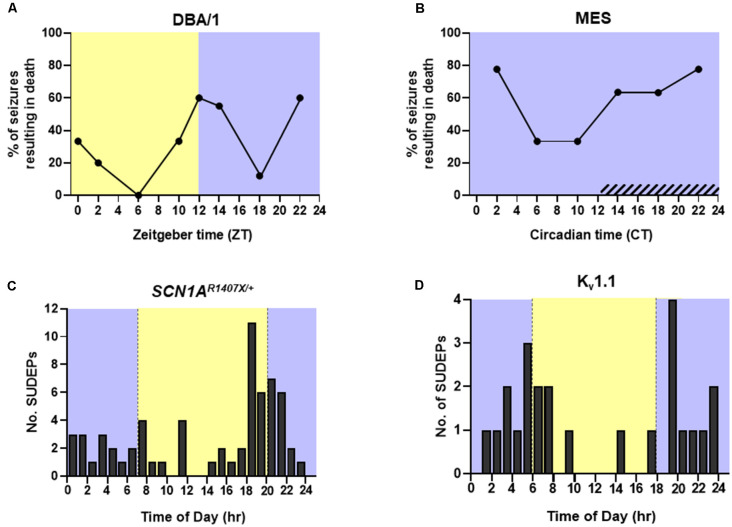
Sudden unexpected death in epilepsy (SUDEP) is the leading cause of death among patients with refractory epilepsy. While the exact etiology of SUDEP is unknown, mounting evidence implicates respiratory dysfunction as a precipitating factor in cases of seizure-induced death. Dysregulation of breathing can occur in epilepsy patients during and after seizures as well as interictally, with many epilepsy patients exhibiting sleep-disordered breathing (SDB), such as obstructive sleep apnea (OSA). The majority of SUDEP cases occur during the night, with the victim found prone in or near a bed. As breathing is modulated in both a time-of-day and sleep state-dependent manner, it is relevant to examine the added burden of nocturnal seizures on respiratory function. This review explores the current state of understanding of the relationship between respiratory function, sleep state and time of day, and epilepsy. We highlight sleep as a particularly vulnerable period for individuals with epilepsy and press that this topic warrants further investigation in order to develop therapeutic interventions to mitigate the risk of SUDEP.
癫痫猝死(SUDEP)是耐药性癫痫患者死亡的主要原因。尽管 SUDEP 的确切病因尚不清楚,但越来越多的证据表明,呼吸功能障碍是癫痫发作导致死亡的一个促成因素。癫痫患者在发作期间和发作后以及发作间期可能会出现呼吸紊乱,许多癫痫患者表现出睡眠呼吸障碍(SDB),如阻塞性睡眠呼吸暂停(OSA)。大多数 SUDEP 病例发生在夜间,受害者被发现俯卧在或靠近床边。由于呼吸在时间和睡眠状态上都受到调节,因此研究夜间发作对呼吸功能的额外影响是很重要的。这篇综述探讨了目前对呼吸功能、睡眠状态和时间与癫痫之间关系的理解。我们强调了睡眠是癫痫患者特别脆弱的时期,并认为这个问题值得进一步研究,以便开发治疗干预措施来降低 SUDEP 的风险。