Max Planck Institute for Multidisciplinary Sciences, Am Fassberg 11, Göttingen, Niedersachsen D-37077, Germany.
Cluster of Excellence "Multiscale Bioimaging: From Molecular Machines to Networks of Excitable Cells" (MBExC), University of Göttingen, Göttingen D-37075, Germany.
J Am Chem Soc. 2022 Sep 21;144(37):17041-17053. doi: 10.1021/jacs.2c06611. Epub 2022 Sep 9.
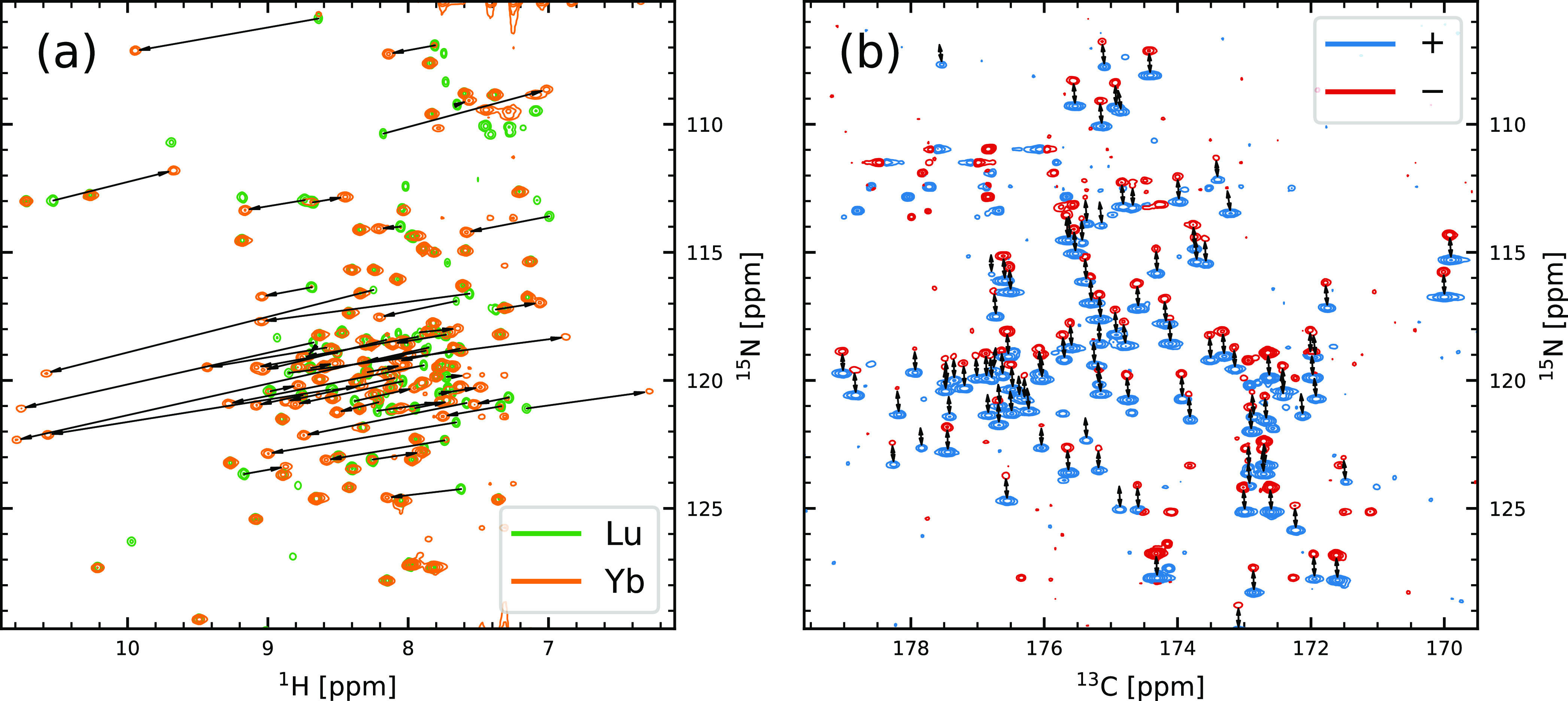
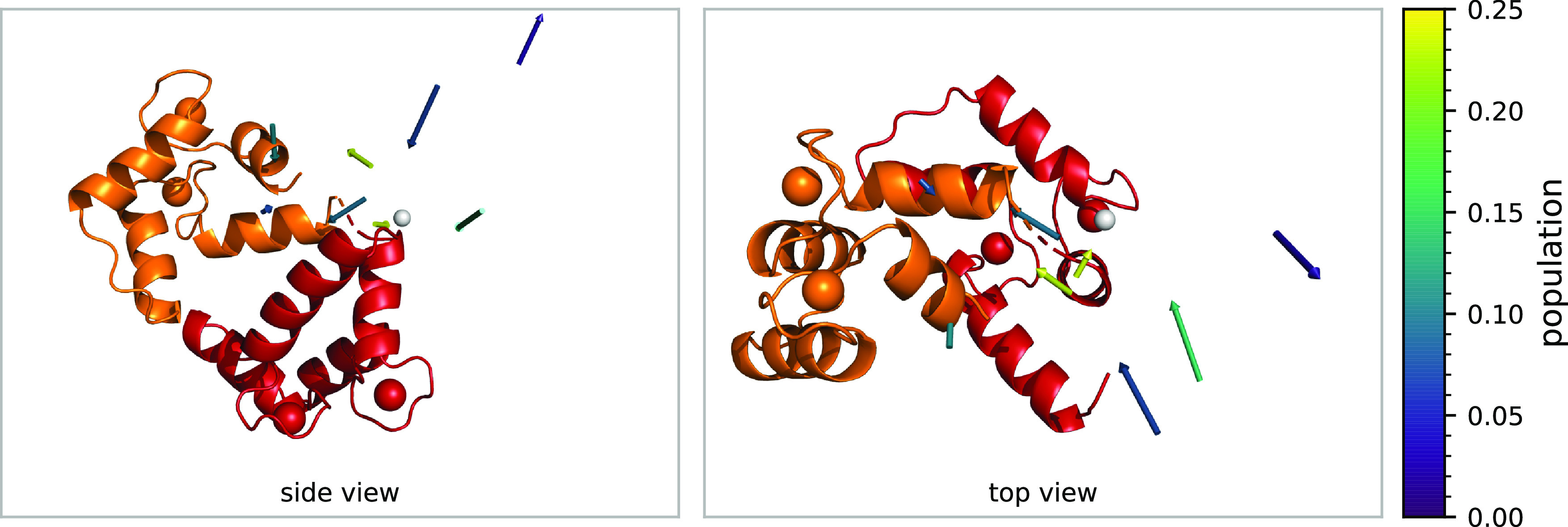
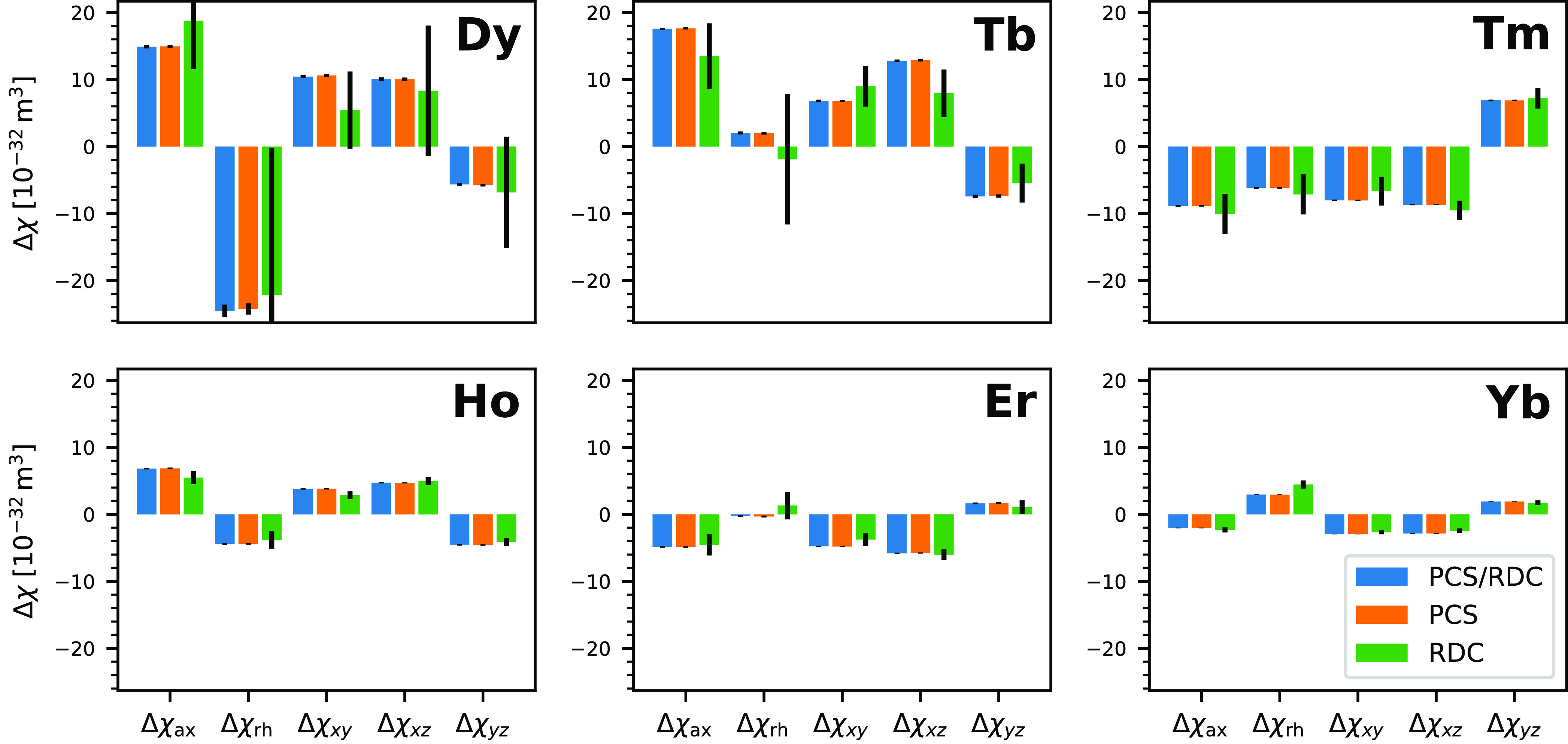
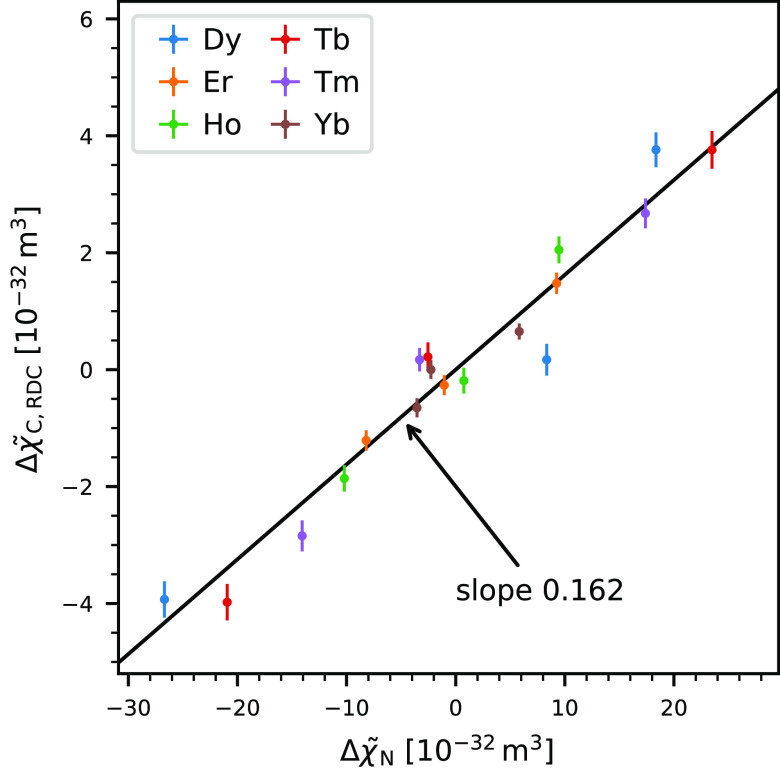
Paramagnetic NMR constraints are very useful to study protein interdomain motion, but their interpretation is not always straightforward. On the example of the particularly flexible complex Calmodulin/Munc13-1, we present a new approach to characterize this motion with pseudocontact shifts and residual dipolar couplings. Using molecular mechanics, we sampled the conformational space of the complex and used a genetic algorithm to find ensembles that are in agreement with the data. We used the Bayesian information criterion to determine the ideal ensemble size. This way, we were able to make an accurate, unambiguous, reproducible model of the interdomain motion of Calmodulin/Munc13-1 without prior knowledge about the domain orientation from crystallography.
顺磁 NMR 约束在研究蛋白质域间运动方面非常有用,但它们的解释并不总是那么直接。我们以特别灵活的钙调蛋白/Munc13-1 复合物为例,提出了一种使用赝接触位移和残差偶极耦合来描述这种运动的新方法。我们使用分子力学对复合物的构象空间进行采样,并使用遗传算法来寻找与数据一致的集合。我们使用贝叶斯信息准则来确定理想的集合大小。通过这种方式,我们能够在没有晶体学中关于结构域取向的先验知识的情况下,对钙调蛋白/Munc13-1 的结构域间运动做出准确、明确、可重复的模型。