Department of Urology, Shanghai Children's Medical Center, School of Medicine, Shanghai Jiaotong University, 1678 Dongfang Rd, Pudong District, Shanghai, 200127, China.
BMC Surg. 2022 Sep 9;22(1):334. doi: 10.1186/s12893-022-01787-6.
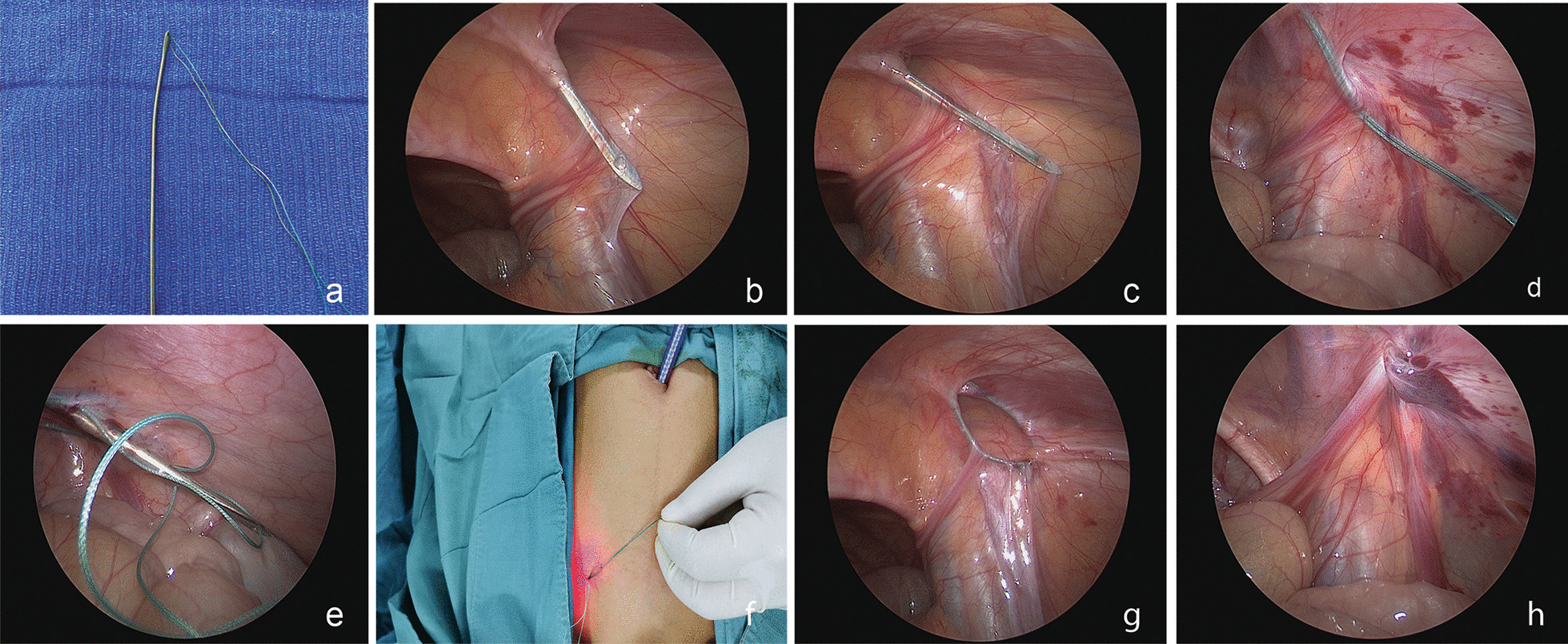
Laparoscopic-assisted repairs for pediatric inguinal hernia have gained gradual acceptance over the past decade. However, consensus about the optimal management is still lacking. The aim of this study is to compare outcomes of a modified laparoscope-assisted single-needle laparoscopic percutaneous extraperitoneal closure (LPEC) versus open repair of pediatric hernias/hydrocele in a single institution.
We retrospectively reviewed the medical data of children who underwent laparoscope-assisted single-needle LPEC and open repair (OR) for inguinal hernia from 2014 to 2019. Data collection included demographics, laterality of hernia, surgical time and time to follow-up. We also reviewed and analyzed the evidence of recurrence, the incidence of metachronous contralateral inguinal hernia (MCIH), and other complications.
In our cohort, 961 patients in the OR group and 1098 patients in the LPEC group were analyzed retrospectively. Mean operative time was significantly shorter in the LPEC group (22.3 ± 3.5 min) than in the OR group (27.8 ± 5.9 min) for bilateral hernia repair (p < 0.001). Postoperative recurrence was 1.3% (13/1035) in the OR group and 0.5% (6/1182) in the LPEC group (p = 0.056). Iatrogenic cryptorchidism occurred statistically more frequently in the OR group than in the LPEC group (0.4% vs. 0%, p = 0.013). In addition, the incidence of MCIH was 3.7% (33/887) in the OR group and 0.3% (3/1014) in the LPEC group (p < 0.01).
Comparing to open technique, laparoscope-assisted single-needle LPEC provides a simple and effective option for pediatric inguinal hernia/hydrocele repair with excellent outcomes, a low incidence of recurrence, and reduced MCIH.
腹腔镜辅助治疗小儿腹股沟疝在过去十年中逐渐得到认可。然而,对于最佳治疗方法仍缺乏共识。本研究旨在比较改良腹腔镜辅助单针经皮腹腔镜腹膜外结扎术(LPEC)与开放手术治疗小儿疝/鞘膜积液的效果。
我们回顾性分析了 2014 年至 2019 年在我院行腹腔镜辅助单针 LPEC 和开放手术(OR)治疗腹股沟疝的患儿的临床资料。收集的数据包括人口统计学、疝的侧别、手术时间和随访时间。我们还回顾并分析了复发、对侧腹股沟疝(MCIH)的发生率和其他并发症的证据。
在我们的队列中,OR 组有 961 例患者,LPEC 组有 1098 例患者。双侧疝修补术时,LPEC 组的平均手术时间明显短于 OR 组(22.3±3.5 分钟对 27.8±5.9 分钟)(p<0.001)。OR 组的术后复发率为 1.3%(13/1035),LPEC 组为 0.5%(6/1182)(p=0.056)。OR 组的医源性隐睾发生率明显高于 LPEC 组(0.4%对 0%,p=0.013)。此外,OR 组的 MCIH 发生率为 3.7%(33/887),LPEC 组为 0.3%(3/1014)(p<0.01)。
与开放技术相比,腹腔镜辅助单针 LPEC 为小儿腹股沟疝/鞘膜积液的治疗提供了一种简单有效的选择,具有良好的疗效、较低的复发率和减少的 MCIH 发生率。