Annu Int Conf IEEE Eng Med Biol Soc. 2022 Jul;2022:5000-5003. doi: 10.1109/EMBC48229.2022.9871968.
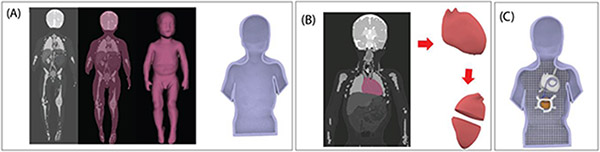
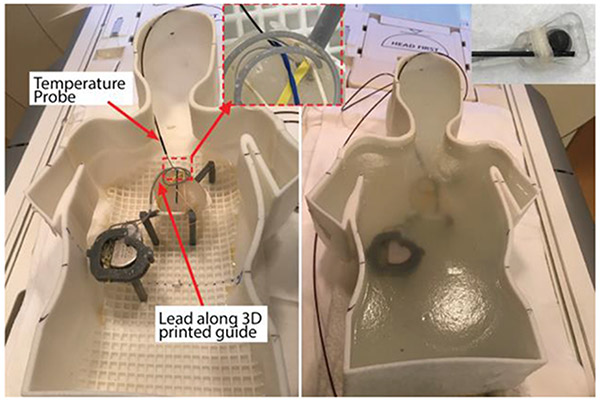
Infants and children with congenital heart defects often receive a cardiac implantable electronic device (CIED). Because transvenous access to the heart is difficult in patients with small veins, the majority of young children receive epicardial CIEDs. Unfortunately, however, once an epicardial CIED is placed, patients are no longer eligible to receive magnetic resonance imaging (MRI) exams due to the unknown risk of MRI-induced radiofrequency (RF) heating of the device. Although many studies have assessed the role of device configuration in RF heating of endocardial CIEDs in adults, such case for epicardial devices in pediatric patients is relatively unexplored. In this study, we evaluated the variation in RF heating of an epicardial lead due to changes in the lateral position and orientation of the implantable pulse generator (IPG). We found that changing the orientation and position of the IPG resulted in a five-fold variation in the RF heating at the lead's tip. Maximum heating was observed when the IPG was moved to a left lateral abdominal position of patient, and minimum heating was observed when the IPG was positioned directly under the heart. Clinical Relevance- This study examines the role of device configuration on MRI-induced RF heating of an epicardial CIED in a pediatric phantom. Results could help pediatric cardiac surgeons to modify device implantation to reduce future risks of MRI in patients.
患有先天性心脏缺陷的婴儿和儿童通常会接受心脏植入式电子设备 (CIED)。由于小静脉患者的经静脉进入心脏很困难,因此大多数幼儿都会接受心外膜 CIED。然而,不幸的是,一旦放置心外膜 CIED,由于对 MRI 诱导的设备射频 (RF) 加热的未知风险,患者就不再有资格接受磁共振成像 (MRI) 检查。尽管许多研究已经评估了设备配置在成人心内膜 CIED 的 RF 加热中的作用,但在儿科患者中心外膜设备的这种情况相对尚未得到探索。在这项研究中,我们评估了植入式脉冲发生器 (IPG) 的横向位置和方向变化对心外膜导联 RF 加热的变化。我们发现,改变 IPG 的方向和位置会导致导联尖端的 RF 加热产生五倍的变化。当 IPG 移动到患者的左侧腹部位置时,观察到最大加热,当 IPG 直接位于心脏下方时,观察到最小加热。临床意义-本研究检查了设备配置对儿科模拟患者中心外膜 CIED 的 MRI 诱导 RF 加热的作用。结果可以帮助儿科心脏外科医生修改设备植入以降低患者未来接受 MRI 的风险。