• 文献检索
  • 文档翻译
  • 深度研究
  • 学术资讯
  • Suppr Zotero 插件Zotero 插件
  • 邀请有礼
  • 套餐&价格
  • 历史记录
应用&插件
Suppr Zotero 插件Zotero 插件浏览器插件Mac 客户端Windows 客户端微信小程序
定价
高级版会员购买积分包购买API积分包
服务
文献检索文档翻译深度研究API 文档MCP 服务
关于我们
关于 Suppr公司介绍联系我们用户协议隐私条款
关注我们

Suppr 超能文献

核心技术专利:CN118964589B侵权必究
粤ICP备2023148730 号-1Suppr @ 2026

文献检索

告别复杂PubMed语法,用中文像聊天一样搜索,搜遍4000万医学文献。AI智能推荐,让科研检索更轻松。

立即免费搜索

文件翻译

保留排版,准确专业,支持PDF/Word/PPT等文件格式,支持 12+语言互译。

免费翻译文档

深度研究

AI帮你快速写综述,25分钟生成高质量综述,智能提取关键信息,辅助科研写作。

立即免费体验

改变心外膜导联的轨迹可以显著降低 1.5T 场强下患有心脏植入式电子设备的儿科患者的 MRI 诱导射频加热。

Modifying the trajectory of epicardial leads can substantially reduce MRI-induced RF heating in pediatric patients with a cardiac implantable electronic device at 1.5T.

机构信息

Department of Biomedical Engineering, McCormick School of Engineering, Northwestern University, Evanston, Illinois, USA.

Department of Radiology, Feinberg School of Medicine, Northwestern University, Chicago, Illinois, USA.

出版信息

Magn Reson Med. 2023 Dec;90(6):2510-2523. doi: 10.1002/mrm.29776. Epub 2023 Aug 1.

DOI:10.1002/mrm.29776
PMID:37526134
原文链接:https://pmc.ncbi.nlm.nih.gov/articles/PMC10863853/
Abstract

PURPOSE

After epicardial cardiac implantable electronic devices are implanted in pediatric patients, they become ineligible to receive MRI exams due to an elevated risk of RF heating. We investigated whether simple modifications in the trajectories of epicardial leads could substantially and reliably reduce RF heating during MRI at 1.5 T, with benefits extending to abandoned leads.

METHODS

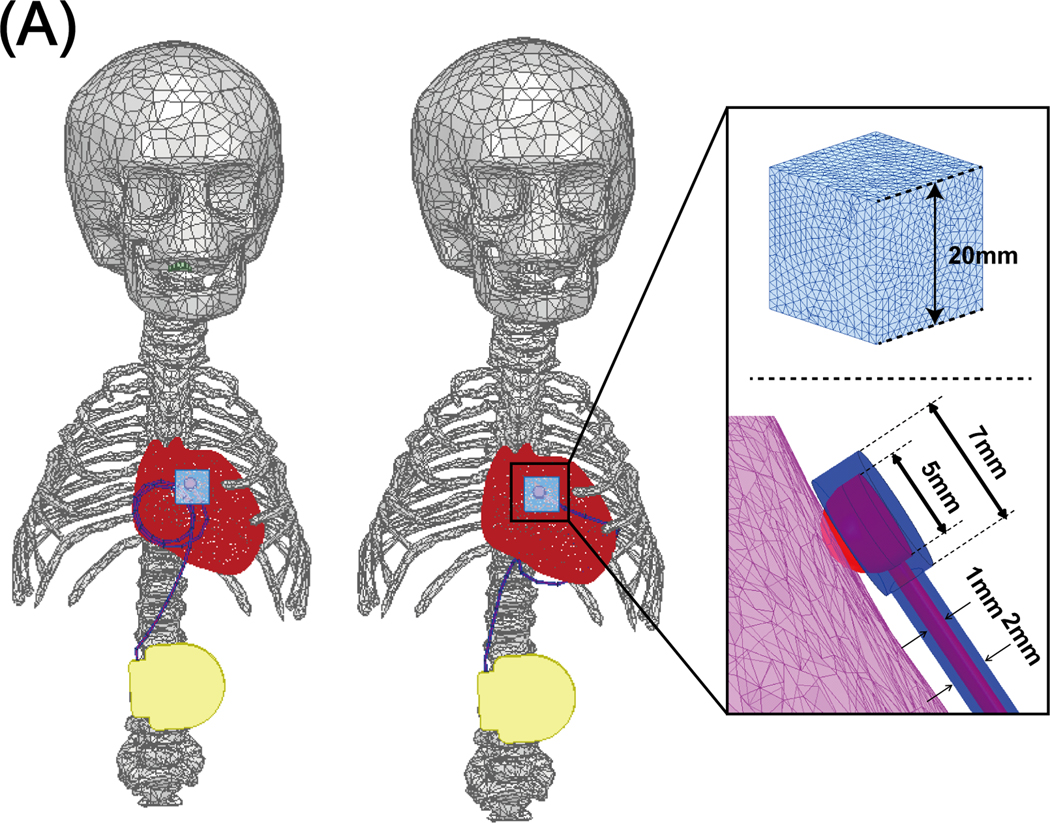
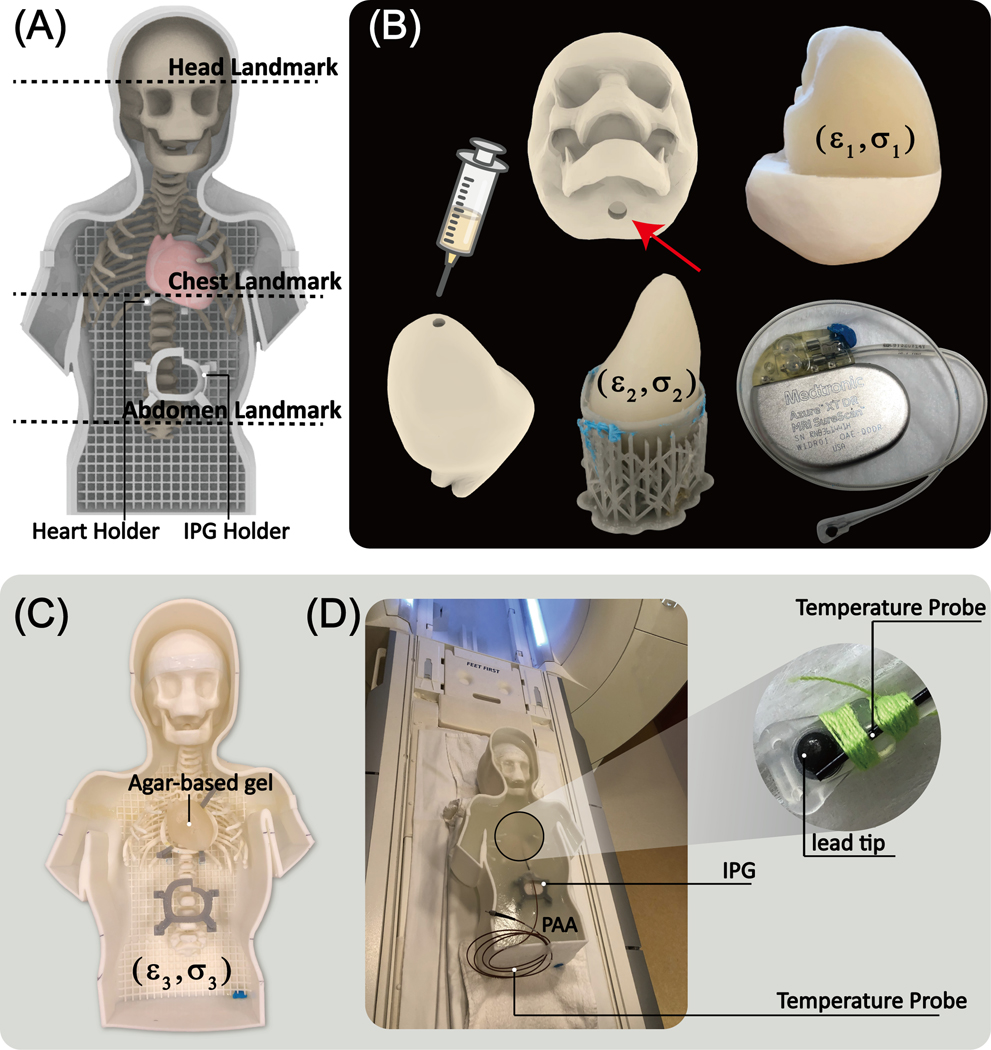
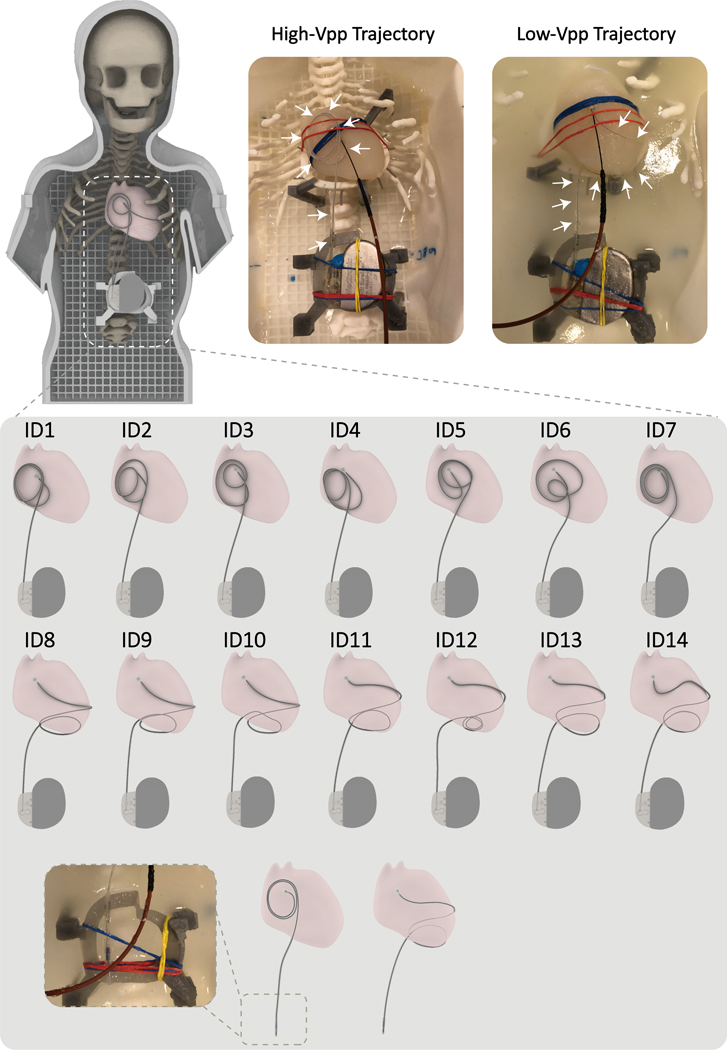
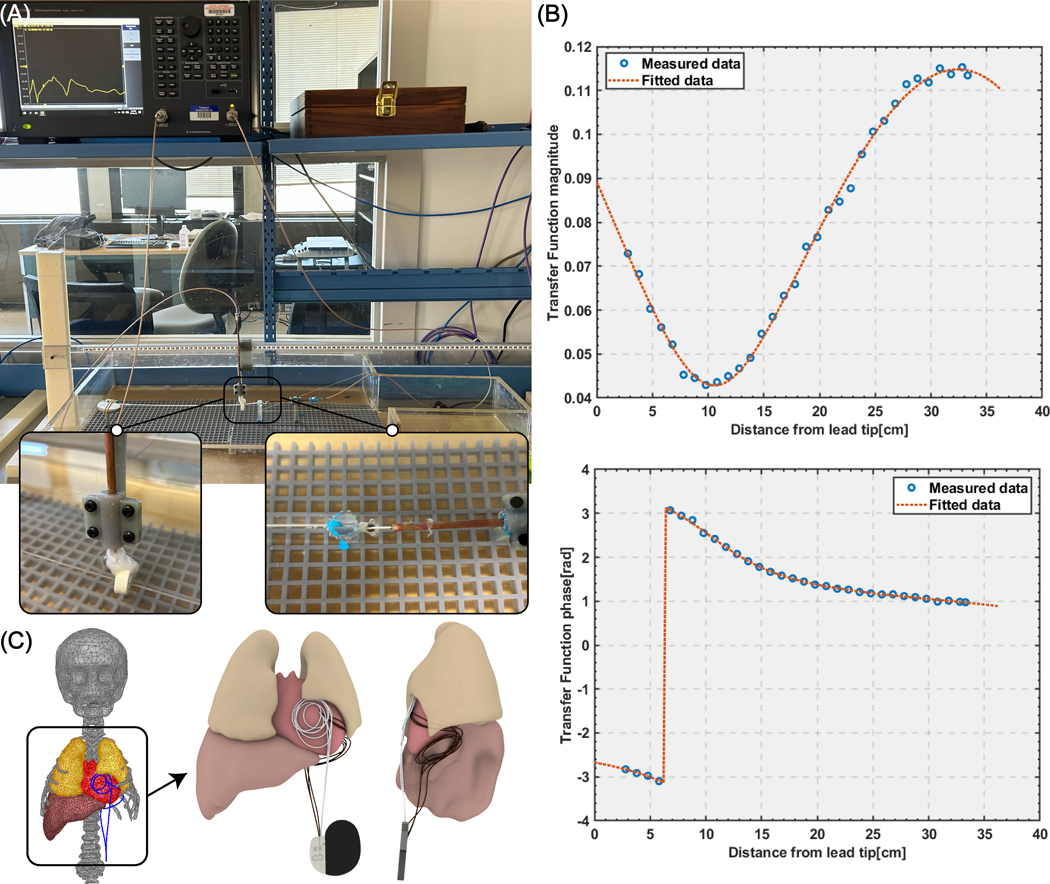
Electromagnetic simulations were performed to assess RF heating of two common 35-cm epicardial lead trajectories exhibiting different degrees of coupling with MRI incident electric fields. Experiments in anthropomorphic phantoms implanted with commercial cardiac implantable electronic devices confirmed the findings. Both electromagnetic simulations and experimental measurements were performed using head-first and feet-first positioning and various landmarks. Transfer function approach was used to assess the performance of suggested modifications in realistic body models.

RESULTS

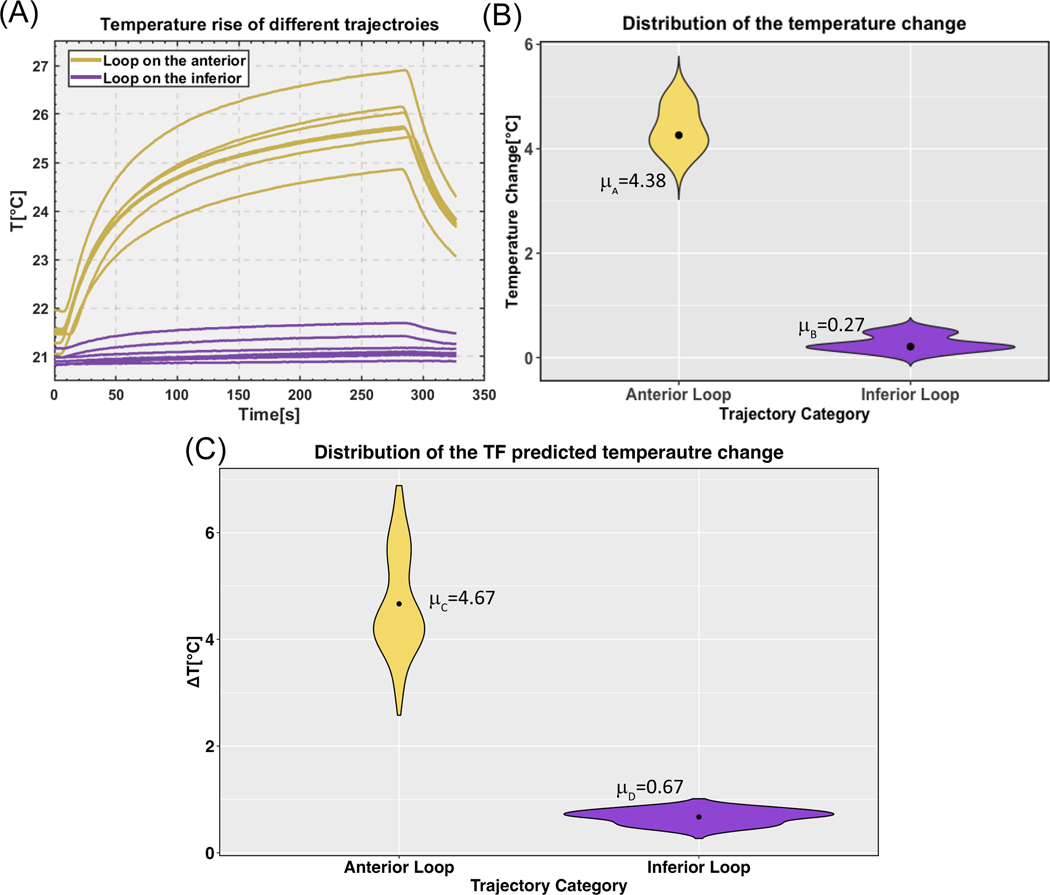
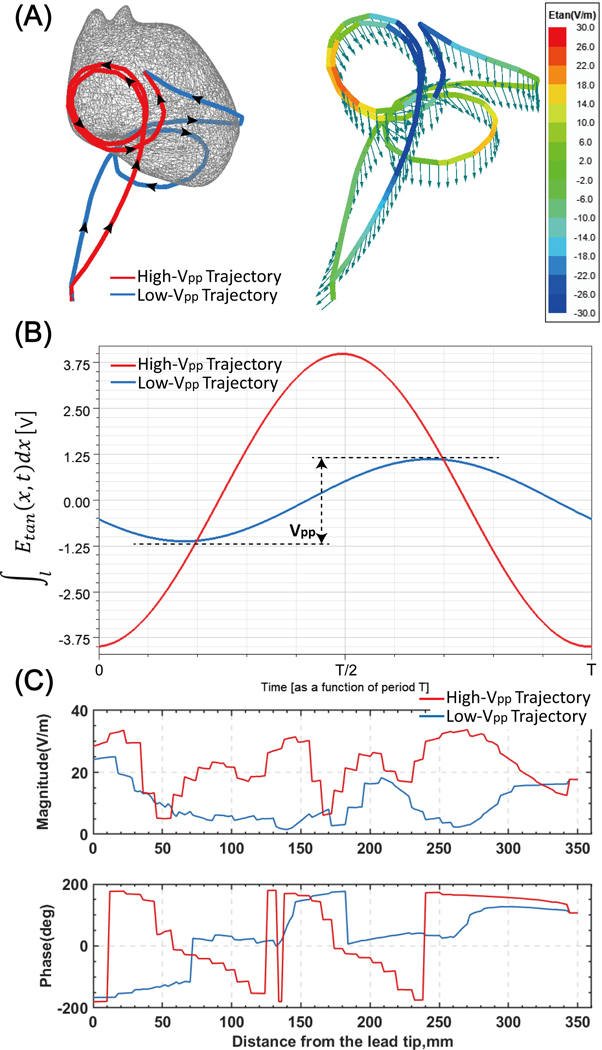
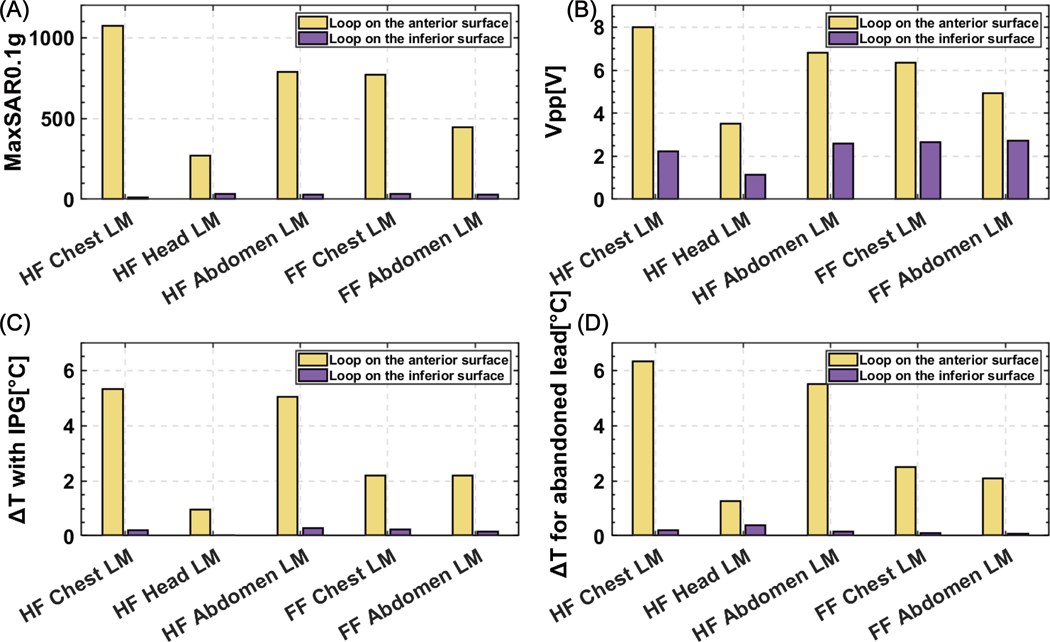
Simulations (head-first, chest landmark) of a 35-cm epicardial lead with a trajectory where the excess length of the lead was looped and placed on the inferior surface of the heart showed an 87-fold reduction in the 0.1 g-averaged specific absorption rate compared with the lead where the excess length was looped on the anterior surface. Repeated experiments with a commercial epicardial device confirmed this. For fully implanted systems following low-specific absorption rate trajectories, there was a 16-fold reduction in the average temperature rise and a 28-fold reduction for abandoned leads. The transfer function method predicted a 7-fold reduction in the RF heating in 336 realistic scenarios.

CONCLUSION

Surgical modification of epicardial lead trajectory can substantially reduce RF heating at 1.5 T, with benefits extending to abandoned leads.

摘要

目的

在儿科患者体内植入心外膜心脏植入式电子设备后,由于射频加热风险增加,他们将无法接受 1.5T MRI 检查。我们研究了在 1.5T 下,通过简单改变心外膜导联的轨迹是否可以显著且可靠地降低 MRI 期间的射频加热,并且这种方法对于废弃导联也同样适用。

方法

进行了电磁场模拟,以评估两种常见的 35cm 心外膜导联轨迹在与 MRI 入射电场不同耦合程度下的射频加热情况。在植入商业心脏植入式电子设备的人体模型中进行了实验,验证了模拟结果。电磁场模拟和实验测量均采用头高脚低位和不同的标志点进行。采用传递函数方法评估了在实际人体模型中对建议修改的性能。

结果

在头高脚低位、胸部标志点进行的 35cm 心外膜导联轨迹模拟中,将多余长度的导联绕成环并放在心脏下表面,与将多余长度的导联绕在心脏前表面的导联相比,0.1g 平均比吸收率降低了 87 倍。商业心外膜设备的重复实验证实了这一点。对于遵循低比吸收率轨迹的完全植入系统,平均温升降低了 16 倍,废弃导联降低了 28 倍。传递函数方法预测,在 336 种实际情况下,射频加热降低了 7 倍。

结论

通过手术改变心外膜导联轨迹可以显著降低 1.5T 下的射频加热,并且这种方法对于废弃导联也同样适用。
https://cdn.ncbi.nlm.nih.gov/pmc/blobs/a72b/10863853/08db72015604/nihms-1907321-f0010.jpg
https://cdn.ncbi.nlm.nih.gov/pmc/blobs/a72b/10863853/d79b4a8f0b4f/nihms-1907321-f0001.jpg
https://cdn.ncbi.nlm.nih.gov/pmc/blobs/a72b/10863853/29ef2195b8f6/nihms-1907321-f0002.jpg
https://cdn.ncbi.nlm.nih.gov/pmc/blobs/a72b/10863853/358ef233fa6f/nihms-1907321-f0003.jpg
https://cdn.ncbi.nlm.nih.gov/pmc/blobs/a72b/10863853/964ca008d87d/nihms-1907321-f0004.jpg
https://cdn.ncbi.nlm.nih.gov/pmc/blobs/a72b/10863853/17eb8664b9e5/nihms-1907321-f0005.jpg
https://cdn.ncbi.nlm.nih.gov/pmc/blobs/a72b/10863853/6d7574d5a46a/nihms-1907321-f0006.jpg
https://cdn.ncbi.nlm.nih.gov/pmc/blobs/a72b/10863853/85ff27218077/nihms-1907321-f0007.jpg
https://cdn.ncbi.nlm.nih.gov/pmc/blobs/a72b/10863853/679eb506f401/nihms-1907321-f0008.jpg
https://cdn.ncbi.nlm.nih.gov/pmc/blobs/a72b/10863853/6ca977227015/nihms-1907321-f0009.jpg
https://cdn.ncbi.nlm.nih.gov/pmc/blobs/a72b/10863853/08db72015604/nihms-1907321-f0010.jpg
https://cdn.ncbi.nlm.nih.gov/pmc/blobs/a72b/10863853/d79b4a8f0b4f/nihms-1907321-f0001.jpg
https://cdn.ncbi.nlm.nih.gov/pmc/blobs/a72b/10863853/29ef2195b8f6/nihms-1907321-f0002.jpg
https://cdn.ncbi.nlm.nih.gov/pmc/blobs/a72b/10863853/358ef233fa6f/nihms-1907321-f0003.jpg
https://cdn.ncbi.nlm.nih.gov/pmc/blobs/a72b/10863853/964ca008d87d/nihms-1907321-f0004.jpg
https://cdn.ncbi.nlm.nih.gov/pmc/blobs/a72b/10863853/17eb8664b9e5/nihms-1907321-f0005.jpg
https://cdn.ncbi.nlm.nih.gov/pmc/blobs/a72b/10863853/6d7574d5a46a/nihms-1907321-f0006.jpg
https://cdn.ncbi.nlm.nih.gov/pmc/blobs/a72b/10863853/85ff27218077/nihms-1907321-f0007.jpg
https://cdn.ncbi.nlm.nih.gov/pmc/blobs/a72b/10863853/679eb506f401/nihms-1907321-f0008.jpg
https://cdn.ncbi.nlm.nih.gov/pmc/blobs/a72b/10863853/6ca977227015/nihms-1907321-f0009.jpg
https://cdn.ncbi.nlm.nih.gov/pmc/blobs/a72b/10863853/08db72015604/nihms-1907321-f0010.jpg

相似文献

1
Modifying the trajectory of epicardial leads can substantially reduce MRI-induced RF heating in pediatric patients with a cardiac implantable electronic device at 1.5T.改变心外膜导联的轨迹可以显著降低 1.5T 场强下患有心脏植入式电子设备的儿科患者的 MRI 诱导射频加热。
Magn Reson Med. 2023 Dec;90(6):2510-2523. doi: 10.1002/mrm.29776. Epub 2023 Aug 1.
2
Effect of surgical modification of deep brain stimulation lead trajectories on radiofrequency heating during MRI at 3T: from phantom experiments to clinical implementation.手术修正深部脑刺激导联轨迹对 3T MRI 时射频加热的影响:从体模实验到临床实施。
J Neurosurg. 2023 Nov 10;140(5):1459-1470. doi: 10.3171/2023.8.JNS23580. Print 2024 May 1.
3
RF-induced heating of capped and uncapped abandoned epicardial leads during MRI at 1.5 T and 3 T.在 1.5T 和 3T 磁共振成像时,带帽和未带帽废弃心外膜导线的射频感应加热。
Annu Int Conf IEEE Eng Med Biol Soc. 2023 Jul;2023:1-5. doi: 10.1109/EMBC40787.2023.10340533.
4
The Position and Orientation of the Pulse Generator Affects MRI RF Heating of Epicardial Leads in Children.脉冲发生器的位置和方向会影响儿童心外膜导联的 MRI 射频加热。
Annu Int Conf IEEE Eng Med Biol Soc. 2022 Jul;2022:5000-5003. doi: 10.1109/EMBC48229.2022.9871968.
5
RF-induced heating for active implantable medical devices in dual parallel leads configurations at 1.5 T MRI.1.5T MRI 下双平行导联配置中主动植入式医疗器械的射频感应加热。
Magn Reson Med. 2023 Aug;90(2):686-698. doi: 10.1002/mrm.29650. Epub 2023 Apr 10.
6
RF-induced heating in tissue near bilateral DBS implants during MRI at 1.5 T and 3T: The role of surgical lead management.在 1.5T 和 3T MRI 中双侧 DBS 植入物附近组织的 RF 感应加热:手术导管理的作用。
Neuroimage. 2019 Jan 1;184:566-576. doi: 10.1016/j.neuroimage.2018.09.034. Epub 2018 Sep 19.
7
A comparative study of RF heating of deep brain stimulation devices in vertical vs. horizontal MRI systems.垂直与水平 MRI 系统中射频加热深部脑刺激器的对比研究。
PLoS One. 2022 Dec 9;17(12):e0278187. doi: 10.1371/journal.pone.0278187. eCollection 2022.
8
Changes in the specific absorption rate (SAR) of radiofrequency energy in patients with retained cardiac leads during MRI at 1.5T and 3T.1.5T 和 3T 磁共振成像时带心脏留置导线患者射频能量比吸收率(SAR)的变化。
Magn Reson Med. 2019 Jan;81(1):653-669. doi: 10.1002/mrm.27350. Epub 2018 Jun 12.
9
Application of Machine learning to predict RF heating of cardiac leads during magnetic resonance imaging at 1.5 T and 3 T: A simulation study.机器学习在 1.5T 和 3T 磁共振成像中心脏导联射频加热预测中的应用:一项模拟研究。
J Magn Reson. 2023 Apr;349:107384. doi: 10.1016/j.jmr.2023.107384. Epub 2023 Jan 26.
10
A technique for the reduction of RF-induced heating of active implantable medical devices during MRI.一种降低 MRI 期间有源植入式医疗器械中射频致热的技术。
Magn Reson Med. 2022 Jan;87(1):349-364. doi: 10.1002/mrm.28953. Epub 2021 Aug 10.

引用本文的文献

1
Comparative study of radiofrequency heating in deep brain stimulation devices during MRI at 1.5 T and 0.55 T: Challenging the assumption of safety at low field strengths.1.5T和0.55T磁共振成像期间深部脑刺激装置中射频加热的比较研究:质疑低场强安全性的假设
Magn Reson Med. 2025 Aug;94(2):785-796. doi: 10.1002/mrm.30515. Epub 2025 Apr 28.
2
Modeling and measurement of lead tip heating in implanted wires with loops.带环植入导线中尖端加热的建模与测量
Phys Med Biol. 2025 Apr 22;70(9):095002. doi: 10.1088/1361-6560/adcc73.
3
Modeling and Measurement of Lead Tip Heating in Implanted Wires with Loops.

本文引用的文献

1
A comparative study of MRI-induced RF heating in pediatric and adult populations with epicardial and endocardial implantable electronic devices.MRI 诱导的心脏外膜和心内膜植入式电子设备在儿科和成年人群中射频加热的对比研究。
Annu Int Conf IEEE Eng Med Biol Soc. 2022 Jul;2022:4014-4017. doi: 10.1109/EMBC48229.2022.9871087.
2
Machine learning-based prediction of MRI-induced power absorption in the tissue in patients with simplified deep brain stimulation lead models.基于机器学习对简化深部脑刺激电极模型患者组织中磁共振成像诱导的功率吸收进行预测。
IEEE Trans Electromagn Compat. 2021 Oct;63(5):1757-1766. doi: 10.1109/temc.2021.3106872. Epub 2021 Sep 30.
3
带环植入导线中尖端加热的建模与测量
ArXiv. 2024 Dec 19:arXiv:2412.15120v1.
On the accuracy of Tier 4 simulations to predict RF heating of wire implants during magnetic resonance imaging at 1.5 T.
在 1.5T 磁共振成像中,预测线植入物射频加热的 Tier 4 模拟的准确性。
Annu Int Conf IEEE Eng Med Biol Soc. 2021 Nov;2021:4982-4985. doi: 10.1109/EMBC46164.2021.9630220.
4
Modifying surgical implantation of deep brain stimulation leads significantly reduces RF-induced heating during 3 T MRI.修改深部脑刺激的手术植入方法可显著降低 3T MRI 时射频诱导的加热。
Annu Int Conf IEEE Eng Med Biol Soc. 2021 Nov;2021:4978-4981. doi: 10.1109/EMBC46164.2021.9629553.
5
Vertical open-bore MRI scanners generate significantly less radiofrequency heating around implanted leads: A study of deep brain stimulation implants in 1.2T OASIS scanners versus 1.5T horizontal systems.垂直开放式磁共振成像扫描仪在植入导线周围产生的射频加热明显更少:一项针对1.2T OASIS扫描仪与1.5T水平系统中脑深部刺激植入物的研究。
Magn Reson Med. 2021 Sep;86(3):1560-1572. doi: 10.1002/mrm.28818. Epub 2021 May 7.
6
A combined computational and experimental approach to assess the transfer function of real pacemaker leads for MR radiofrequency-induced heating.采用计算与实验相结合的方法评估实际起搏器导线在磁共振射频加热下的传递函数。
MAGMA. 2021 Aug;34(4):619-630. doi: 10.1007/s10334-021-00909-0. Epub 2021 Feb 8.
7
Development, validation, and pilot MRI safety study of a high-resolution, open source, whole body pediatric numerical simulation model.开发、验证和初步 MRI 安全性研究:高分辨率、开源、全身儿科数值模拟模型。
PLoS One. 2021 Jan 13;16(1):e0241682. doi: 10.1371/journal.pone.0241682. eCollection 2021.
8
Effect of Device Configuration and Patient's Body Composition on the RF Heating and Nonsusceptibility Artifact of Deep Brain Stimulation Implants During MRI at 1.5T and 3T.设备配置和患者身体成分对1.5T和3T磁共振成像期间深部脑刺激植入物的射频加热及非敏感性伪影的影响
J Magn Reson Imaging. 2021 Feb;53(2):599-610. doi: 10.1002/jmri.27346. Epub 2020 Aug 28.
9
Magnetic resonance imaging of patients with epicardial leads: in vitro evaluation of temperature changes at the lead tip.心外膜导联患者的磁共振成像:导联尖端温度变化的体外评估
J Interv Card Electrophysiol. 2019 Dec;56(3):321-326. doi: 10.1007/s10840-019-00627-7. Epub 2019 Nov 12.
10
RF heating of deep brain stimulation implants in open-bore vertical MRI systems: A simulation study with realistic device configurations.开式磁体垂直 MRI 系统中深部脑刺激植入物的射频加热:采用真实设备构型的模拟研究。
Magn Reson Med. 2020 Jun;83(6):2284-2292. doi: 10.1002/mrm.28049. Epub 2019 Nov 2.