The Rowett Institute, University of Aberdeen, Foresterhill Road, Aberdeen AB25 2ZD, UK.
Biomathematics & Statistics Scotland, Foresterhill Road, Aberdeen AB25 2ZD, UK.
Cell Metab. 2022 Oct 4;34(10):1472-1485.e6. doi: 10.1016/j.cmet.2022.08.001. Epub 2022 Sep 9.
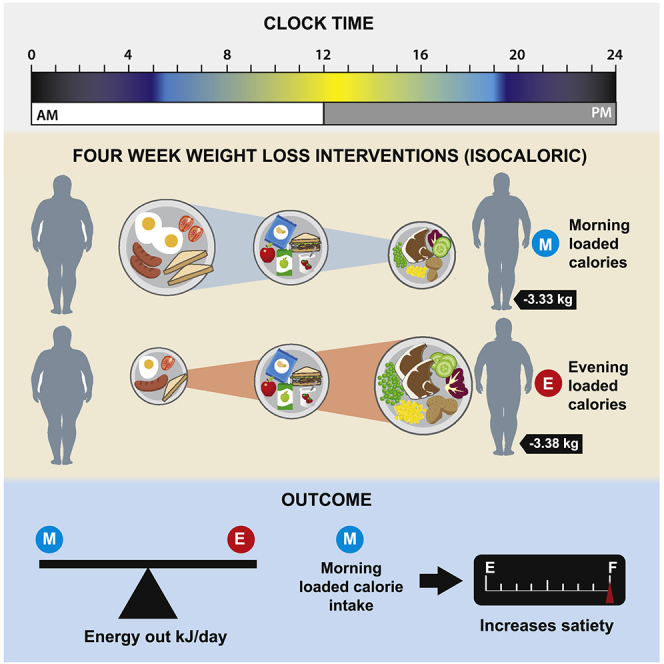
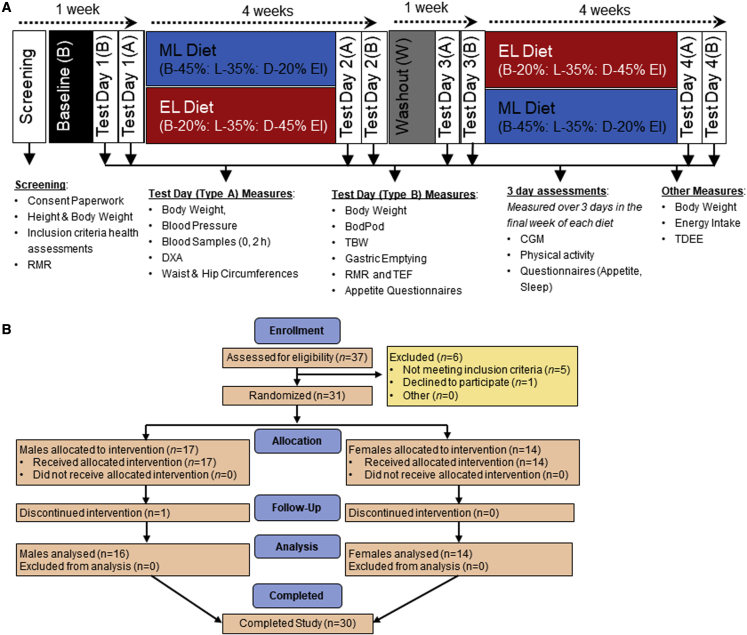
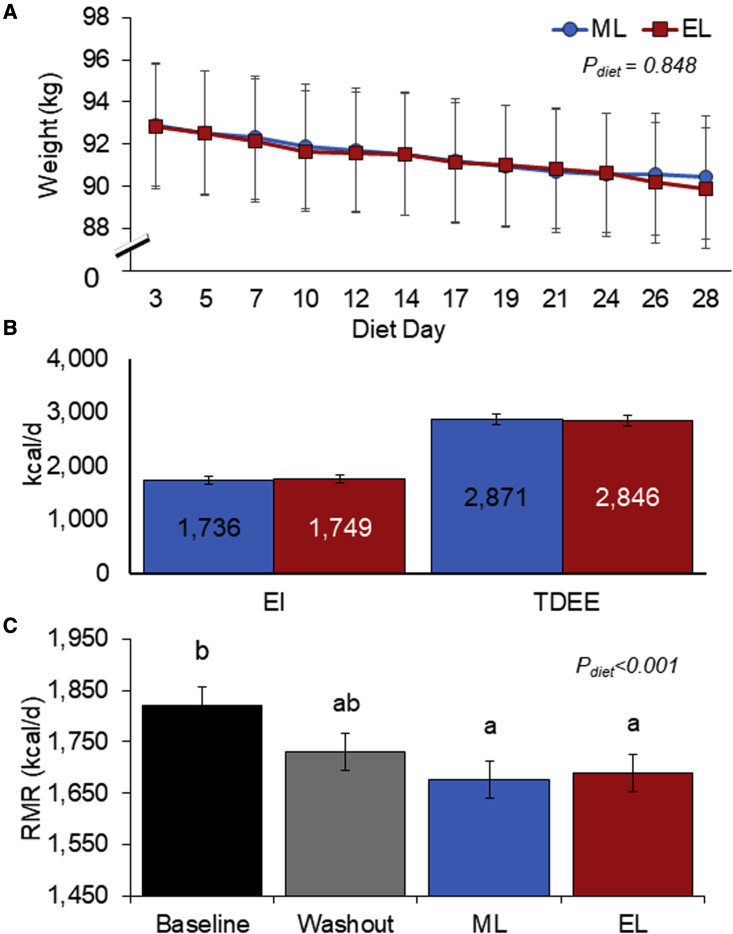
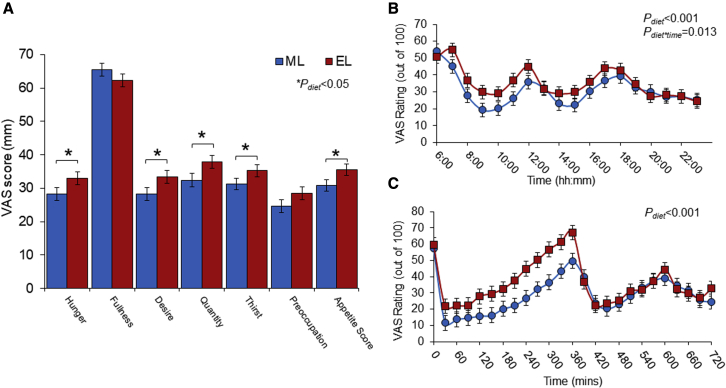
Morning loaded calorie intake in humans has been advocated as a dietary strategy to improve weight loss. This is also supported by animal studies suggesting time of eating can prevent weight gain. However, the underlying mechanisms through which timing of eating could promote weight loss in humans are unclear. In a randomized crossover trial (NCT03305237), 30 subjects with obesity/overweight underwent two 4-week calorie-restricted but isoenergetic weight loss diets, with morning loaded or evening loaded calories (45%:35%:20% versus 20%:35%:45% calories at breakfast, lunch, and dinner, respectively). We demonstrate no differences in total daily energy expenditure or resting metabolic rate related to the timing of calorie distribution, and no difference in weight loss. Participants consuming the morning loaded diet reported significantly lower hunger. Thus, morning loaded intake (big breakfast) may assist with compliance to weight loss regime through a greater suppression of appetite.
早上摄入高热量已被提倡为改善减肥效果的饮食策略。动物研究也支持这一观点,即进食时间可以预防体重增加。然而,目前尚不清楚进食时间如何促进人类减肥的潜在机制。在一项随机交叉试验(NCT03305237)中,30 名肥胖/超重受试者接受了两种为期 4 周的热量限制但能量相等的减肥饮食,分别为早上高负荷或晚上高负荷热量摄入(早餐、午餐和晚餐分别为 45%:35%:20%和 20%:35%:45%的热量)。我们没有发现与热量分配时间相关的总日能量消耗或静息代谢率的差异,也没有体重减轻的差异。摄入高负荷早餐的参与者报告饥饿感明显降低。因此,高负荷早餐(丰盛早餐)可能通过更大程度地抑制食欲来帮助遵守减肥计划。