Oxford Cancer Centre for Immuno-Oncology, Nuffield Department of Medicine, University of Oxford, Oxford, United Kingdom; The Jenner Institute, University of Oxford, Oxford, United Kingdom.
Oxford Institute of Radiation Oncology, Department of Oncology, University of Oxford, Oxford, United Kingdom.
Mol Cell Proteomics. 2022 Nov;21(11):100410. doi: 10.1016/j.mcpro.2022.100410. Epub 2022 Sep 9.
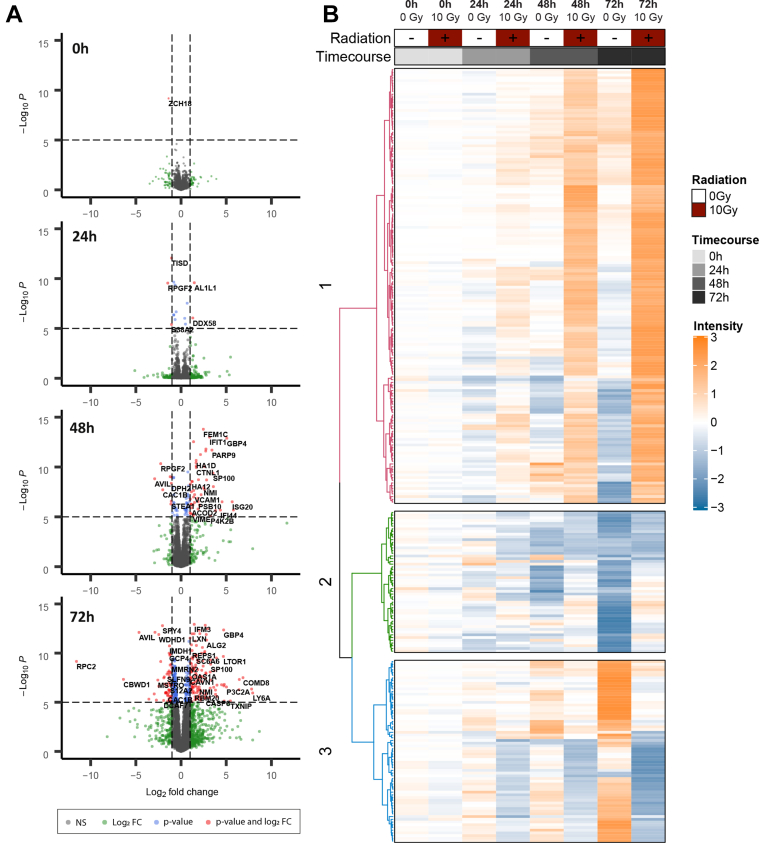
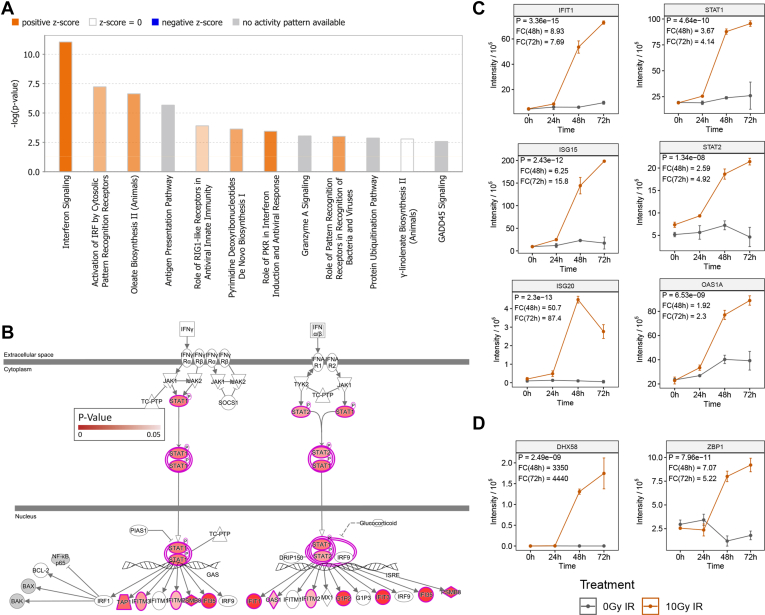
Little is known about the pathways regulating MHC antigen presentation and the identity of treatment-specific T cell antigens induced by ionizing radiation. For this reason, we investigated the radiation-specific changes in the colorectal tumor cell proteome. We found an increase in DDX58 and ZBP1 protein expression, two nucleic acid sensing molecules likely involved in induction of the dominant interferon response signature observed after genotoxic insult. We further observed treatment-induced changes in key regulators and effector proteins of the antigen processing and presentation machinery. Differential regulation of MHC allele expression was further driving the presentation of a significantly broader MHC-associated peptidome postirradiation, defining a radiation-specific peptide repertoire. Interestingly, treatment-induced peptides originated predominantly from proteins involved in catecholamine synthesis and metabolic pathways. A nuanced relationship between protein expression and antigen presentation was observed where radiation-induced changes in proteins do not correlate with increased presentation of associated peptides. Finally, we detected an increase in the presentation of a tumor-specific neoantigen derived from Mtch1. This study provides new insights into how radiation enhances antigen processing and presentation that could be suitable for the development of combinatorial therapies. Data are available via ProteomeXchange with identifier PXD032003.
关于调节 MHC 抗原呈递的途径以及电离辐射诱导的治疗特异性 T 细胞抗原的特性,目前知之甚少。基于此,我们研究了结直肠肿瘤细胞蛋白质组在辐射下的特异性变化。我们发现,在受到遗传毒性损伤后观察到的优势干扰素反应特征诱导中,两种可能参与核酸感应的分子 DDX58 和 ZBP1 的蛋白表达增加。我们进一步观察到抗原加工和呈递机制的关键调节剂和效应蛋白的治疗诱导变化。MHC 等位基因表达的差异调节进一步驱动了辐射后 MHC 相关肽组的广泛呈递,定义了一个辐射特异性的肽库。有趣的是,治疗诱导的肽主要来源于儿茶酚胺合成和代谢途径中涉及的蛋白质。我们观察到蛋白表达和抗原呈递之间存在细微的关系,其中与相关肽呈递增加不相关的是蛋白的辐射诱导变化。最后,我们检测到源自 Mtch1 的肿瘤特异性新抗原的呈递增加。这项研究提供了有关辐射如何增强抗原处理和呈递的新见解,这可能适合开发组合疗法。数据可通过 ProteomeXchange 获取,标识符为 PXD032003。