Program in Plant Ecology and Evolution, Department of Ecology and Genetics, Evolutionary Biology Centre, Uppsala University, Norbyvägen 18D, 752 36, Uppsala, Sweden.
Department of Clinical Sciences, Lund University Diabetes Centre, 214 28, Malmö, Sweden.
New Phytol. 2022 Dec;236(6):2344-2357. doi: 10.1111/nph.18477. Epub 2022 Sep 30.
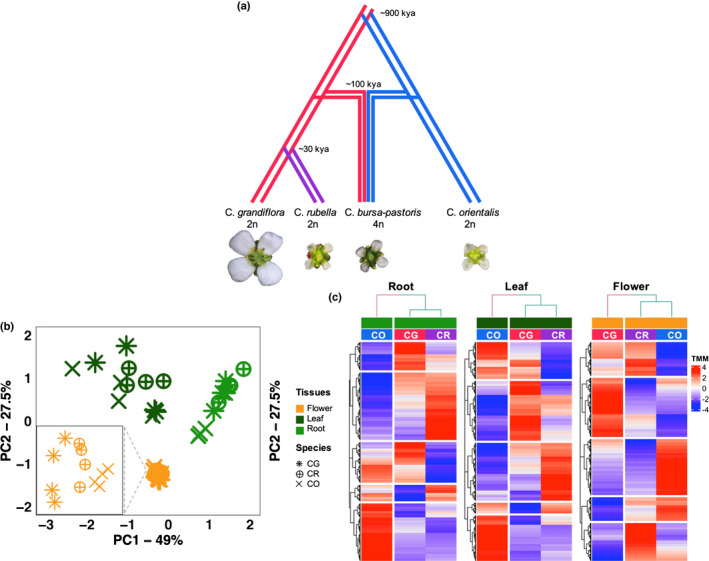
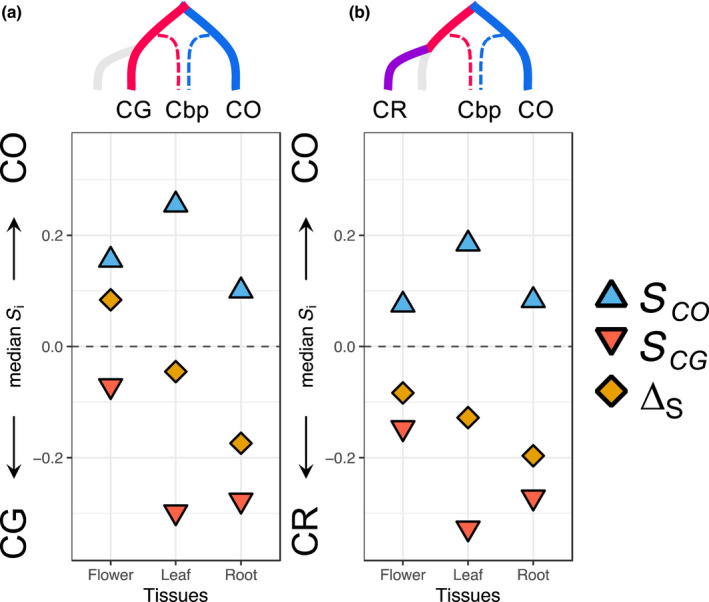
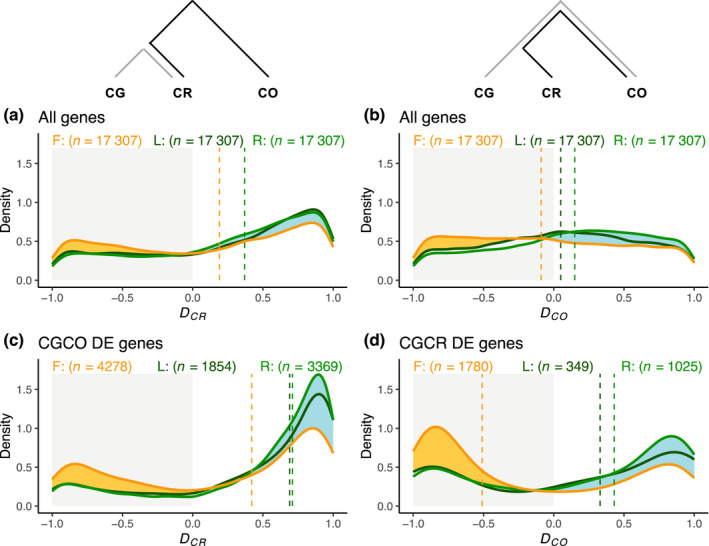
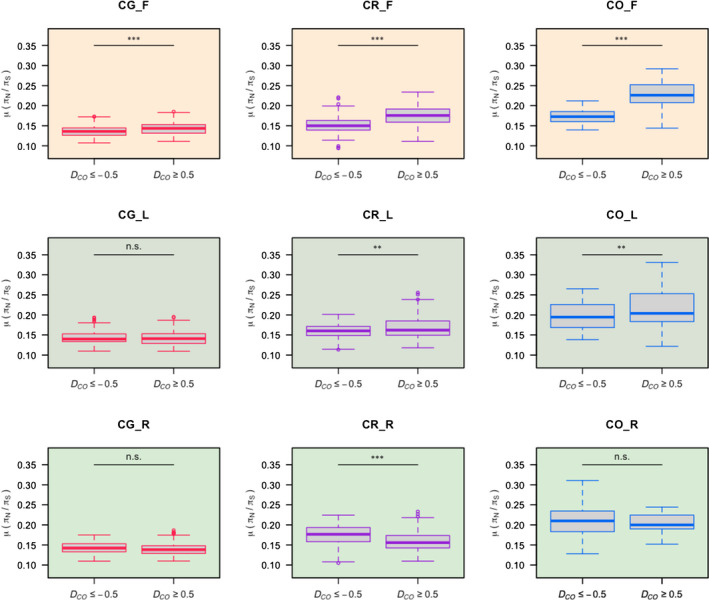
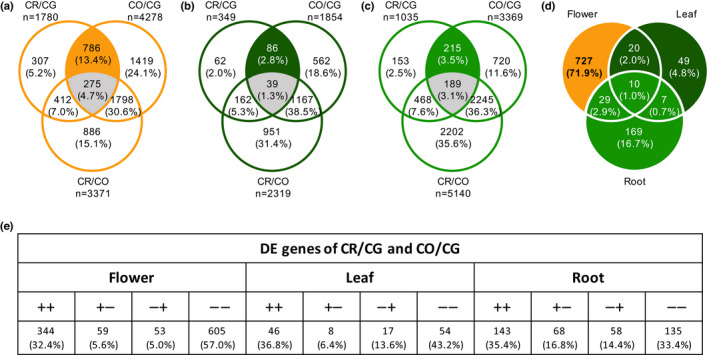
The shift from outcrossing to selfing is one of the main evolutionary transitions in plants. It is accompanied by profound effects on reproductive traits, the so-called selfing syndrome. Because the transition to selfing also implies deep genomic and ecological changes, one also expects to observe a genomic selfing syndrome. We took advantage of the three independent transitions from outcrossing to selfing in the Capsella genus to characterize the overall impact of mating system change on RNA expression, in flowers but also in leaves and roots. We quantified the extent of both selfing and genomic syndromes, and tested whether changes in expression corresponded to adaptation to selfing or to relaxed selection on traits that were constrained in outcrossers. Mating system change affected gene expression in all three tissues but more so in flowers than in roots and leaves. Gene expression in selfing species tended to converge in flowers but diverged in the two other tissues. Hence, convergent adaptation to selfing dominates in flowers, whereas genetic drift plays a more important role in leaves and roots. The effect of mating system transition is not limited to reproductive tissues and corresponds to both adaptation to selfing and relaxed selection on previously constrained traits.
从异交到自交的转变是植物主要的进化转变之一。它伴随着生殖特征的深刻变化,即所谓的自交综合征。由于向自交的转变也意味着深刻的基因组和生态变化,人们也期望观察到基因组自交综合征。我们利用甘蓝属中的三个独立的从异交到自交的转变,来描述交配系统变化对 RNA 表达的整体影响,包括花,也包括叶和根。我们量化了自交和基因组综合征的程度,并测试了表达的变化是否与对自交的适应或对在异交者中受到限制的性状的放松选择相对应。交配系统的改变影响了所有三种组织的基因表达,但在花中比在根和叶中更为明显。自交种的基因表达在花中趋于趋同,但在另外两种组织中则趋异。因此,自交的趋同适应在花中占主导地位,而遗传漂变在叶和根中扮演着更重要的角色。交配系统转变的影响不仅限于生殖组织,而且对应于自交的适应和对以前受限制的性状的放松选择。