Scietti Luigi, Moroni Elisabetta, Mattoteia Daiana, Fumagalli Marco, De Marco Matteo, Negro Lisa, Chiapparino Antonella, Serapian Stefano A, De Giorgi Francesca, Faravelli Silvia, Colombo Giorgio, Forneris Federico
The Armenise-Harvard Laboratory of Structural Biology, Department of Biology and Biotechnology, University of Pavia, Pavia, Italy.
Consiglio Nazionale delle Ricerche, Istituto di Scienze e Tecnologie Chimiche "Giulio Natta" (SCITEC-CNR), Milano, Italy.
Front Mol Biosci. 2022 Aug 25;9:876352. doi: 10.3389/fmolb.2022.876352. eCollection 2022.
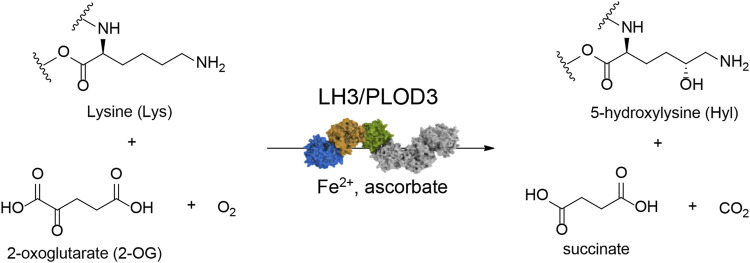
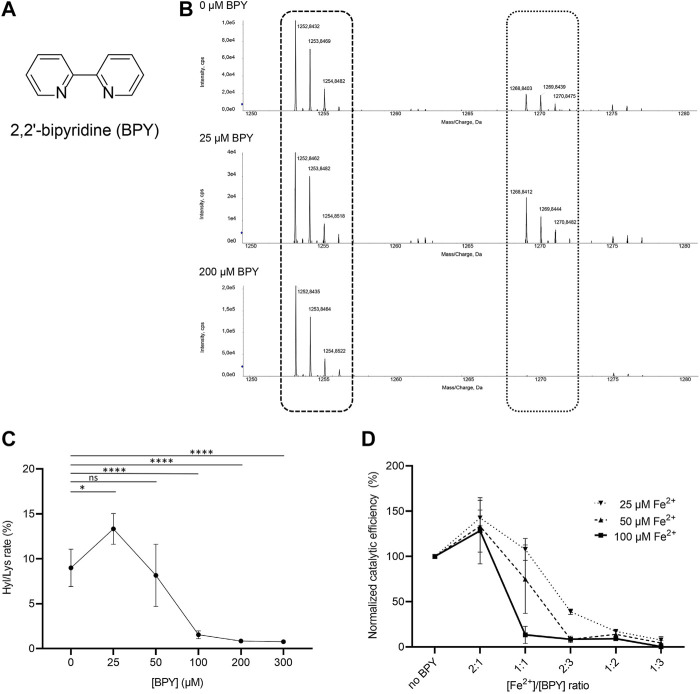
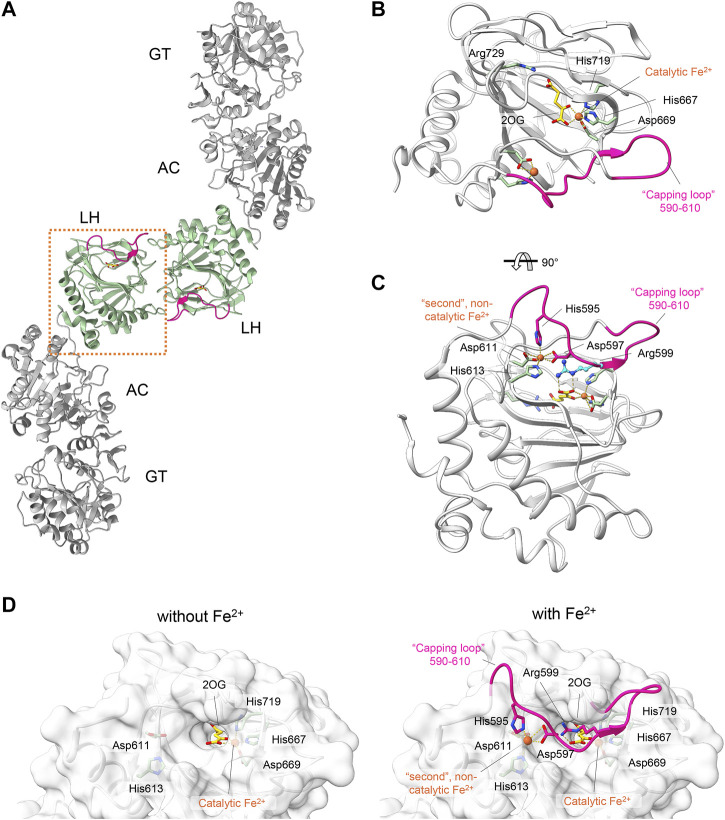
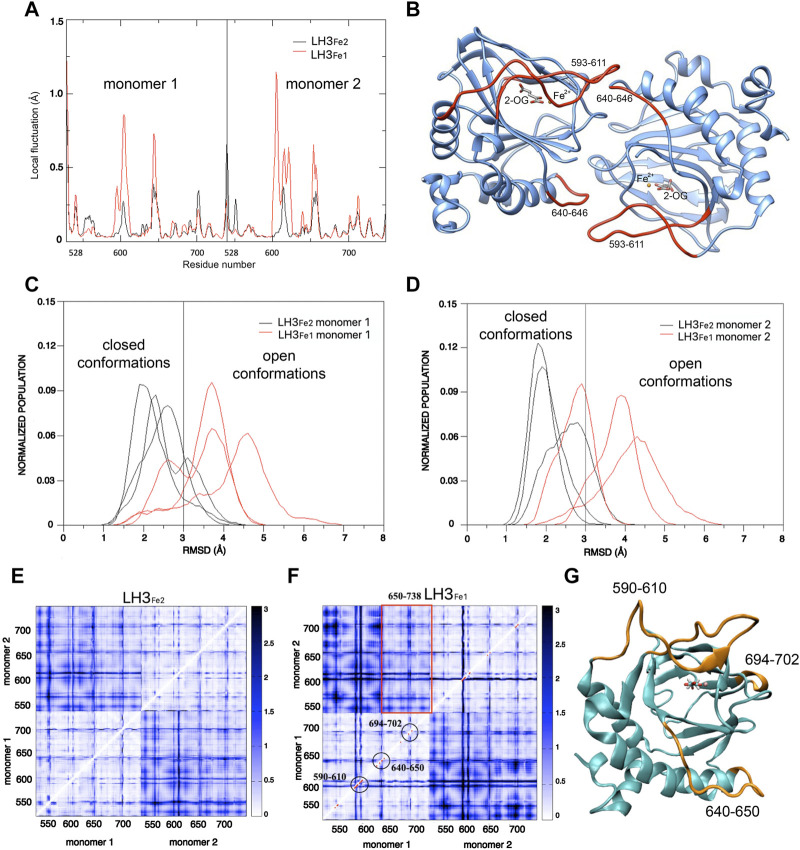
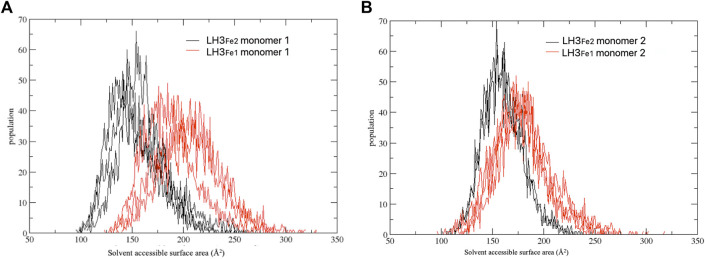
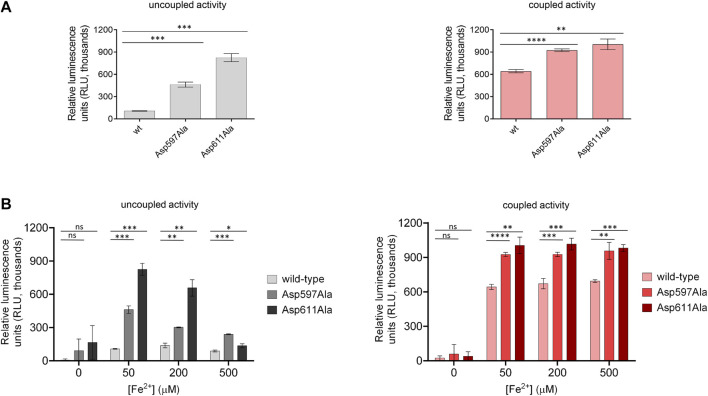
Multifunctional human collagen lysyl hydroxylase (LH/PLOD) enzymes catalyze post-translational hydroxylation and subsequent glycosylation of collagens, enabling their maturation and supramolecular organization in the extracellular matrix (ECM). Recently, the overexpression of LH/PLODs in the tumor microenvironment results in abnormal accumulation of these collagen post-translational modifications, which has been correlated with increased metastatic progression of a wide variety of solid tumors. These observations make LH/PLODs excellent candidates for prospective treatment of aggressive cancers. The recent years have witnessed significant research efforts to facilitate drug discovery on LH/PLODs, including molecular structure characterizations and development of reliable high-throughput enzymatic assays. Using a combination of biochemistry and studies, we characterized the dual role of Fe as simultaneous cofactor and inhibitor of lysyl hydroxylase activity and studied the effect of a promiscuous Fe chelating agent, 2,2'-bipyridil, broadly considered a lysyl hydroxylase inhibitor. We found that at low concentrations, 2,2'-bipyridil unexpectedly enhances the LH enzymatic activity by reducing the inhibitory effect of excess Fe. Together, our results show a fine balance between Fe-dependent enzymatic activity and Fe-induced self-inhibited states, highlighting exquisite differences between LH/PLODs and related Fe, 2-oxoglutarate dioxygenases and suggesting that conventional structure-based approaches may not be suited for successful inhibitor development. These insights address outstanding questions regarding druggability of LH/PLOD lysyl hydroxylase catalytic site and provide a solid ground for upcoming drug discovery and screening campaigns.
多功能人胶原蛋白赖氨酰羟化酶(LH/PLOD)催化胶原蛋白的翻译后羟化及随后的糖基化,使其在细胞外基质(ECM)中成熟并形成超分子结构。最近,LH/PLOD在肿瘤微环境中的过表达导致这些胶原蛋白翻译后修饰异常积累,这与多种实体瘤转移进展增加相关。这些观察结果使LH/PLOD成为侵袭性癌症前瞻性治疗的优秀候选对象。近年来,为促进针对LH/PLOD的药物发现开展了大量研究工作,包括分子结构表征和可靠的高通量酶促测定法的开发。我们结合生物化学和[具体研究内容未给出]研究,表征了铁作为赖氨酰羟化酶活性的同时辅助因子和抑制剂的双重作用,并研究了一种广泛被认为是赖氨酰羟化酶抑制剂的混杂铁螯合剂2,2'-联吡啶的作用。我们发现,在低浓度下,2,2'-联吡啶意外地通过降低过量铁的抑制作用增强了LH酶活性。总之,我们的结果显示了铁依赖性酶活性和铁诱导的自抑制状态之间的精细平衡,突出了LH/PLOD与相关铁、2-氧代戊二酸双加氧酶之间的细微差异,并表明传统的基于结构的方法可能不适用于成功开发抑制剂。这些见解解决了关于LH/PLOD赖氨酰羟化酶催化位点可药用性的悬而未决的问题,并为即将开展的药物发现和筛选活动提供了坚实基础。