Merl-Pham Juliane, Basak Trayambak, Knüppel Larissa, Ramanujam Deepak, Athanason Mark, Behr Jürgen, Engelhardt Stefan, Eickelberg Oliver, Hauck Stefanie M, Vanacore Roberto, Staab-Weijnitz Claudia A
Research Unit Protein Science, Helmholtz Zentrum München, Heidemannstr. 1, 80939 Munich, Germany.
Center for Matrix Biology, Department of Medicine, Division of Nephrology and Hypertension, Vanderbilt University Medical Center, Nashville, TN 37232, United States of America.
Matrix Biol Plus. 2019 Apr 13;1:100005. doi: 10.1016/j.mbplus.2019.04.002. eCollection 2019 Feb.
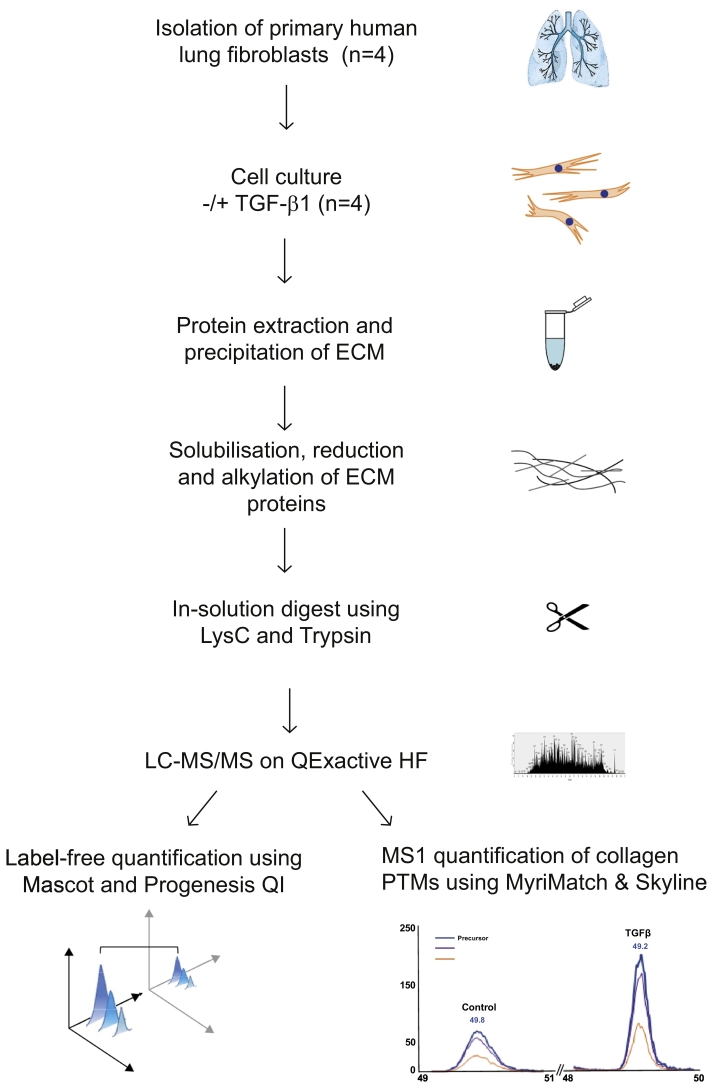
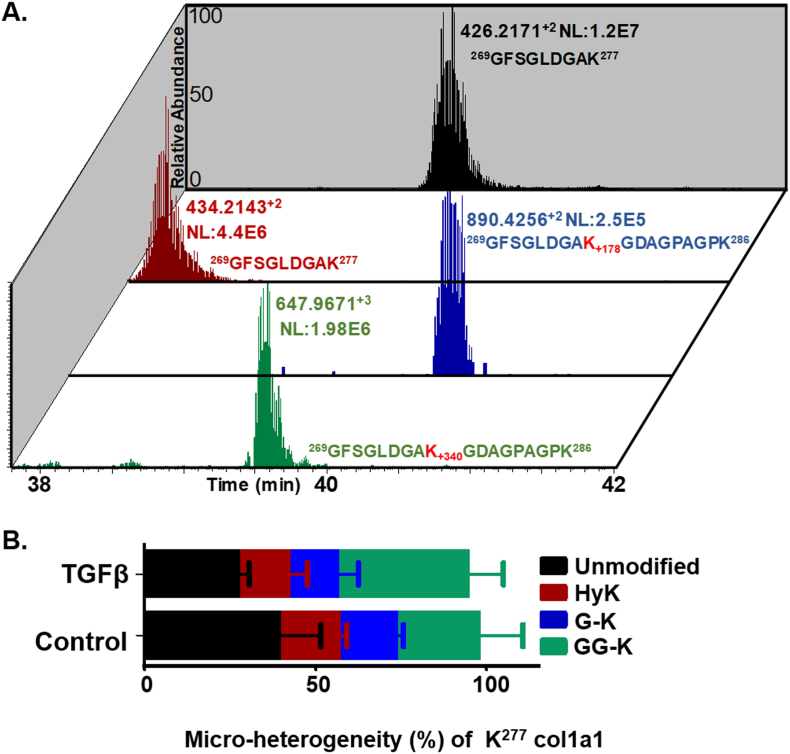
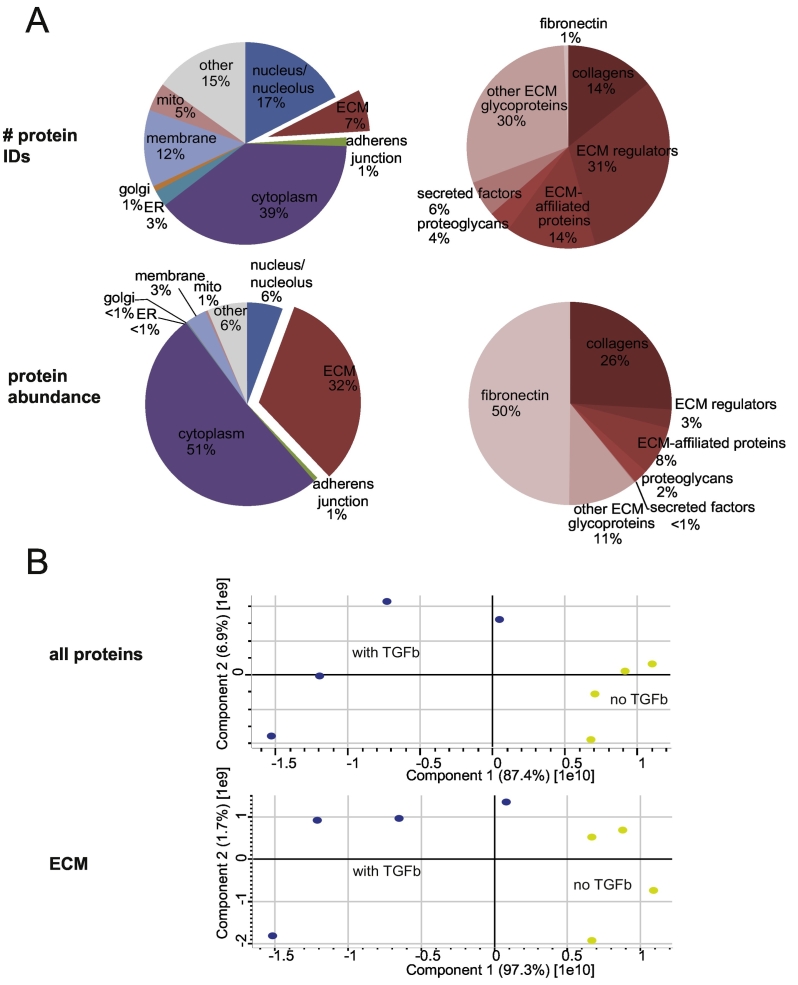
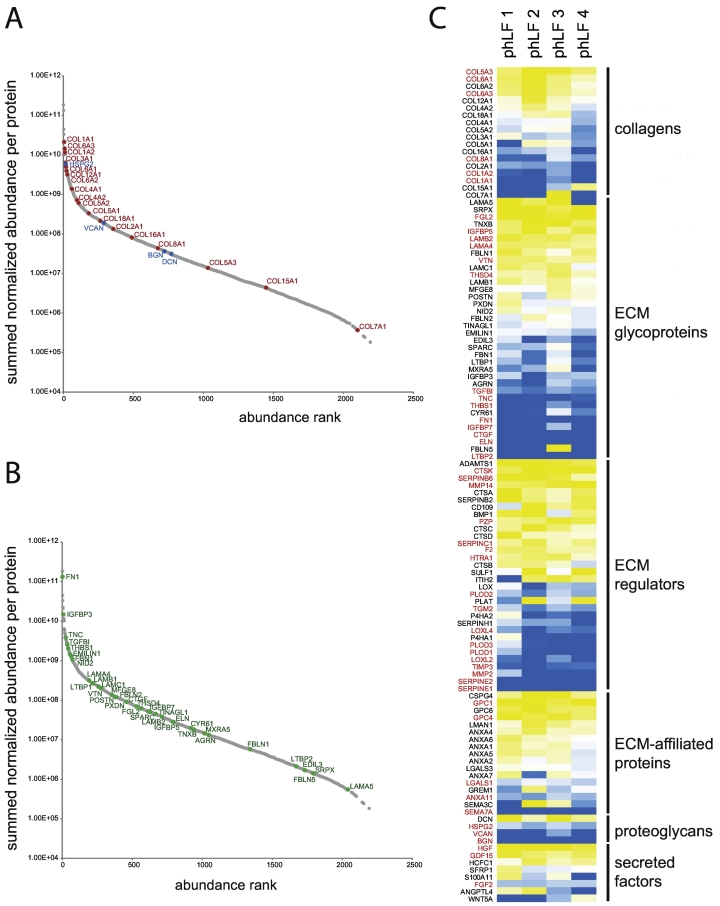
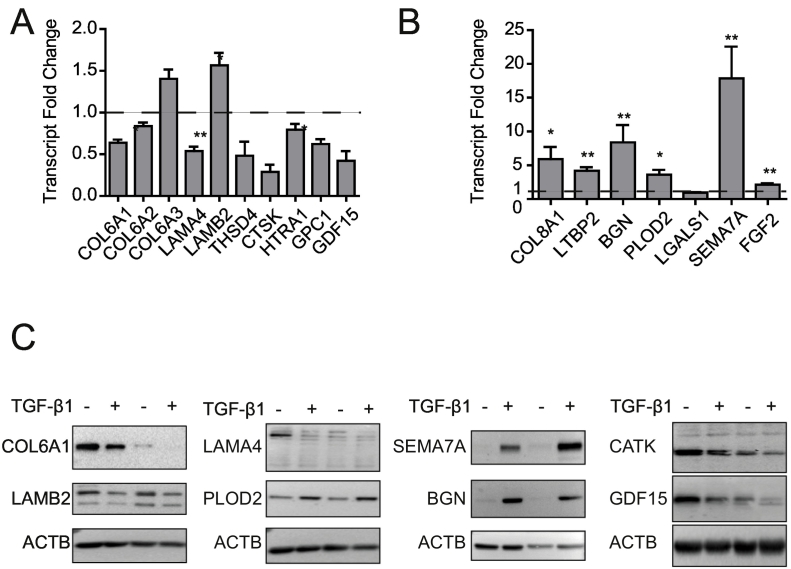
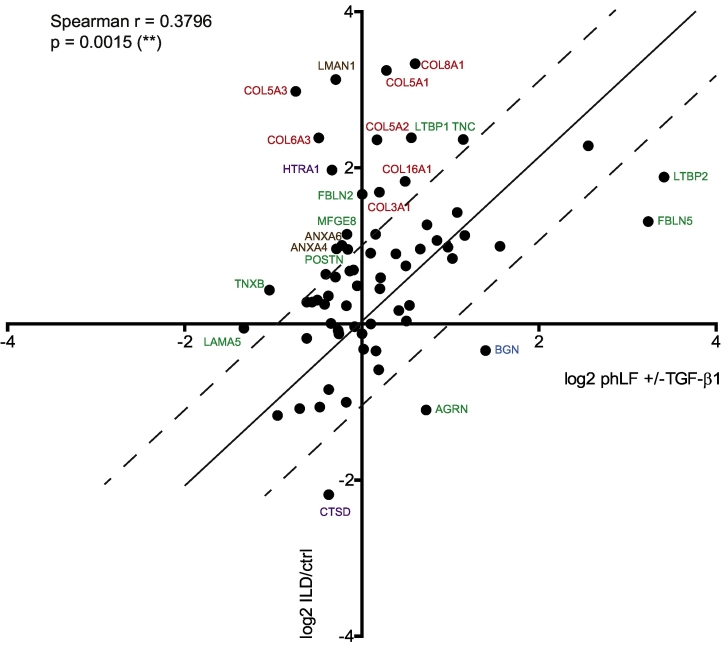
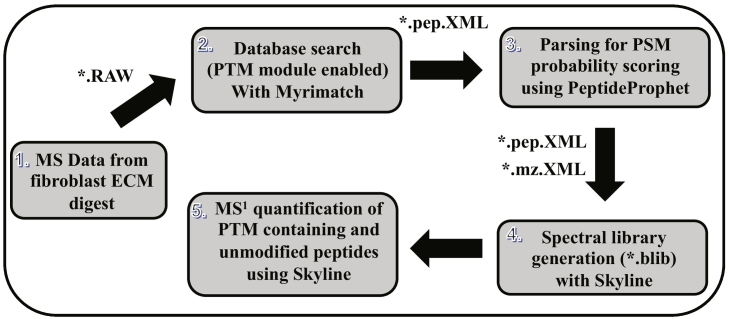
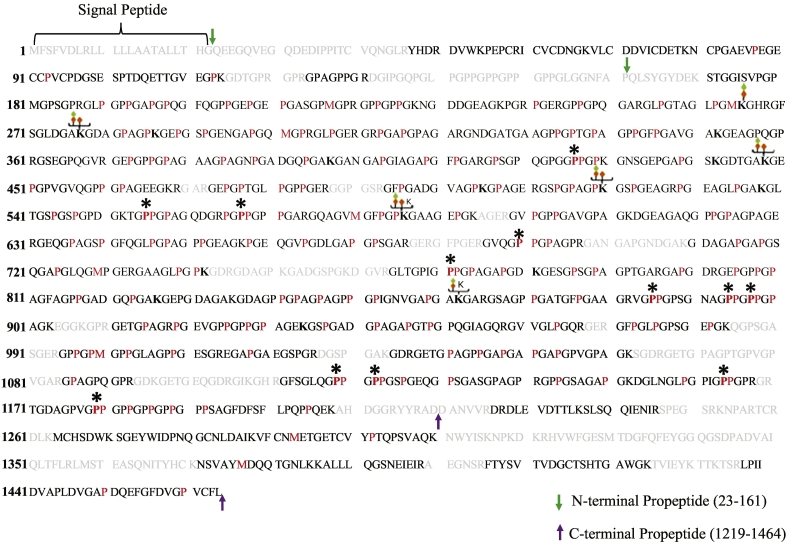
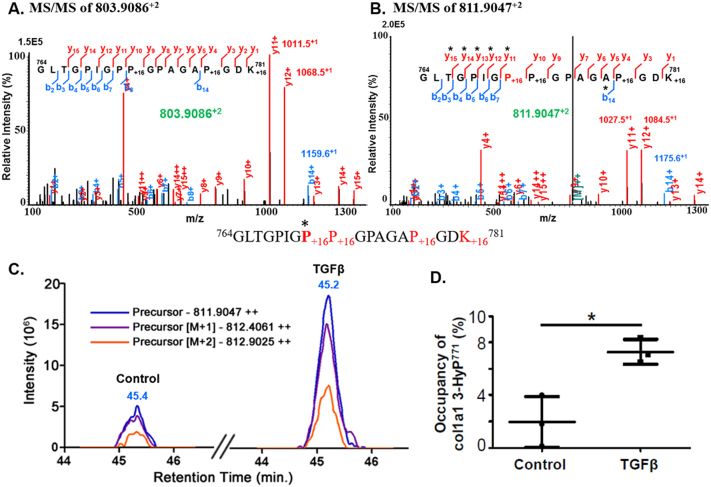
Lung fibrosis is characterized by excessive deposition of extracellular matrix (ECM), in particular collagens, by fibroblasts in the interstitium. Transforming growth factor-β1 (TGF-β1) alters the expression of many extracellular matrix (ECM) components produced by fibroblasts, but such changes in ECM composition as well as modulation of collagen post-translational modification (PTM) levels have not been comprehensively investigated. Here, we performed mass spectrometry (MS)-based proteomics analyses to assess changes in the ECM deposited by cultured lung fibroblasts from idiopathic pulmonary fibrosis (IPF) patients upon stimulation with transforming growth factor β1 (TGF-β1). In addition to the ECM changes commonly associated with lung fibrosis, MS-based label-free quantification revealed profound effects on enzymes involved in ECM crosslinking and turnover as well as multiple positive and negative feedback mechanisms of TGF-β1 signaling. Notably, the ECM changes observed in this model correlated significantly with ECM changes observed in patient samples. Because collagens are subject to multiple PTMs with major implications in disease, we implemented a new bioinformatic platform to analyze MS data that allows for the comprehensive mapping and site-specific quantitation of collagen PTMs in crude ECM preparations. These analyses yielded a comprehensive map of prolyl and lysyl hydroxylations as well as lysyl glycosylations for 15 collagen chains. In addition, site-specific PTM analysis revealed novel sites of prolyl-3-hydroxylation and lysyl glycosylation in type I collagen. Interestingly, the results show, for the first time, that TGF-β1 can modulate prolyl-3-hydroxylation and glycosylation in a site-specific manner. Taken together, this proof of concept study not only reveals unanticipated TGF-β1 mediated regulation of collagen PTMs and other ECM components but also lays the foundation for dissecting their key roles in health and disease. The proteomic data has been deposited to the ProteomeXchange Consortium the MassIVE partner repository with the data set identifier MSV000082958.
肺纤维化的特征是成纤维细胞在间质中过度沉积细胞外基质(ECM),尤其是胶原蛋白。转化生长因子-β1(TGF-β1)会改变成纤维细胞产生的许多细胞外基质(ECM)成分的表达,但ECM组成的这种变化以及胶原蛋白翻译后修饰(PTM)水平的调节尚未得到全面研究。在这里,我们进行了基于质谱(MS)的蛋白质组学分析,以评估来自特发性肺纤维化(IPF)患者的培养肺成纤维细胞在转化生长因子β1(TGF-β1)刺激后沉积的ECM的变化。除了与肺纤维化通常相关的ECM变化外,基于MS的无标记定量揭示了对参与ECM交联和周转的酶以及TGF-β1信号传导的多种正反馈和负反馈机制的深远影响。值得注意的是,在该模型中观察到的ECM变化与在患者样本中观察到的ECM变化显著相关。由于胶原蛋白会经历多种对疾病有重大影响的PTM,我们实施了一个新的生物信息学平台来分析MS数据,该平台允许对粗ECM制剂中的胶原蛋白PTM进行全面映射和位点特异性定量。这些分析产生了15条胶原链的脯氨酰和赖氨酰羟化以及赖氨酰糖基化的综合图谱。此外,位点特异性PTM分析揭示了I型胶原蛋白中脯氨酰-3-羟化和赖氨酰糖基化的新位点。有趣的是,结果首次表明TGF-β1可以以位点特异性方式调节脯氨酰-3-羟化和糖基化。综上所述,这项概念验证研究不仅揭示了TGF-β1介导的对胶原蛋白PTM和其他ECM成分的意外调节,还为剖析它们在健康和疾病中的关键作用奠定了基础。蛋白质组学数据已存入蛋白质组交换联盟的MassIVE合作伙伴存储库,数据集标识符为MSV000082958。