Li Chuang, Chen Ning, Zhang Xingxing, Shahzad Khuram, Qi Ruxin, Zhang Zhenbin, Lu Zhiqi, Lu Yue, Yu Xiang, Zafar Muhammad Hammad, Wang Mengzhi, Liu Wujun
College of Animal Science and Technology, Yangzhou University, Yangzhou, China.
State Key Laboratory for Sheep Genetic Improvement and Healthy Production, Xinjiang Academy of Agricultural and Reclamation Science, Shihezi, China.
Front Microbiol. 2022 Aug 26;13:978940. doi: 10.3389/fmicb.2022.978940. eCollection 2022.
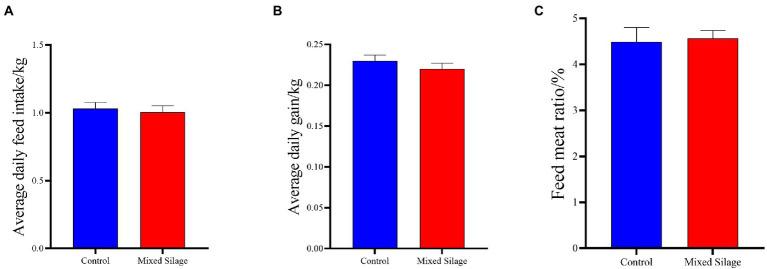
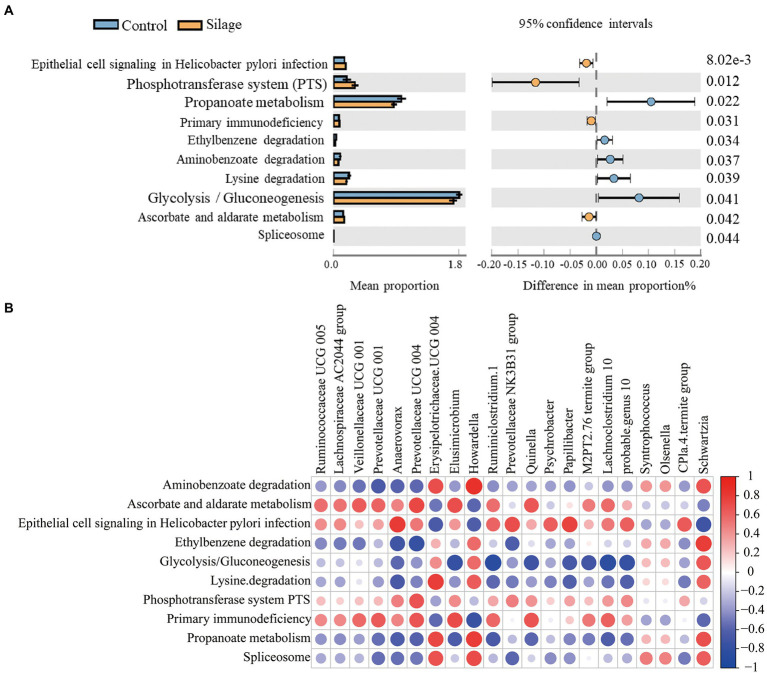
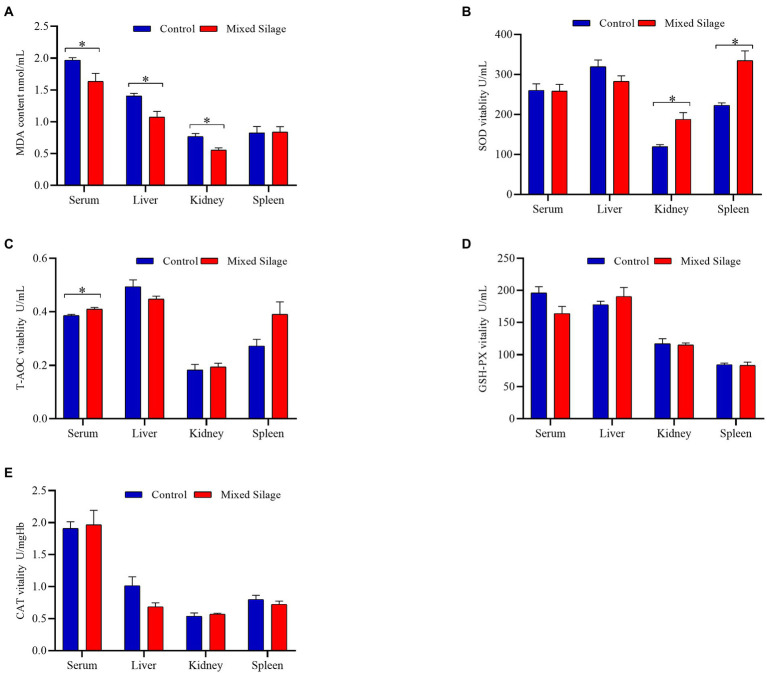
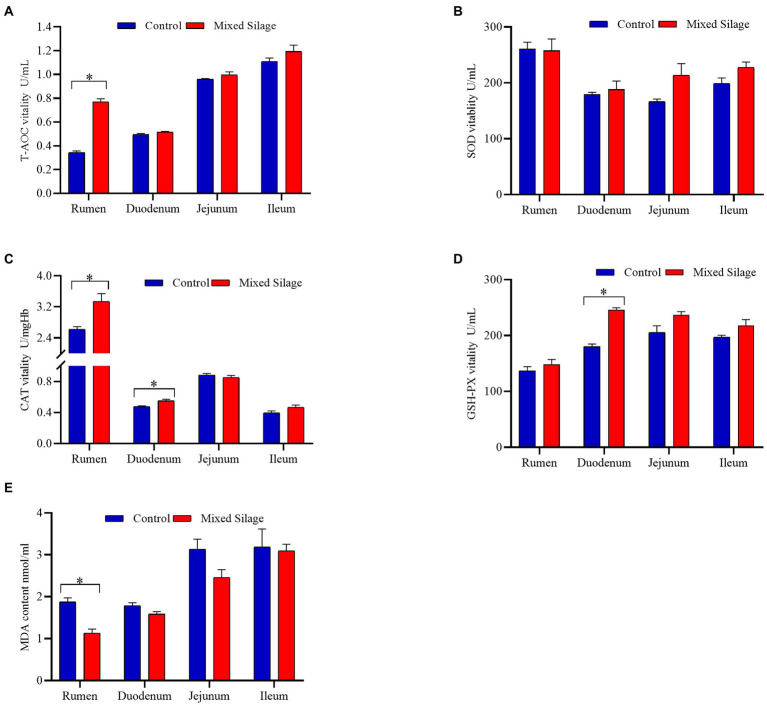
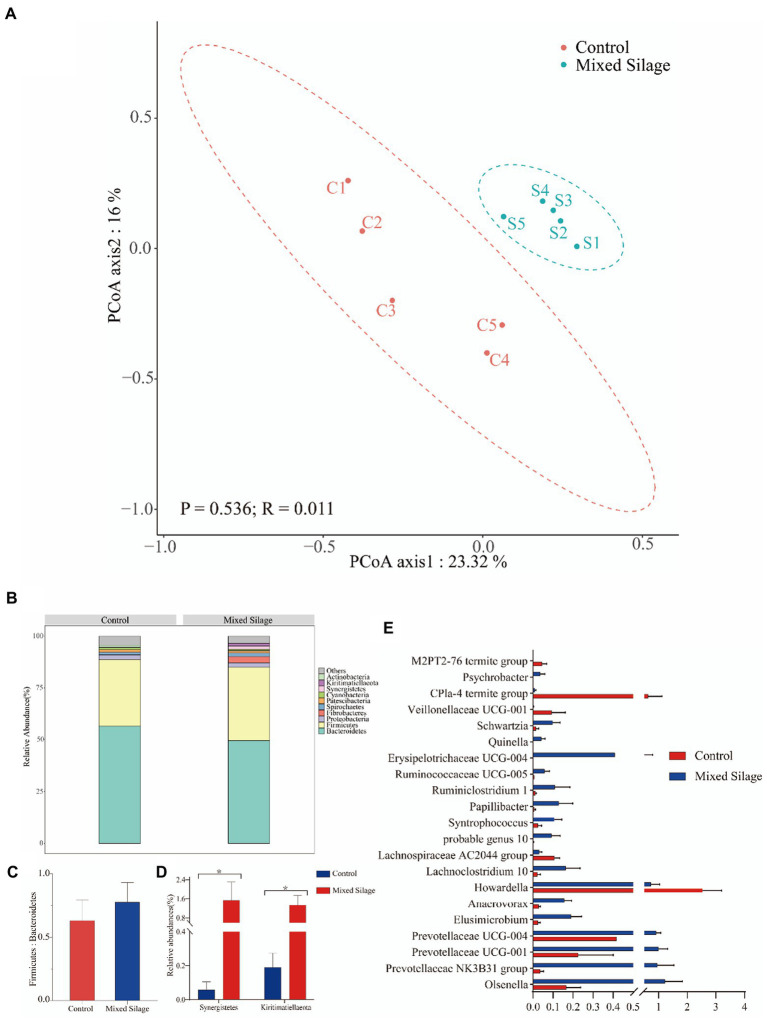
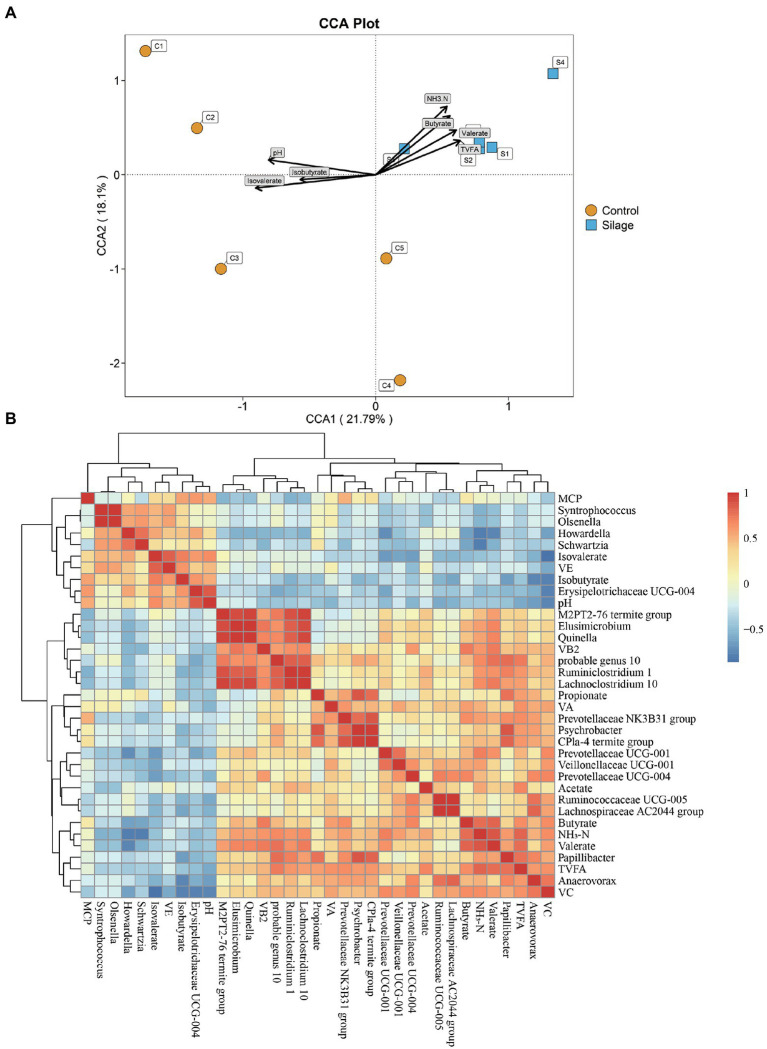
Silage is rich in nutrients, which can make up for the lack of seasonal roughage, and has a certain promotion effect on the intensive feeding of ruminants. In addition, silage can maintain the rumen function of ruminants to a certain extent and reduce the risk of rumen acidosis and abomasum translocation. The purpose of this study was to investigate the effects of the mixed silage of Chinese cabbage waste and rice straw (mixed silage) on antioxidant performance, rumen microbial population, and fermentation metabolism of Hu sheep. The 16 healthy Hu sheep (eight rams and eight ewes, 39.11 ± 1.16 kg, 5.5 months) were randomly divided into two groups (the control group and the mixed silage group) with eight animals (four rams and four ewes) in each group. The control group was fed with farm roughage (peanut seedlings, corn husk, and high grain shell) as forage, and the mixed silage group was fed with the mixed silage as forage. The results showed that the mixed silage had no effect on the growth performance of Hu sheep ( > 0.05). Ruminal butyric acid, total volatile fatty acids (TVFA), and ammonia nitrogen (NH-N) concentration in the mixed silage group were increased, whereas the pH was decreased ( < 0.05). The blood and rumen total antioxidants capacity (T-AOC) concentration in the mixed silage group was higher, and the malondialdehyde (MDA) content in rumen, serum, liver, and kidney was lower than that in the control group ( < 0.05). PCoA and ANOSIM results of Illumina sequencing indicated that the mixed silage affected the bacterial composition of the rumen microbes. The mixed silage increased the proportion of which was in a positive correlation with Vitamin C (Vc). In addition, PICRUSt functional prediction analysis showed that ascorbate and aldarate metabolism were up-regulated in the mixed silage group ( < 0.05). In conclusion, higher contents of V and acid detergent fiber (ADF) in the mixed silage were beneficial to the growth and reproduction of , resulting in increased production of the butyric acid significantly upregulated the metabolism of ascorbate and aldarate metabolism, thereby improving the antioxidant properties of Hu sheep.
青贮饲料营养丰富,能够弥补季节性粗饲料的不足,对反刍动物的集约化饲养有一定的促进作用。此外,青贮饲料在一定程度上可以维持反刍动物的瘤胃功能,降低瘤胃酸中毒和真胃移位的风险。本研究旨在探讨大白菜废弃物与稻草混合青贮(混合青贮)对湖羊抗氧化性能、瘤胃微生物种群及发酵代谢的影响。选取16只健康湖羊(8只公羊和8只母羊,体重39.11±1.16 kg,5.5月龄),随机分为两组(对照组和混合青贮组),每组8只(4只公羊和4只母羊)。对照组饲喂农场粗饲料(花生秧、玉米皮和高梁壳)作为草料,混合青贮组饲喂混合青贮作为草料。结果表明,混合青贮对湖羊的生长性能无影响(P>0.05)。混合青贮组瘤胃丁酸、总挥发性脂肪酸(TVFA)和氨氮(NH₃-N)浓度升高,而pH值降低(P<0.05)。混合青贮组血液和瘤胃总抗氧化能力(T-AOC)浓度较高,瘤胃、血清、肝脏和肾脏中丙二醛(MDA)含量低于对照组(P<0.05)。Illumina测序的PCoA和ANOSIM结果表明,混合青贮影响瘤胃微生物的细菌组成。混合青贮增加了与维生素C(Vc)呈正相关的[具体菌名未给出]的比例。此外,PICRUSt功能预测分析表明,混合青贮组中抗坏血酸和醛糖代谢上调(P<0.05)。综上所述,混合青贮中较高的Vc和酸性洗涤纤维(ADF)含量有利于湖羊的生长繁殖,导致丁酸产量增加,显著上调抗坏血酸和醛糖代谢,从而提高湖羊的抗氧化性能。