Grim Katarina, Näslund Hilda, Allaskog Conny, Andersson Jessica, Argentzell Elisabeth, Broström Kjell, Jenneteg Filippa Gagnér, Jansson Mårten, Schön Ulla-Karin, Svedberg Petra, Svensson Sara, Wåhlstedt Sonny, Rosenberg David
Department of Social and Psychological Studies, Karlstad University, Karlstad, Sweden.
Department of Social Work, Umeå University, Umeå, Sweden.
Front Psychiatry. 2022 Aug 25;13:981238. doi: 10.3389/fpsyt.2022.981238. eCollection 2022.
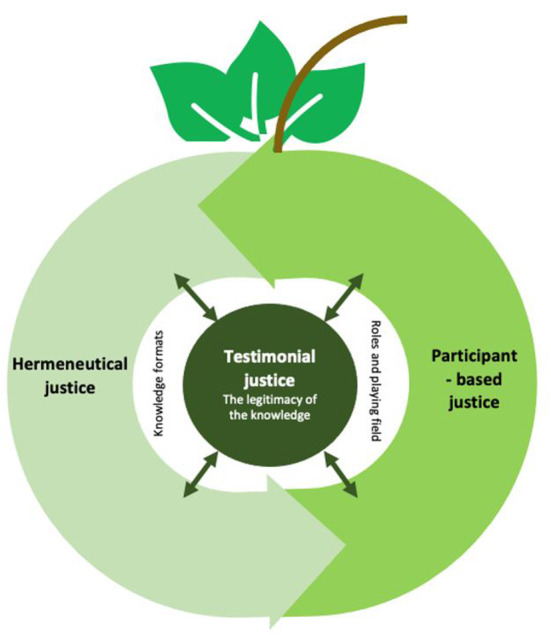
Including the voices and knowledge of service users is essential for developing recovery-oriented and evidence-based mental health services. Recent studies have however, suggested that challenges remain to the legitimization of user knowledge in practice. To further explore such challenges, a co-production study was conducted by a team of researchers and representatives from user organizations in Sweden. The aim of the study was to explore the barriers and facilitators to the legitimacy of user knowledge, as a central factor in sustainably implementing user influence in mental health practice. A series of workshops, with representatives of mental health services and user organizations were conducted by the research team to explore these issues. The analysis built on the theoretical framework of epistemic injustice, and the underlying aspects, testimonial, hermeneutic and participation-based injustice, were utilized as a framework for a deductive analysis. Results suggest that this is a useful model for exploring the complex dynamics related to the legitimacy of user knowledge in mental health systems. The analysis suggests that the legitimacy of user knowledge is related to the representativeness of the knowledge base, the systematic formulation of this knowledge in applicable methods, access to resources and positions within the mental health system and participation in the process of integrating this knowledge-base in mental health contexts. Legitimizing user knowledge in practice additionally challenges mental health systems to support readiness for change in working environments and to address the power and role issues that these changes involve.
纳入服务使用者的声音和知识对于发展以康复为导向且基于证据的心理健康服务至关重要。然而,近期研究表明,在实践中使使用者知识合法化仍存在挑战。为进一步探究此类挑战,瑞典的一组研究人员与使用者组织的代表开展了一项合作生产研究。该研究的目的是探索使用者知识合法化的障碍与促进因素,这是在心理健康实践中可持续发挥使用者影响力的核心因素。研究团队与心理健康服务及使用者组织的代表举办了一系列研讨会来探讨这些问题。分析基于认知不公正的理论框架,其潜在方面,即证成语境不公正、诠释不公正和参与型不公正,被用作演绎分析的框架。结果表明,这是探索心理健康系统中与使用者知识合法化相关的复杂动态的有用模型。分析表明,使用者知识的合法化与知识库的代表性、以适用方法对该知识进行系统阐述、在心理健康系统内获取资源和职位以及参与将该知识库融入心理健康情境的过程有关。在实践中使使用者知识合法化还对心理健康系统提出了挑战,要求其支持工作环境中的变革意愿,并解决这些变革所涉及的权力和角色问题。