Zhang Sheng, Yun Weigeng, Lin Zhang
School of Human Settlements and Civil Engineering, Xi'an Jiaotong University, Xi'an, China.
Department of Mechanical and Aerospace Engineering, The Hong Kong University of Science and Technology, Hong Kong Special Administrative Region.
Appl Therm Eng. 2022 Nov 25;217:119256. doi: 10.1016/j.applthermaleng.2022.119256. Epub 2022 Sep 3.
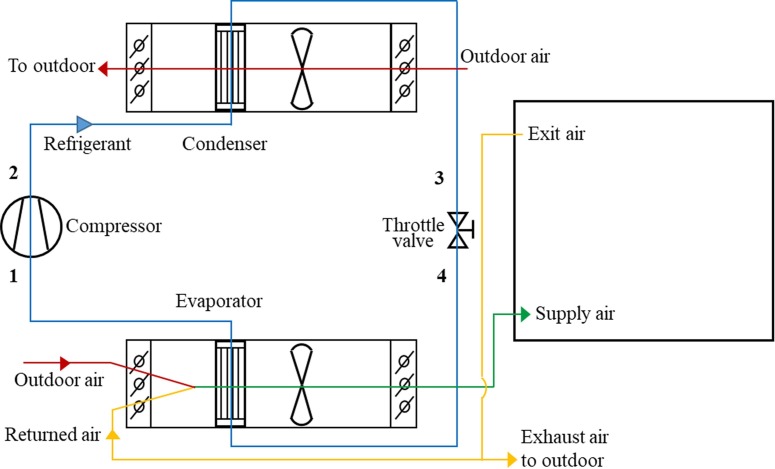
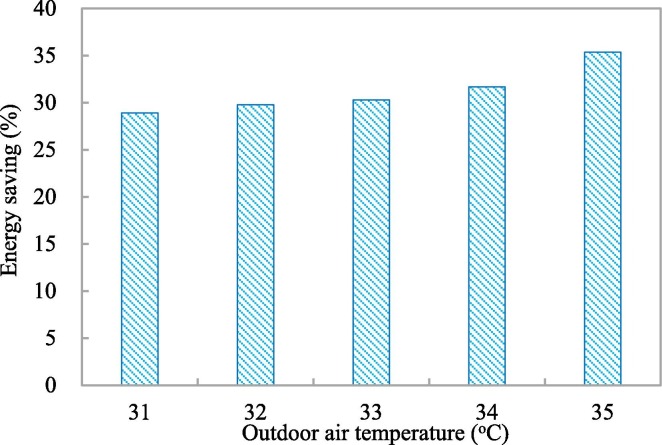
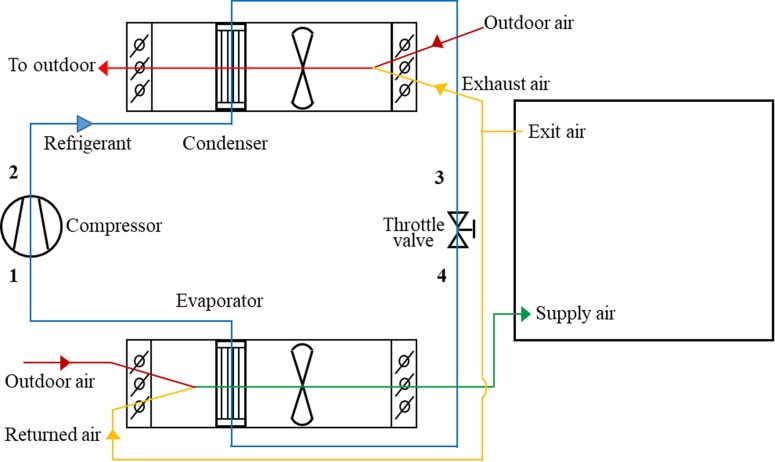
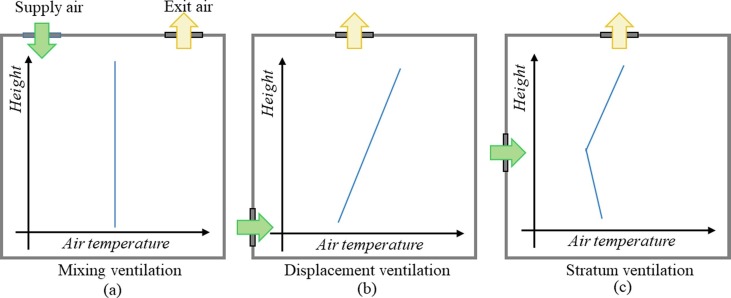
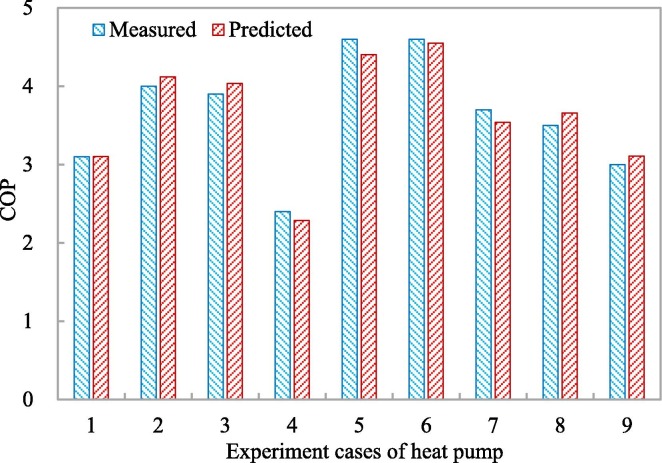
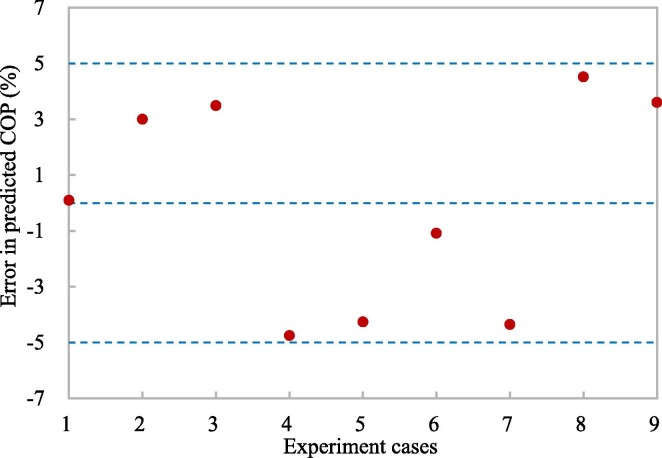
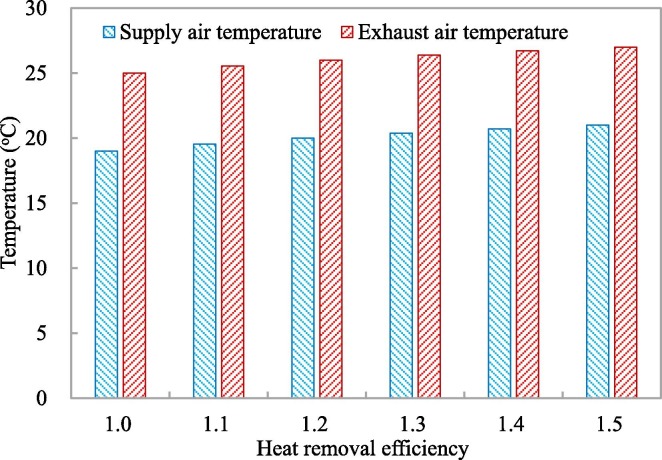
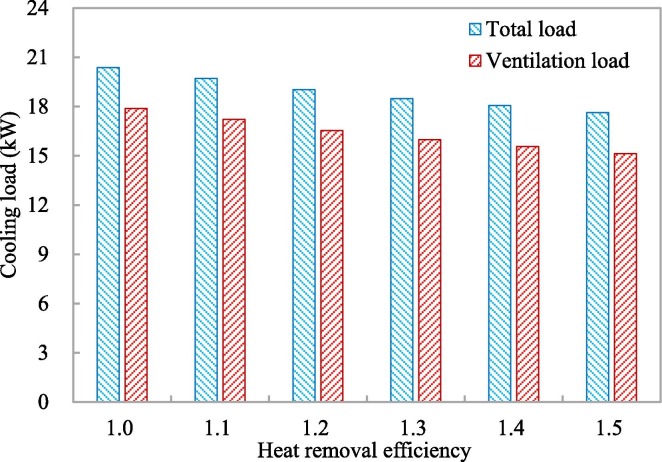
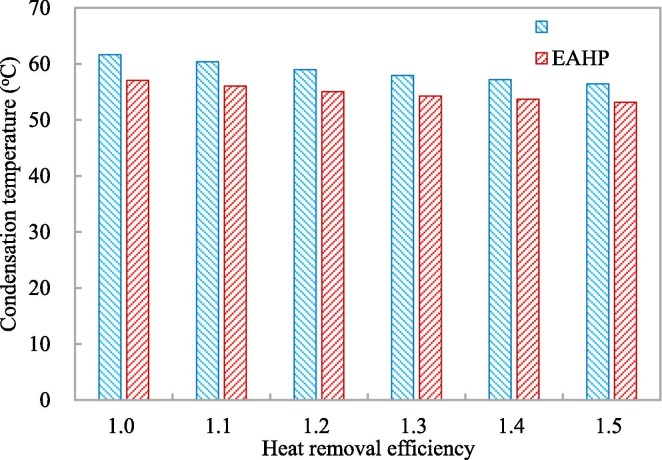
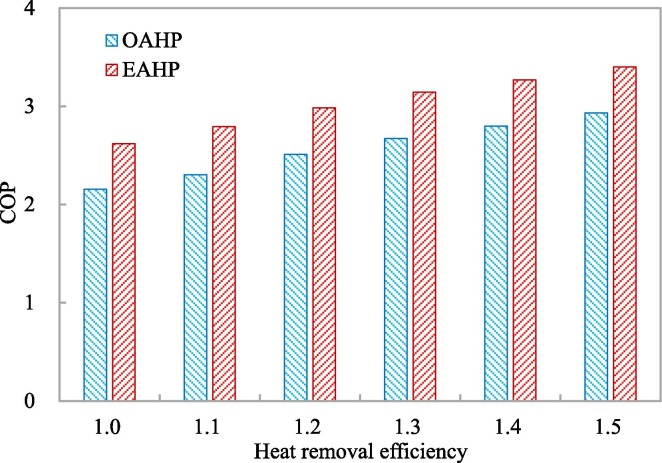
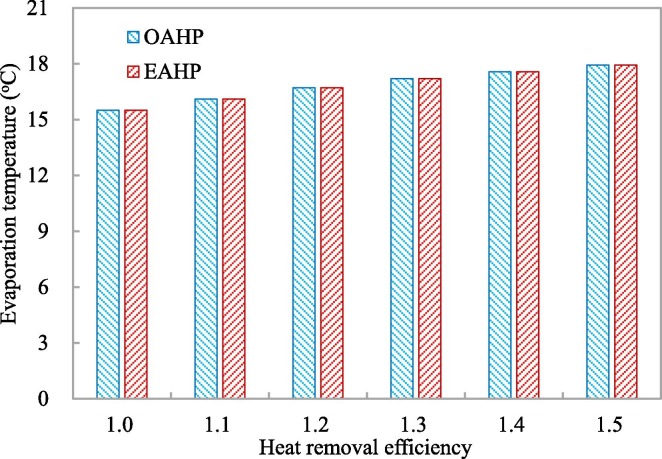
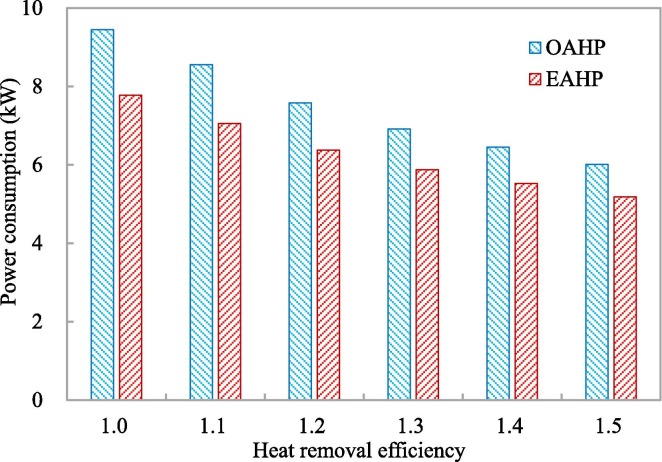
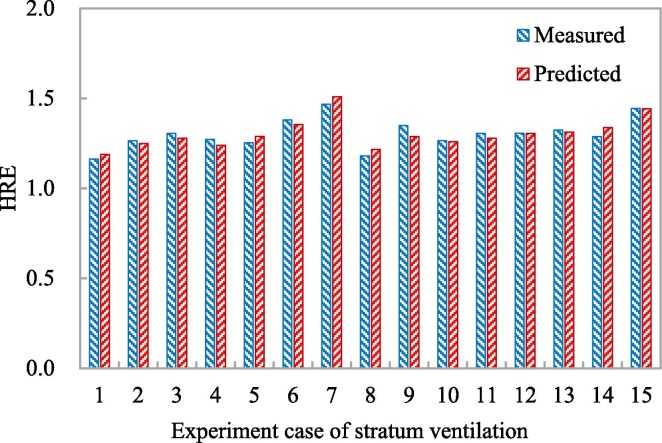
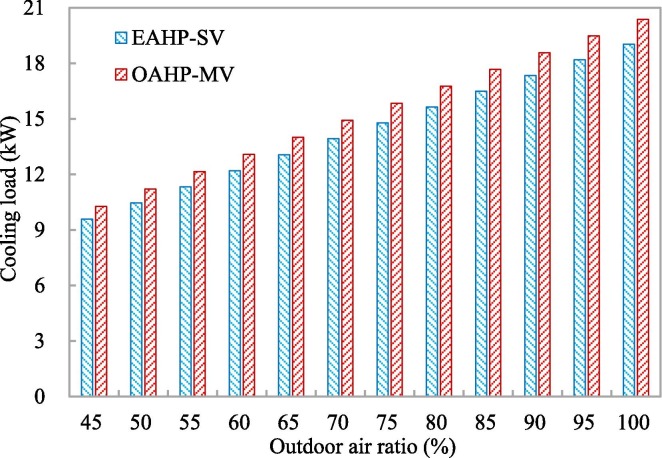
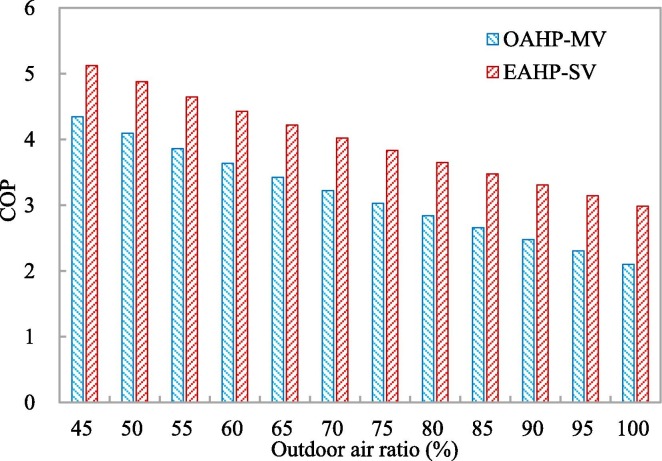
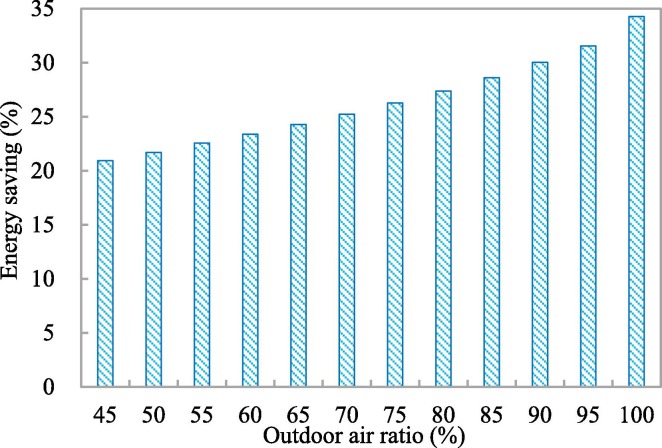
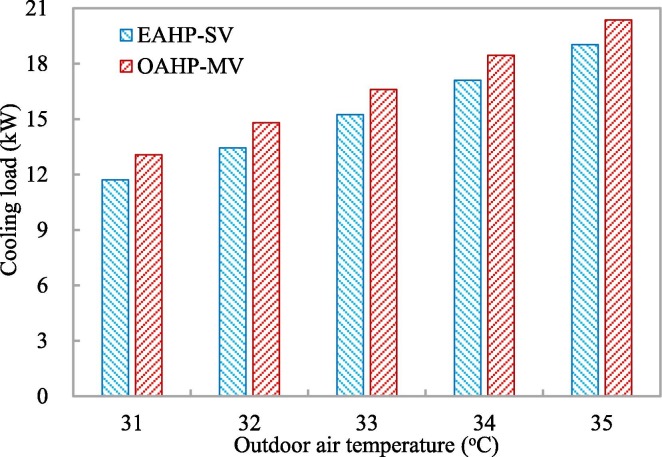
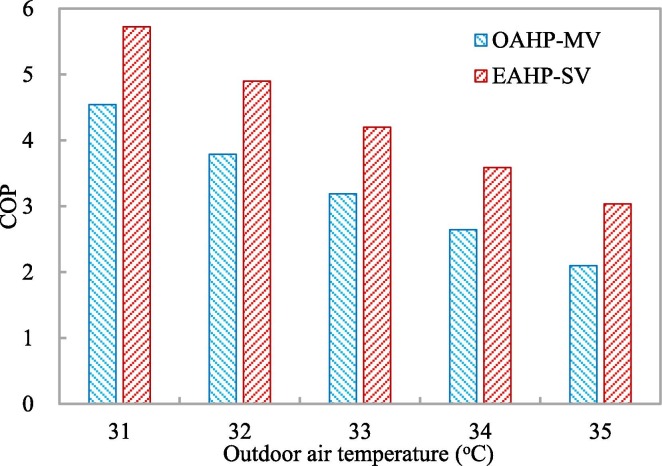
A large outdoor air supply is required to control the airborne infection risk of respiratory diseases (, COVID 19) but causes a high energy penalty. This study proposes a novel integrated system of the exhaust air heat pump and advanced air distribution to energy-efficiently provide outdoor air. The system energy performances are evaluated by the experimentally validated thermodynamic model of heat pump and heat removal efficiency model of advanced air distribution. Results show the exhaust air heat pump with advanced air distribution can save energy because of three mechanisms. First, the exhaust air heat pump reuses the exhaust air to reduce the condensation temperature, thereby improving the coefficient of performance. Second, advanced air distribution reduces ventilation load. Third, advanced air distribution reduces the condensation temperature and enhances the evaporation temperature, thereby improving the coefficient of performance. The exhaust air heat pump saves energy by 18%, advanced air distribution saves energy by 36%, and the integrated system of the exhaust air heat pump and advanced air distribution can save energy by 45%. As a specific application, compared with the conventional system (, the outdoor air heat pump with mixing ventilation), the exhaust air heat pump with stratum ventilation saves energy by 21% - 35% under various outdoor air ratios and outdoor air temperatures. The proposed integrated system of the exhaust air heat pump and advanced air distribution contributes to the development of low-carbon and healthy buildings.
控制呼吸道疾病(如新冠病毒 19)的空气传播感染风险需要大量的室外空气供应,但这会导致高昂的能源消耗。本研究提出了一种新型的集成系统,该系统将排风热泵与先进的空气分配相结合,以高效地提供室外空气。通过经实验验证的热泵热力学模型和先进空气分配的排热效率模型来评估系统的能源性能。结果表明,带有先进空气分配的排风热泵能够通过三种机制实现节能。首先,排风热泵通过再利用排出的空气来降低冷凝温度,从而提高性能系数。其次,先进的空气分配降低了通风负荷。第三,先进的空气分配降低了冷凝温度并提高了蒸发温度,从而提高了性能系数。排风热泵节能 18%,先进空气分配节能 36%,排风热泵与先进空气分配的集成系统可节能 45%。作为一个具体应用,与传统系统(即带有混合通风的室外空气热泵)相比,带有分层通风的排风热泵在不同的室外空气比例和室外空气温度下可节能 21% - 35%。所提出的排风热泵与先进空气分配的集成系统有助于低碳健康建筑的发展。