Abbasi Moud Aref
Polymer and Color Engineering Department, AmirKabir University of Technology, P.O. Box 15875/4413, PC36+P45 District 6, Tehran, Tehran Province 1591634311, Iran.
ACS Omega. 2022 Aug 23;7(35):30673-30699. doi: 10.1021/acsomega.2c03311. eCollection 2022 Sep 6.
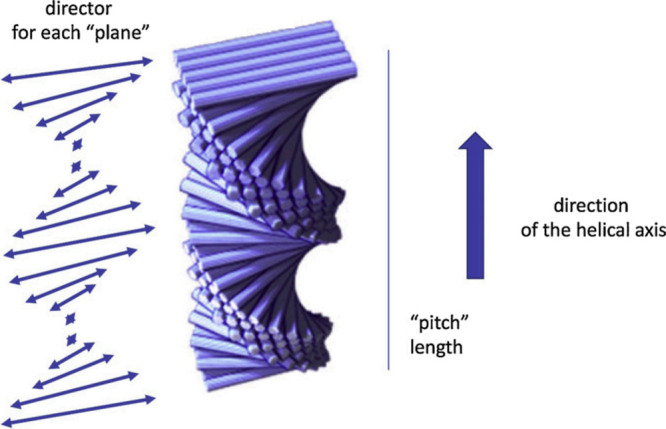
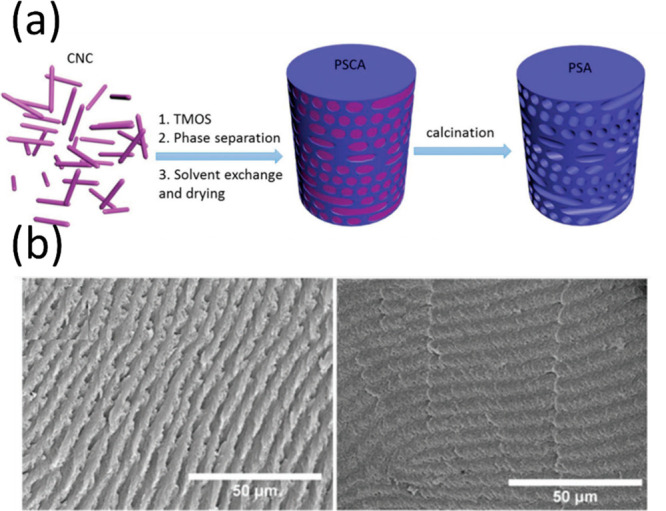
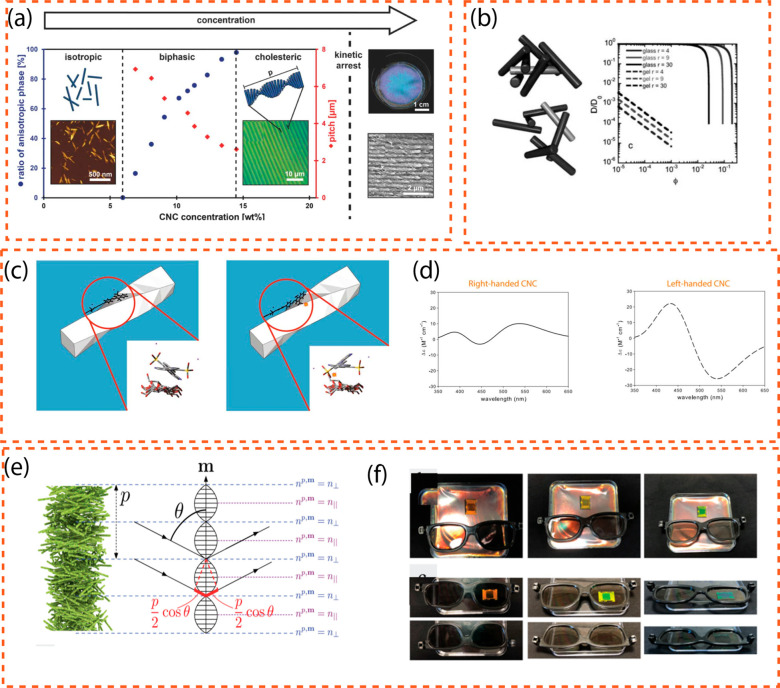
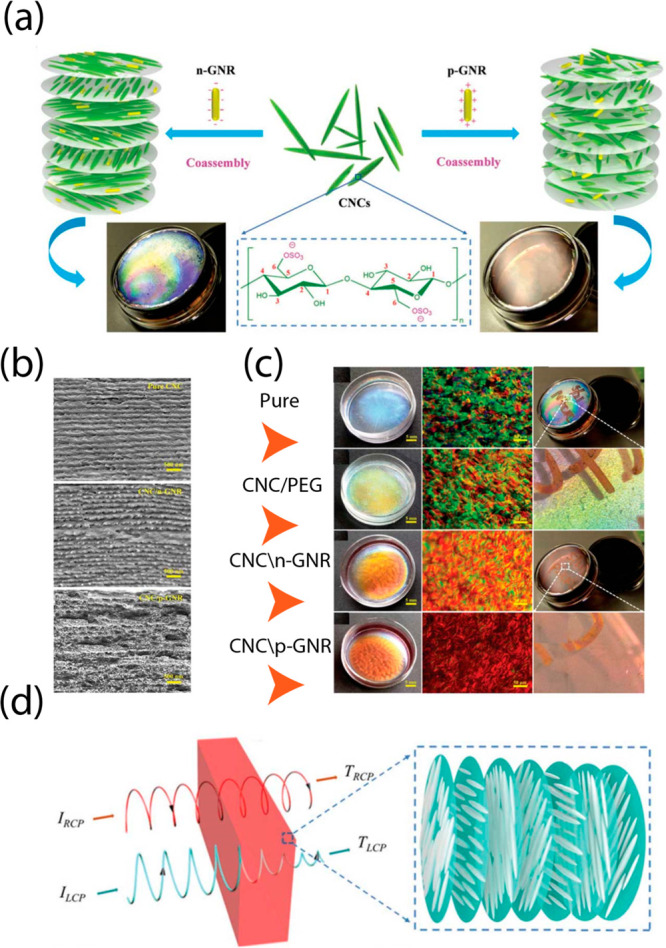
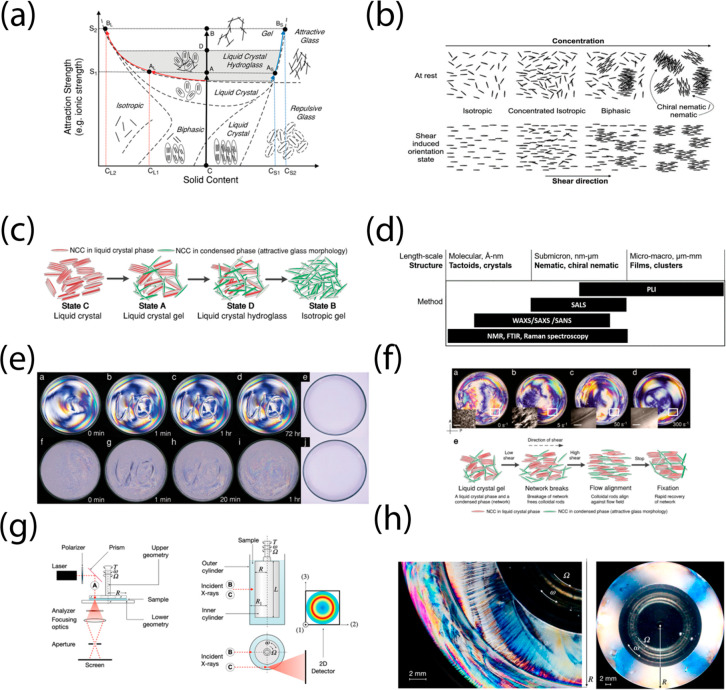
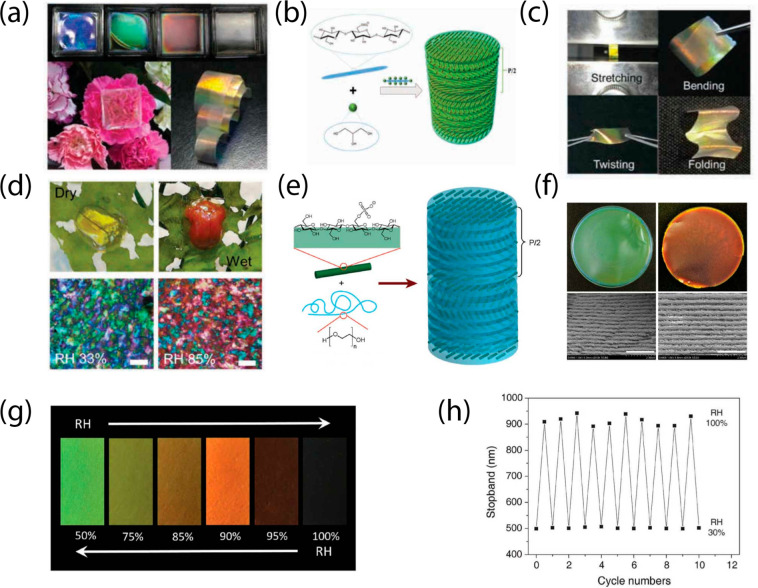
By using an independent self-assembly process that is occasionally controlled by evaporation, cellulose nanocrystals (CNCs) may create films (pure or in conjunction with other materials) that have iridescent structural colors. The self-forming chiral nematic structures and environmental safety of a new class of photonic liquid crystals (LCs), referred to as CNCs and CNC-embedded materials, make them simple to make and treat. The structure of the matrix interacts with light to give structural coloring, as opposed to other dye pigments, which interact with light by adsorption and reflection. Understanding how CNC self-assembly constructs structures is vital in several fields, including physics, science, and engineering. To constructure this review, the colloidal characteristics of CNC particles and their behavior during the formation of liquid crystals and gelling were studied. Then, some of the recognized applications for these naturally occurring nanoparticles were summarized. Different factors were considered, including the CNC aspect ratio, surface chemistry, concentration, the amount of time needed to produce an anisotropic phase, and the addition of additional substances to the suspension medium. The effects of alignment and the drying process conditions on structural changes are also covered. The focus of this study however is on the optical properties of the films as well as the impact of the aforementioned factors on the final transparency, iridescent colors, and versus the overall response of these bioinspired photonic materials. Control of the examined factors was found to be necessary to produce reliable materials for optoelectronics, intelligent inks and papers, transparent flexible support for electronics, and decorative coatings and films.
通过使用一种偶尔由蒸发控制的独立自组装过程,纤维素纳米晶体(CNCs)可以形成具有彩虹色结构颜色的薄膜(纯薄膜或与其他材料结合的薄膜)。一类新型的光子液晶(LCs),即CNCs和嵌入CNC的材料,其自形成的手性向列结构和环境安全性使得它们易于制备和处理。与其他通过吸附和反射与光相互作用的染料颜料不同,基质的结构与光相互作用以产生结构颜色。了解CNC自组装如何构建结构在包括物理、科学和工程在内的多个领域至关重要。为了构建本综述,研究了CNC颗粒的胶体特性及其在液晶形成和凝胶化过程中的行为。然后,总结了这些天然存在的纳米颗粒的一些公认应用。考虑了不同因素,包括CNC的长宽比、表面化学性质、浓度、产生各向异性相所需的时间以及向悬浮介质中添加的其他物质。还涵盖了取向和干燥工艺条件对结构变化的影响。然而,本研究的重点是薄膜的光学性质以及上述因素对最终透明度、彩虹色以及这些受生物启发的光子材料整体响应的影响。发现控制所研究的因素对于生产用于光电子学、智能油墨和纸张、电子产品的透明柔性支撑材料以及装饰涂层和薄膜的可靠材料是必要的。