State Key Laboratory of Agricultural Microbiology, College of Veterinary Medicine, Huazhong Agricultural Universitygrid.35155.37, Wuhan, Hubei Province, People's Republic of China.
Key Laboratory of Preventive Medicine in Hubei Province, Huazhong Agricultural Universitygrid.35155.37, Wuhan, Hubei Province, People's Republic of China.
Microbiol Spectr. 2022 Oct 26;10(5):e0218622. doi: 10.1128/spectrum.02186-22. Epub 2022 Sep 12.
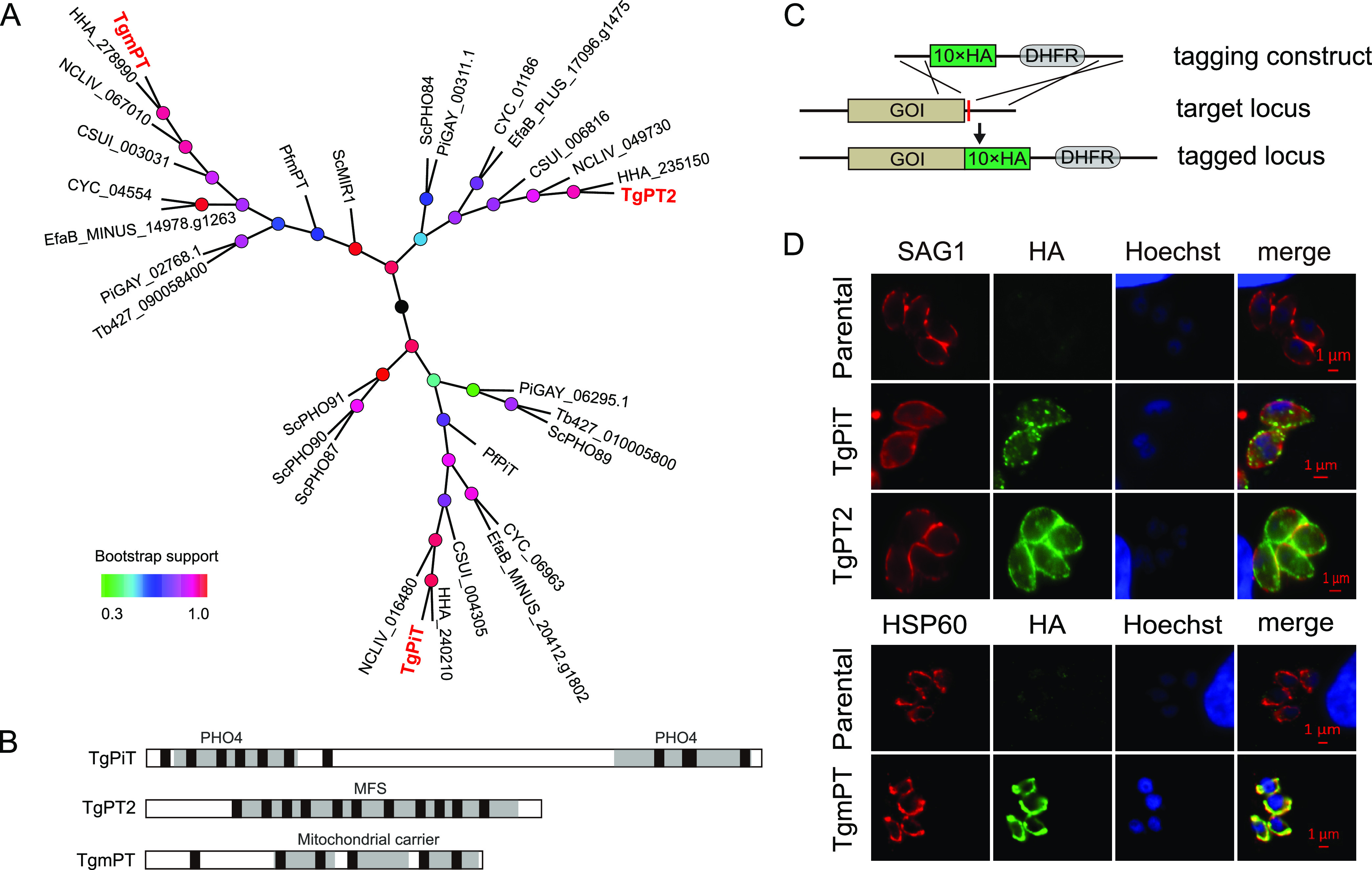
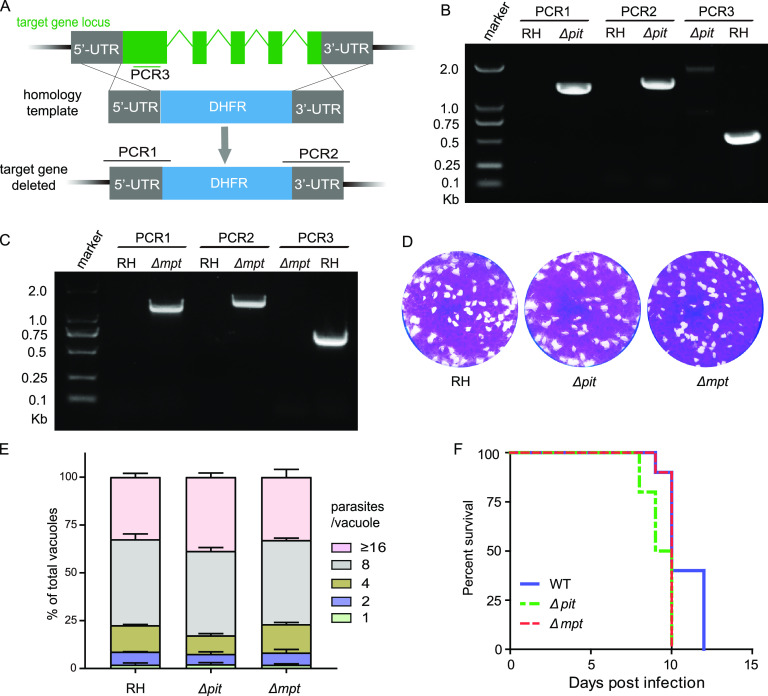
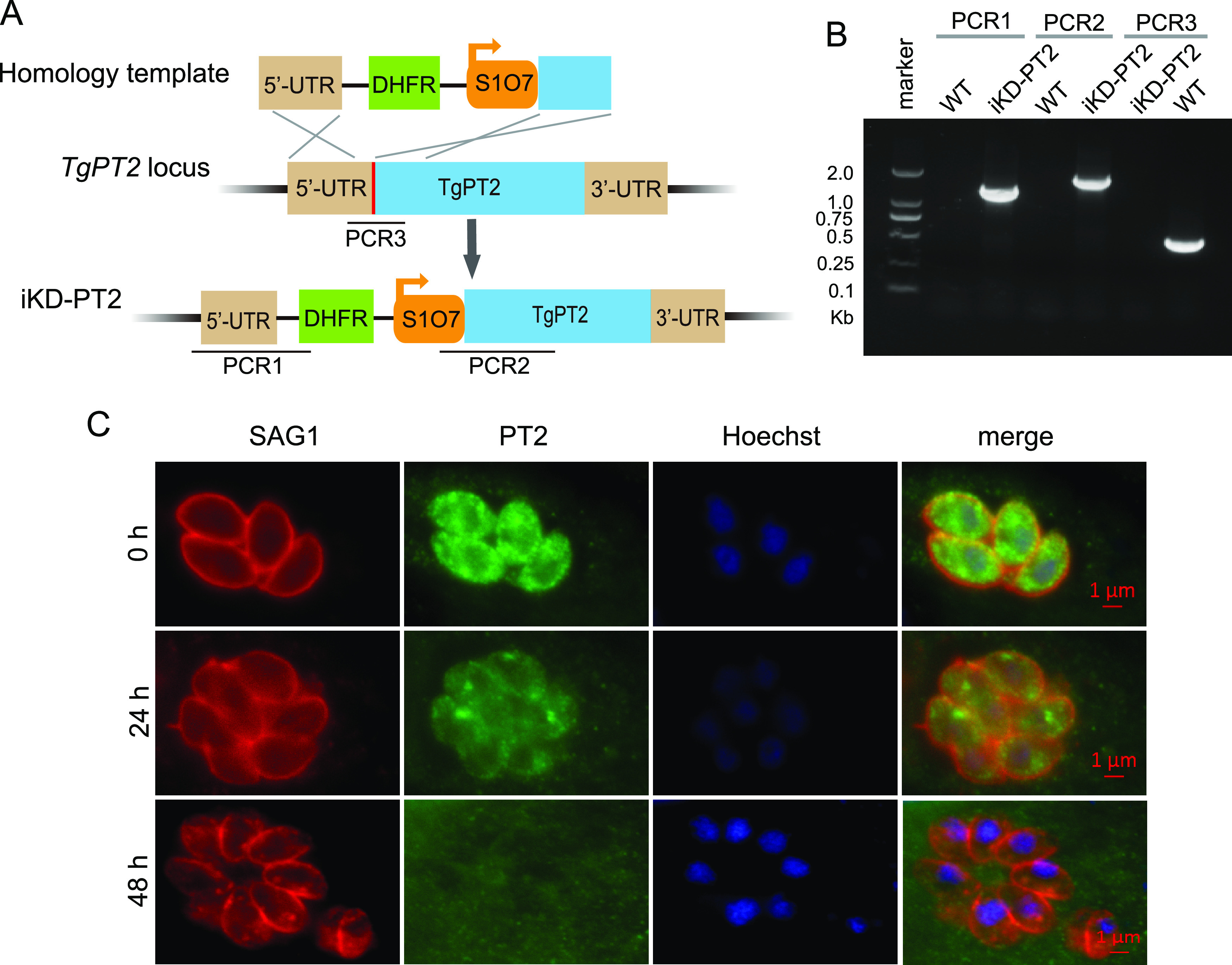
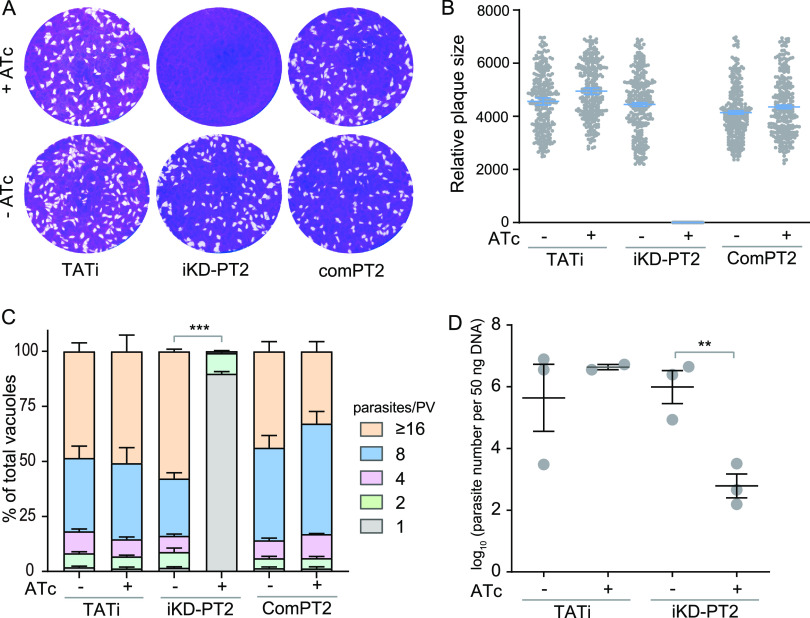
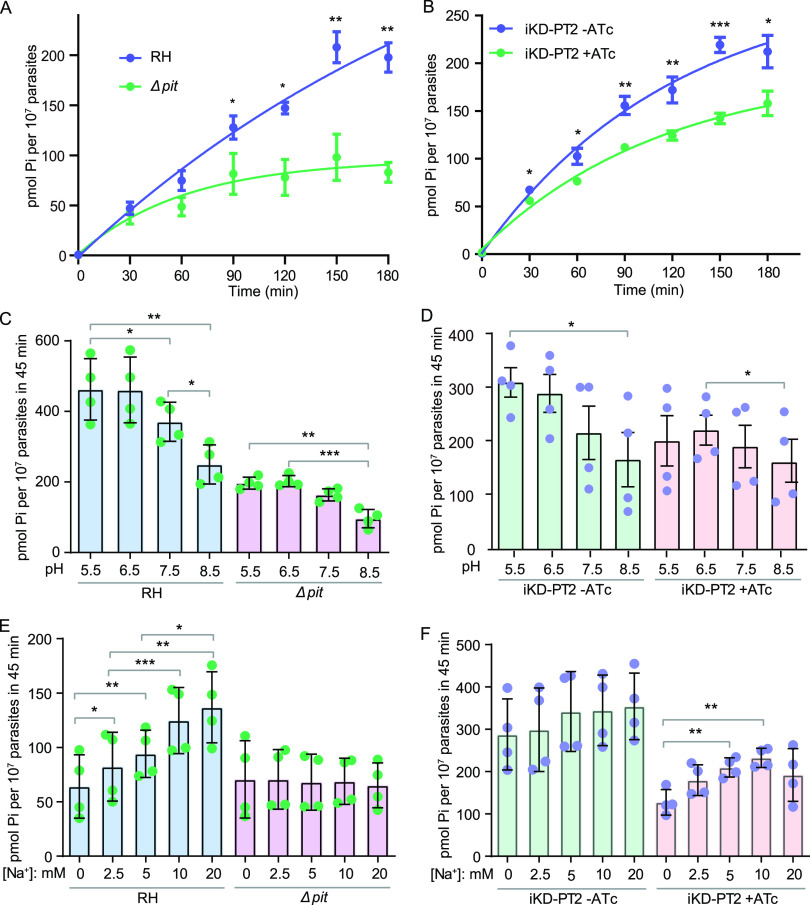
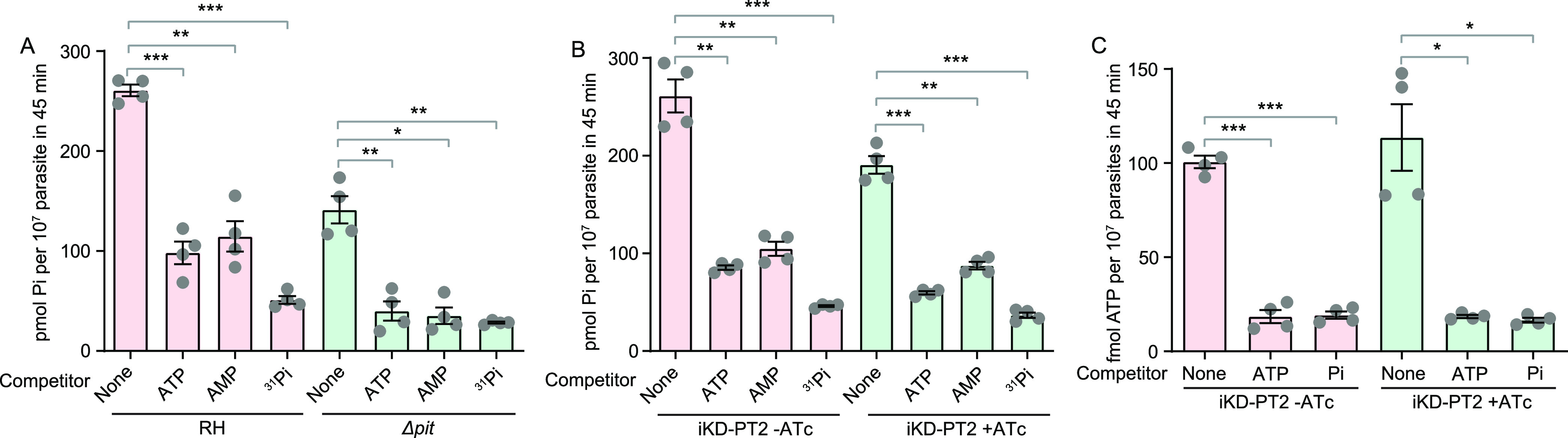
Toxoplasma gondii is an obligate intracellular parasite that acquires all necessary nutrients from the hosts, but the exact nutrient acquisition mechanisms are poorly understood. Here, we identified three putative phosphate transporters in T. gondii. TgPiT and TgPT2 are mainly on the plasma membrane, whereas TgmPT is localized to the mitochondrion. TgPiT and TgmPT are widely present and conserved in apicomplexan parasites that include and species. Nonetheless, they are dispensable for the growth and virulence of . TgPT2, on the other hand, is restricted to coccidia parasites and is essential for survival. TgPT2 depletion led to reduced motility and invasion, as well as growth arrest of the parasites both and . Both TgPiT and TgPT2 have phosphate transport activities and contribute to parasites' inorganic phosphate (P) absorption. Interestingly, the P importing activity of parasites could be competitively inhibited by ATP and AMP. Furthermore, direct uptake of P-ATP was also observed, indicating the parasites' ability to scavenge host ATP. Nonetheless, ATP/AMP import is not mediated by TgPiT or TgPT2, suggesting additional mechanisms. Together, these results show the complex pathways of phosphate transport in , and TgPT2 is a potential target for antitoxoplasmic intervention design due to its essential role in parasite growth. To grow and survive within host cells, must scavenge necessary nutrients from hosts to support its parasitism. Transporters located in the plasma membrane of the parasites play critical roles in nutrient acquisition. encodes a large number of transporters, but so far, only a few have been characterized. In this study, we identified two phosphate transporters, TgPiT and TgPT2, to localize to the plasma membrane of Although both TgPiT and TgPT2 possess phosphate transport activities, only the novel transporter TgPT2 was essential for parasite growth, both and . In addition, TgPT2 and its orthologs are only present in coccidia parasites. As such, TgPT2 represents a potential target for drug design against toxoplasmosis. In addition, our data indicated that can take up ATP and AMP from the environment, providing new insights into the energy metabolism of .
刚地弓形虫是一种专性细胞内寄生虫,它从宿主中获取所有必需的营养物质,但确切的营养物质获取机制还不清楚。在这里,我们鉴定了刚地弓形虫中的三个假定的磷酸盐转运体。TgPiT 和 TgPT2 主要位于质膜上,而 TgmPT 则定位于线粒体。TgPiT 和 TgmPT 在包括 和 物种的顶复门寄生虫中广泛存在且保守。尽管如此,它们对于 的生长和毒力并非不可或缺。另一方面,TgPT2 仅限于球虫寄生虫,对 的存活至关重要。TgPT2 耗尽会导致运动和侵袭能力降低,以及 和 的寄生虫生长停滞。TgPiT 和 TgPT2 都具有磷酸盐转运活性,并有助于寄生虫吸收无机磷酸盐(P)。有趣的是, 寄生虫的 P 导入活性可被 ATP 和 AMP 竞争性抑制。此外,还观察到 P-ATP 的直接摄取,表明寄生虫有能力从宿主中摄取 ATP。尽管如此,ATP/AMP 的导入并非由 TgPiT 或 TgPT2 介导,这表明存在其他机制。总之,这些结果显示了刚地弓形虫中磷酸盐转运的复杂途径,并且 TgPT2 是抗弓形虫干预设计的潜在靶标,因为它在寄生虫生长中起关键作用。为了在宿主细胞内生长和存活,必须从宿主中摄取必要的营养物质以支持其寄生。位于寄生虫质膜上的转运体在营养物质摄取中发挥关键作用。 编码大量转运体,但迄今为止,只有少数得到了表征。在这项研究中,我们鉴定了两种磷酸盐转运体,TgPiT 和 TgPT2,它们定位于 的质膜上。尽管 TgPiT 和 TgPT2 都具有磷酸盐转运活性,但只有新型转运体 TgPT2 对寄生虫的生长是必需的,无论是 还是 。此外,TgPT2 和其同源物仅存在于球虫寄生虫中。因此,TgPT2 代表了针对弓形虫病的药物设计的潜在靶标。此外,我们的数据表明, 可以从环境中摄取 ATP 和 AMP,为 提供了新的见解。