Department of Microbiology and Immunology, Tulane University, New Orleans, LA, USA.
Zalgen Labs, Frederick, MD, USA.
Nat Rev Microbiol. 2023 Feb;21(2):87-96. doi: 10.1038/s41579-022-00789-8. Epub 2022 Sep 12.
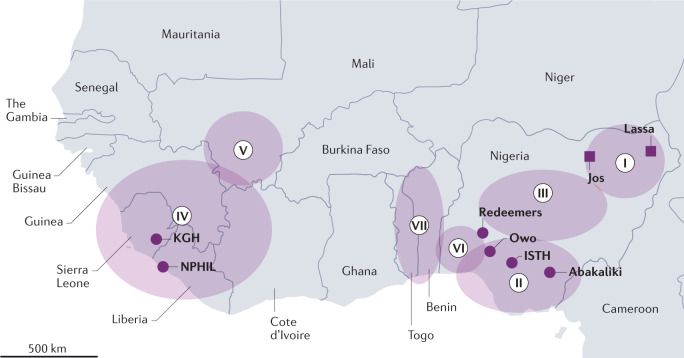
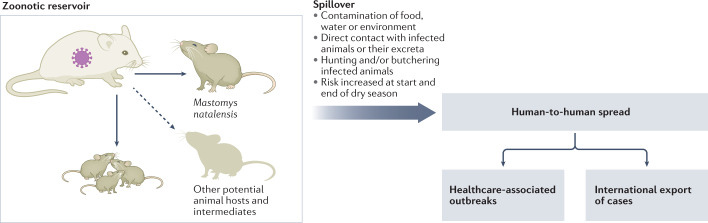
Lassa virus (LASV) is endemic in the rodent populations of Sierra Leone, Nigeria and other countries in West Africa. Spillover to humans occurs frequently and results in Lassa fever, a viral haemorrhagic fever (VHF) associated with a high case fatality rate. Despite advances, fundamental gaps in knowledge of the immunology, epidemiology, ecology and pathogenesis of Lassa fever persist. More frequent outbreaks, the potential for further geographic expansion of Mastomys natalensis and other rodent reservoirs, the ease of procurement and possible use and weaponization of LASV, the frequent importation of LASV to North America and Europe, and the emergence of novel LASV strains in densely populated West Africa have driven new initiatives to develop countermeasures for LASV. Although promising candidates are being evaluated, as yet there are no approved vaccines or therapeutics for human use. This Review discusses the virology of LASV, the clinical course of Lassa fever and the progress towards developing medical countermeasures.
拉萨病毒(LASV)在塞拉利昂、尼日利亚和西非其他国家的啮齿动物群体中流行。病毒经常会溢出到人类身上,导致拉沙热,这是一种病毒性出血热(VHF),病死率很高。尽管取得了进展,但对拉沙热的免疫学、流行病学、生态学和发病机制的基本认识仍然存在差距。更频繁的暴发、Mastomys natalensis 和其他啮齿动物宿主进一步向地理区域扩张的可能性、LASV 的易于采购以及可能的使用和武器化、LASV 频繁输入到北美和欧洲,以及在人口稠密的西非出现新型 LASV 株,这些都推动了开发 LASV 应对措施的新举措。尽管正在评估有前景的候选药物,但目前还没有批准用于人类的疫苗或治疗方法。这篇综述讨论了 LASV 的病毒学、拉沙热的临床过程以及开发医疗对策的进展。