Sección Virología, Facultad de Ciencias, Universidad de la República, Montevideo, Uruguay.
Programa Nacional de Trasplante Hepático y Unidad Docente Asistencial Centro Nacional de Tratamiento Hepatobiliopancreatico. Hospital Central de las Fuerzas Armadas, Montevideo, Uruguay.
Arch Virol. 2022 Dec;167(12):2457-2481. doi: 10.1007/s00705-022-05575-8. Epub 2022 Sep 13.
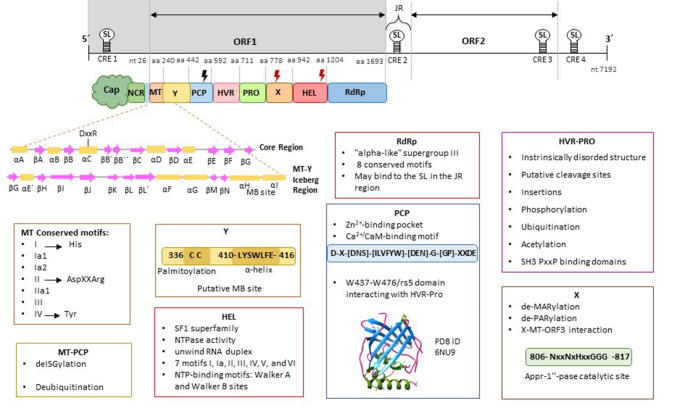
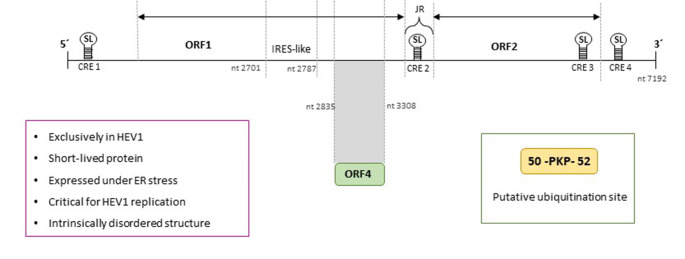
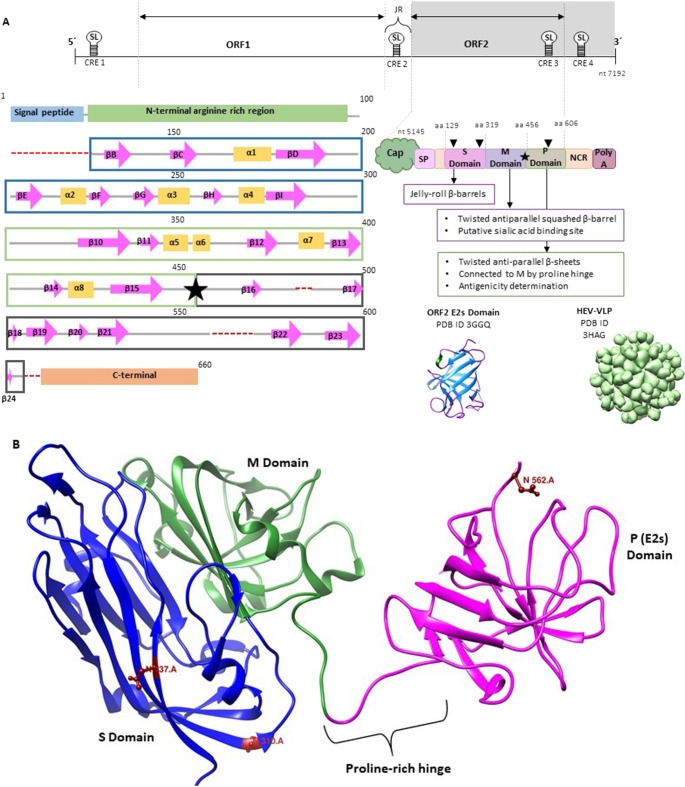
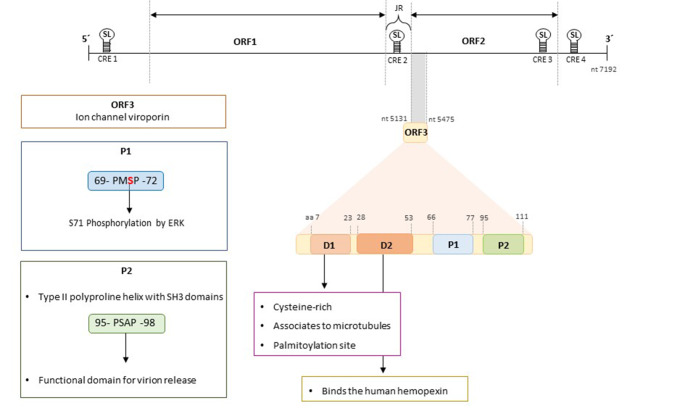
Hepatitis E virus (HEV) is a leading cause of acute hepatitis worldwide. Hepatitis E is an enterically transmitted zoonotic disease that causes large waterborne epidemic outbreaks in developing countries and has become an increasing public-health concern in industrialized countries. In this setting, the infection is usually acute and self-limiting in immunocompetent individuals, although chronic cases in immunocompromised patients have been reported, frequently associated with several extrahepatic manifestations. Moreover, extrahepatic manifestations have also been reported in immunocompetent individuals with acute HEV infection. HEV belongs to the alphavirus-like supergroup III of single-stranded positive-sense RNA viruses, and its genome contains three partially overlapping open reading frames (ORFs). ORF1 encodes a nonstructural protein with eight domains, most of which have not been extensively characterized: methyltransferase, Y domain, papain-like cysteine protease, hypervariable region, proline-rich region, X domain, Hel domain, and RNA-dependent RNA polymerase. ORF2 and ORF3 encode the capsid protein and a multifunctional protein believed to be involved in virion release, respectively. The novel ORF4 is only expressed in HEV genotype 1 under endoplasmic reticulum stress conditions, and its exact function has not yet been elucidated. Despite important advances in recent years, the biological and molecular processes underlying HEV replication remain poorly understood, primarily due to a lack of detailed information about the functions of the viral proteins and the mechanisms involved in host-pathogen interactions. This review summarizes the current knowledge concerning HEV proteins and their biological properties, providing updated detailed data describing their function and focusing in detail on their structural characteristics. Furthermore, we review some unclear aspects of the four proteins encoded by the ORFs, highlighting the current key information gaps and discussing potential novel experimental strategies for shedding light on those issues.
戊型肝炎病毒(HEV)是全球急性肝炎的主要病因。HEV 是一种经肠道传播的人畜共患病,在发展中国家引发大规模水源性暴发疫情,在工业化国家也日益成为公共卫生关注的问题。在这种情况下,感染在免疫功能正常的个体中通常是急性和自限性的,尽管已有免疫功能低下患者的慢性病例报告,且常伴有多种肝外表现。此外,在免疫功能正常的急性 HEV 感染者中也有肝外表现报告。HEV 属于单链正链 RNA 病毒的 alphavirus-like 超家族 III,其基因组包含三个部分重叠的开放阅读框(ORF)。ORF1 编码一个具有八个结构域的非结构蛋白,其中大多数结构域尚未得到广泛表征:甲基转移酶、Y 结构域、木瓜蛋白酶样半胱氨酸蛋白酶、高变区、脯氨酸丰富区、X 结构域、Hel 结构域和 RNA 依赖的 RNA 聚合酶。ORF2 和 ORF3 分别编码衣壳蛋白和一种多功能蛋白,被认为参与病毒粒子释放。新型 ORF4 仅在 HEV 基因型 1 在内质网应激条件下表达,其确切功能尚未阐明。尽管近年来取得了重要进展,但 HEV 复制的生物学和分子过程仍知之甚少,主要是因为缺乏有关病毒蛋白功能和宿主-病原体相互作用机制的详细信息。本文综述了目前关于 HEV 蛋白及其生物学特性的知识,提供了更新的详细数据,描述了它们的功能,并详细介绍了它们的结构特征。此外,我们还综述了 ORF 编码的四种蛋白中一些不明确的方面,强调了当前的关键信息空白,并讨论了一些潜在的新实验策略,以期阐明这些问题。