Department of Mechanical and Industrial Engineering, College of Engineering, Qatar University, Doha, 2713, Qatar.
Department of Mechanical and Industrial Engineering, College of Engineering, Qatar University, Doha, 2713, Qatar; Department of Biotechnology, Mirpur University of Science and Technology (MUST), Mirpur, 10250, AJK, Pakistan.
Comput Biol Med. 2022 Oct;149:106070. doi: 10.1016/j.compbiomed.2022.106070. Epub 2022 Sep 1.
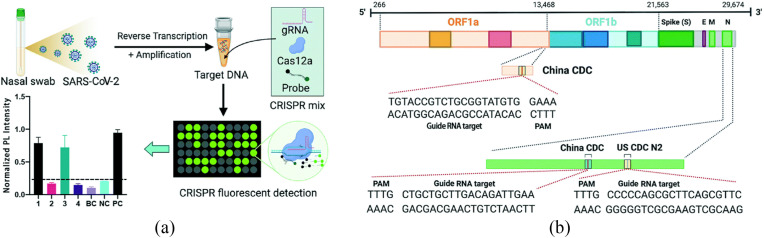
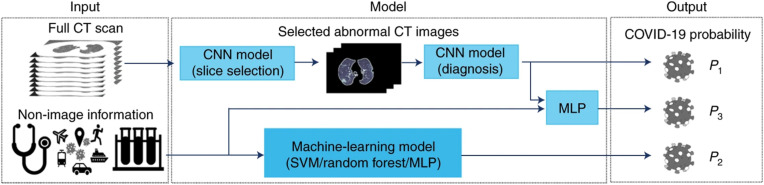
Screening of severe acute respiratory syndrome coronavirus 2 (SARS-CoV-2) among symptomatic and asymptomatic patients offers unique opportunities for curtailing the transmission of novel coronavirus disease 2019, commonly known as COVID-19. Molecular diagnostic techniques, namely reverse transcription loop-mediated isothermal amplification (RT-LAMP), reverse transcription-polymerase chain reaction (RT-PCR), and immunoassays, have been frequently used to identify COVID-19 infection. Although these techniques are robust and accurate, mass testing of potentially infected individuals has shown difficulty due to the resources, manpower, and costs it entails. Moreover, as these techniques are typically used to test symptomatic patients, healthcare systems have failed to screen asymptomatic patients, whereas the spread of COVID-19 by these asymptomatic individuals has turned into a crucial problem. Besides, respiratory infections or cardiovascular conditions generally demonstrate changes in physiological parameters, namely body temperature, blood pressure, and breathing rate, which signifies the onset of diseases. Such vitals monitoring systems have shown promising results employing artificial intelligence (AI). Therefore, the potential use of wearable devices for monitoring asymptomatic COVID-19 individuals has recently been explored. This work summarizes the efforts that have been made in the domains from laboratory-based testing to asymptomatic patient monitoring via wearable systems.
对有症状和无症状患者进行严重急性呼吸综合征冠状病毒 2(SARS-CoV-2)筛查为控制新型冠状病毒病 2019(通常称为 COVID-19)的传播提供了独特的机会。分子诊断技术,即逆转录环介导等温扩增(RT-LAMP)、逆转录-聚合酶链反应(RT-PCR)和免疫测定,已被广泛用于识别 COVID-19 感染。尽管这些技术具有强大且准确,但由于所需的资源、人力和成本,对潜在感染者进行大规模检测具有一定难度。此外,由于这些技术通常用于检测有症状的患者,因此医疗保健系统未能对无症状患者进行筛查,而这些无症状患者传播 COVID-19 已成为一个关键问题。此外,呼吸道感染或心血管疾病通常会导致生理参数(即体温、血压和呼吸频率)发生变化,这表明疾病的发作。此类生命体征监测系统在使用人工智能(AI)方面已显示出良好的效果。因此,最近已经探索了可穿戴设备对无症状 COVID-19 个体进行监测的潜在用途。本工作总结了从实验室检测到通过可穿戴系统对无症状患者监测等领域所做的努力。