• 文献检索
  • 文档翻译
  • 深度研究
  • 学术资讯
  • Suppr Zotero 插件Zotero 插件
  • 邀请有礼
  • 套餐&价格
  • 历史记录
应用&插件
Suppr Zotero 插件Zotero 插件浏览器插件Mac 客户端Windows 客户端微信小程序
定价
高级版会员购买积分包购买API积分包
服务
文献检索文档翻译深度研究API 文档MCP 服务
关于我们
关于 Suppr公司介绍联系我们用户协议隐私条款
关注我们

Suppr 超能文献

核心技术专利:CN118964589B侵权必究
粤ICP备2023148730 号-1Suppr @ 2026

文献检索

告别复杂PubMed语法,用中文像聊天一样搜索,搜遍4000万医学文献。AI智能推荐,让科研检索更轻松。

立即免费搜索

文件翻译

保留排版,准确专业,支持PDF/Word/PPT等文件格式,支持 12+语言互译。

免费翻译文档

深度研究

AI帮你快速写综述,25分钟生成高质量综述,智能提取关键信息,辅助科研写作。

立即免费体验

iCOVID:用于预测COVID-19患者早期恢复时间的可解释深度学习框架。

iCOVID: interpretable deep learning framework for early recovery-time prediction of COVID-19 patients.

作者信息

Wang Jun, Liu Chen, Li Jingwen, Yuan Cheng, Zhang Lichi, Jin Cheng, Xu Jianwei, Wang Yaqi, Wen Yaofeng, Lu Hongbing, Li Biao, Chen Chang, Li Xiangdong, Shen Dinggang, Qian Dahong, Wang Jian

机构信息

School of Biomedical Engineering, Shanghai Jiao Tong University, Shanghai, China.

Department of Radiology, Southwest Hospital, Third Military Medical University (Army Medical University), Chongqing, China.

出版信息

NPJ Digit Med. 2021 Aug 16;4(1):124. doi: 10.1038/s41746-021-00496-3.

DOI:10.1038/s41746-021-00496-3
PMID:34400751
原文链接:https://pmc.ncbi.nlm.nih.gov/articles/PMC8367981/
Abstract

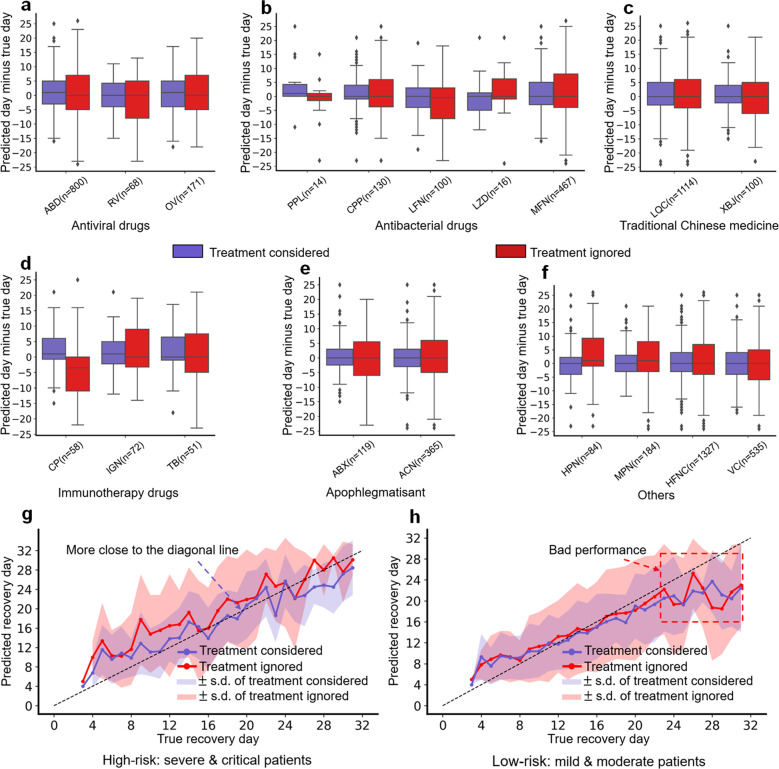
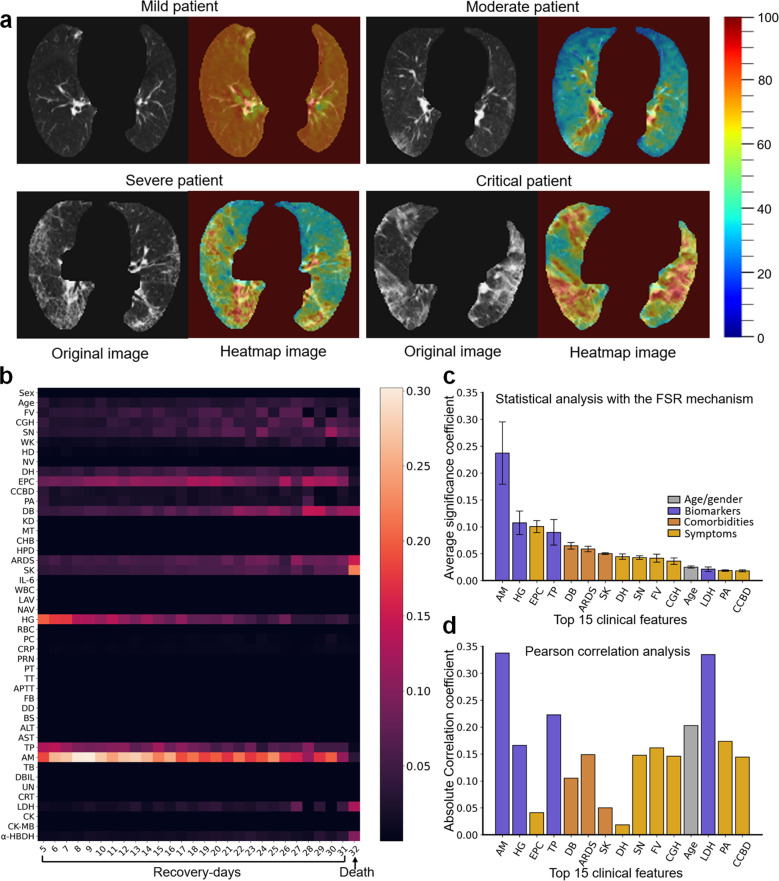
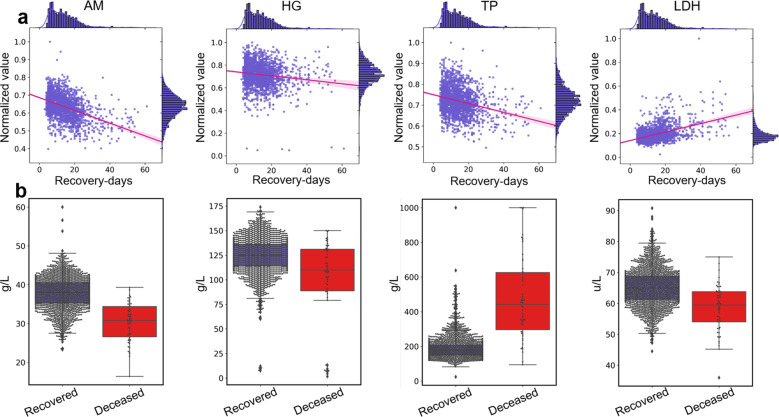
Most prior studies focused on developing models for the severity or mortality prediction of COVID-19 patients. However, effective models for recovery-time prediction are still lacking. Here, we present a deep learning solution named iCOVID that can successfully predict the recovery-time of COVID-19 patients based on predefined treatment schemes and heterogeneous multimodal patient information collected within 48 hours after admission. Meanwhile, an interpretable mechanism termed FSR is integrated into iCOVID to reveal the features greatly affecting the prediction of each patient. Data from a total of 3008 patients were collected from three hospitals in Wuhan, China, for large-scale verification. The experiments demonstrate that iCOVID can achieve a time-dependent concordance index of 74.9% (95% CI: 73.6-76.3%) and an average day error of 4.4 days (95% CI: 4.2-4.6 days). Our study reveals that treatment schemes, age, symptoms, comorbidities, and biomarkers are highly related to recovery-time predictions.

摘要

大多数先前的研究都集中在开发用于预测COVID-19患者严重程度或死亡率的模型。然而,仍然缺乏用于预测康复时间的有效模型。在此,我们提出了一种名为iCOVID的深度学习解决方案,它可以根据预定义的治疗方案和入院后48小时内收集的异构多模态患者信息,成功预测COVID-19患者的康复时间。同时,一种名为FSR的可解释机制被集成到iCOVID中,以揭示对每个患者预测有重大影响的特征。从中国武汉的三家医院收集了总共3008名患者的数据,用于大规模验证。实验表明,iCOVID可以实现74.9%的时间依赖性一致性指数(95%CI:73.6-76.3%)和4.4天的平均日误差(95%CI:4.2-4.6天)。我们的研究表明,治疗方案、年龄、症状、合并症和生物标志物与康复时间预测高度相关。

https://cdn.ncbi.nlm.nih.gov/pmc/blobs/83b9/8367981/0cd1117bef7e/41746_2021_496_Fig7_HTML.jpg
https://cdn.ncbi.nlm.nih.gov/pmc/blobs/83b9/8367981/5542ab31980b/41746_2021_496_Fig1_HTML.jpg
https://cdn.ncbi.nlm.nih.gov/pmc/blobs/83b9/8367981/af458740867f/41746_2021_496_Fig2_HTML.jpg
https://cdn.ncbi.nlm.nih.gov/pmc/blobs/83b9/8367981/93a5bbb15030/41746_2021_496_Fig3_HTML.jpg
https://cdn.ncbi.nlm.nih.gov/pmc/blobs/83b9/8367981/e8ae277a49e0/41746_2021_496_Fig4_HTML.jpg
https://cdn.ncbi.nlm.nih.gov/pmc/blobs/83b9/8367981/21ec8cedc1d5/41746_2021_496_Fig5_HTML.jpg
https://cdn.ncbi.nlm.nih.gov/pmc/blobs/83b9/8367981/d6d5ebed983f/41746_2021_496_Fig6_HTML.jpg
https://cdn.ncbi.nlm.nih.gov/pmc/blobs/83b9/8367981/0cd1117bef7e/41746_2021_496_Fig7_HTML.jpg
https://cdn.ncbi.nlm.nih.gov/pmc/blobs/83b9/8367981/5542ab31980b/41746_2021_496_Fig1_HTML.jpg
https://cdn.ncbi.nlm.nih.gov/pmc/blobs/83b9/8367981/af458740867f/41746_2021_496_Fig2_HTML.jpg
https://cdn.ncbi.nlm.nih.gov/pmc/blobs/83b9/8367981/93a5bbb15030/41746_2021_496_Fig3_HTML.jpg
https://cdn.ncbi.nlm.nih.gov/pmc/blobs/83b9/8367981/e8ae277a49e0/41746_2021_496_Fig4_HTML.jpg
https://cdn.ncbi.nlm.nih.gov/pmc/blobs/83b9/8367981/21ec8cedc1d5/41746_2021_496_Fig5_HTML.jpg
https://cdn.ncbi.nlm.nih.gov/pmc/blobs/83b9/8367981/d6d5ebed983f/41746_2021_496_Fig6_HTML.jpg
https://cdn.ncbi.nlm.nih.gov/pmc/blobs/83b9/8367981/0cd1117bef7e/41746_2021_496_Fig7_HTML.jpg

相似文献

1
iCOVID: interpretable deep learning framework for early recovery-time prediction of COVID-19 patients.iCOVID:用于预测COVID-19患者早期恢复时间的可解释深度学习框架。
NPJ Digit Med. 2021 Aug 16;4(1):124. doi: 10.1038/s41746-021-00496-3.
2
Development and Validation of a Robust and Interpretable Early Triaging Support System for Patients Hospitalized With COVID-19: Predictive Algorithm Modeling and Interpretation Study.开发和验证用于 COVID-19 住院患者的强大且可解释的早期分诊支持系统:预测算法建模和解释研究。
J Med Internet Res. 2024 Jan 11;26:e52134. doi: 10.2196/52134.
3
Interpretable machine-learning model for Predicting the Convalescent COVID-19 patients with pulmonary diffusing capacity impairment.用于预测具有肺弥散能力障碍的康复期 COVID-19 患者的可解释机器学习模型。
BMC Med Inform Decis Mak. 2023 Aug 29;23(1):169. doi: 10.1186/s12911-023-02192-6.
4
Interpretable deep learning for the prediction of ICU admission likelihood and mortality of COVID-19 patients.用于预测新冠肺炎患者入住重症监护病房可能性和死亡率的可解释深度学习
PeerJ Comput Sci. 2022 Mar 17;8:e889. doi: 10.7717/peerj-cs.889. eCollection 2022.
5
Reliable and Interpretable Mortality Prediction With Strong Foresight in COVID-19 Patients: An International Study From China and Germany.对新冠肺炎患者进行具有强大前瞻性的可靠且可解释的死亡率预测:一项来自中国和德国的国际研究
Front Artif Intell. 2021 Sep 3;4:672050. doi: 10.3389/frai.2021.672050. eCollection 2021.
6
Multi-Modal Data Analysis for Pneumonia Status Prediction Using Deep Learning (MDA-PSP).基于深度学习的肺炎状态预测多模态数据分析(MDA-PSP)
Diagnostics (Basel). 2022 Jul 13;12(7):1706. doi: 10.3390/diagnostics12071706.
7
Large-scale prediction of stream water quality using an interpretable deep learning approach.使用可解释的深度学习方法对溪流水质进行大规模预测。
J Environ Manage. 2023 Apr 1;331:117309. doi: 10.1016/j.jenvman.2023.117309. Epub 2023 Jan 17.
8
IMAL-Net: Interpretable multi-task attention learning network for invasive lung adenocarcinoma screening in CT images.IMAL-Net:用于 CT 图像中浸润性肺腺癌筛查的可解释多任务注意力学习网络。
Med Phys. 2021 Dec;48(12):7913-7929. doi: 10.1002/mp.15293. Epub 2021 Oct 27.
9
Recurrent neural network models (CovRNN) for predicting outcomes of patients with COVID-19 on admission to hospital: model development and validation using electronic health record data.用于预测COVID-19患者入院时预后的循环神经网络模型(CovRNN):使用电子健康记录数据进行模型开发和验证
Lancet Digit Health. 2022 Jun;4(6):e415-e425. doi: 10.1016/S2589-7500(22)00049-8. Epub 2022 Apr 21.
10
Machine Learning to Predict Mortality and Critical Events in a Cohort of Patients With COVID-19 in New York City: Model Development and Validation.机器学习预测纽约市新冠肺炎患者队列中的死亡率和危急事件:模型开发与验证
J Med Internet Res. 2020 Nov 6;22(11):e24018. doi: 10.2196/24018.

引用本文的文献

1
Prospective study using artificial neural networks for identification of high-risk COVID-19 patients.使用人工神经网络识别高危COVID-19患者的前瞻性研究。
Sci Rep. 2025 May 23;15(1):18005. doi: 10.1038/s41598-025-00925-3.
2
Development of an MRI based artificial intelligence model for the identification of underlying atrial fibrillation after ischemic stroke: a multicenter proof-of-concept analysis.基于磁共振成像的人工智能模型用于识别缺血性中风后潜在心房颤动的开发:一项多中心概念验证分析。
EClinicalMedicine. 2025 Feb 17;81:103118. doi: 10.1016/j.eclinm.2025.103118. eCollection 2025 Mar.
3
A Comprehensive Survey on Pandemic Patient Monitoring System: Enabling Technologies, Opportunities, and Research Challenges.

本文引用的文献

1
A Review on Deep Learning Techniques for the Diagnosis of Novel Coronavirus (COVID-19).关于用于新型冠状病毒(COVID-19)诊断的深度学习技术的综述
IEEE Access. 2021 Feb 10;9:30551-30572. doi: 10.1109/ACCESS.2021.3058537. eCollection 2021.
2
Elevated cardiac biomarkers may be effective prognostic predictors for patients with COVID-19: A multicenter, observational study.心脏生物标志物升高可能是COVID-19患者有效的预后预测指标:一项多中心观察性研究。
Am J Emerg Med. 2021 Jan;39:34-41. doi: 10.1016/j.ajem.2020.10.013. Epub 2020 Oct 13.
3
CovidCTNet: an open-source deep learning approach to diagnose covid-19 using small cohort of CT images.
关于大流行患者监测系统的全面综述:使能技术、机遇与研究挑战
Wirel Pers Commun. 2023 Jun 2:1-48. doi: 10.1007/s11277-023-10535-9.
4
COVID-19 imaging, where do we go from here? Bibliometric analysis of medical imaging in COVID-19.COVID-19 影像学,我们何去何从?COVID-19 医学影像学的文献计量分析。
Eur Radiol. 2023 May;33(5):3133-3143. doi: 10.1007/s00330-023-09498-z. Epub 2023 Mar 9.
5
A comprehensive review of COVID-19 detection techniques: From laboratory systems to wearable devices.COVID-19 检测技术的全面综述:从实验室系统到可穿戴设备。
Comput Biol Med. 2022 Oct;149:106070. doi: 10.1016/j.compbiomed.2022.106070. Epub 2022 Sep 1.
6
Machine Learning-Based COVID-19 Patients Triage Algorithm Using Patient-Generated Health Data from Nationwide Multicenter Database.基于机器学习的新冠疫情患者分诊算法:利用来自全国多中心数据库的患者生成健康数据
Infect Dis Ther. 2022 Apr;11(2):787-805. doi: 10.1007/s40121-022-00600-4. Epub 2022 Feb 16.
CovidCTNet:一种使用少量CT图像队列诊断新冠病毒肺炎的开源深度学习方法。
NPJ Digit Med. 2021 Feb 18;4(1):29. doi: 10.1038/s41746-021-00399-3.
4
Real-time prediction of COVID-19 related mortality using electronic health records.利用电子健康记录实时预测 COVID-19 相关死亡率。
Nat Commun. 2021 Feb 16;12(1):1058. doi: 10.1038/s41467-020-20816-7.
5
Deep COVID DeteCT: an international experience on COVID-19 lung detection and prognosis using chest CT.深度新冠检测:一项使用胸部CT进行新冠病毒肺炎肺部检测与预后评估的国际经验。
NPJ Digit Med. 2021 Jan 29;4(1):11. doi: 10.1038/s41746-020-00369-1.
6
Integrating deep learning CT-scan model, biological and clinical variables to predict severity of COVID-19 patients.整合深度学习 CT 扫描模型、生物学和临床变量以预测 COVID-19 患者的严重程度。
Nat Commun. 2021 Jan 27;12(1):634. doi: 10.1038/s41467-020-20657-4.
7
Scalable Telehealth Services to Combat Novel Coronavirus (COVID-19) Pandemic.可扩展的远程医疗服务以应对新型冠状病毒(COVID-19)大流行。
SN Comput Sci. 2021;2(1):18. doi: 10.1007/s42979-020-00401-x. Epub 2021 Jan 6.
8
Machine learning-based prediction of COVID-19 diagnosis based on symptoms.基于症状的新冠肺炎诊断的机器学习预测
NPJ Digit Med. 2021 Jan 4;4(1):3. doi: 10.1038/s41746-020-00372-6.
9
EMCNet: Automated COVID-19 diagnosis from X-ray images using convolutional neural network and ensemble of machine learning classifiers.EMCNet:使用卷积神经网络和机器学习分类器集成从X射线图像自动诊断新冠肺炎
Inform Med Unlocked. 2021;22:100505. doi: 10.1016/j.imu.2020.100505. Epub 2020 Dec 22.
10
Open resource of clinical data from patients with pneumonia for the prediction of COVID-19 outcomes via deep learning.通过深度学习,从肺炎患者的临床数据中开放资源,以预测 COVID-19 结局。
Nat Biomed Eng. 2020 Dec;4(12):1197-1207. doi: 10.1038/s41551-020-00633-5. Epub 2020 Nov 18.