• 文献检索
  • 文档翻译
  • 深度研究
  • 学术资讯
  • Suppr Zotero 插件Zotero 插件
  • 邀请有礼
  • 套餐&价格
  • 历史记录
应用&插件
Suppr Zotero 插件Zotero 插件浏览器插件Mac 客户端Windows 客户端微信小程序
定价
高级版会员购买积分包购买API积分包
服务
文献检索文档翻译深度研究API 文档MCP 服务
关于我们
关于 Suppr公司介绍联系我们用户协议隐私条款
关注我们

Suppr 超能文献

核心技术专利:CN118964589B侵权必究
粤ICP备2023148730 号-1Suppr @ 2026

文献检索

告别复杂PubMed语法,用中文像聊天一样搜索,搜遍4000万医学文献。AI智能推荐,让科研检索更轻松。

立即免费搜索

文件翻译

保留排版,准确专业,支持PDF/Word/PPT等文件格式,支持 12+语言互译。

免费翻译文档

深度研究

AI帮你快速写综述,25分钟生成高质量综述,智能提取关键信息,辅助科研写作。

立即免费体验

PCovNet+:一种用于基于智能手表的COVID-19检测的带有长短期记忆网络嵌入的卷积神经网络-变分自编码器异常检测框架。

PCovNet+: A CNN-VAE anomaly detection framework with LSTM embeddings for smartwatch-based COVID-19 detection.

作者信息

Abir Farhan Fuad, Chowdhury Muhammad E H, Tapotee Malisha Islam, Mushtak Adam, Khandakar Amith, Mahmud Sakib, Hasan Md Anwarul

机构信息

Department of Electrical and Computer Engineering, University of Central Florida, Orlando, FL, United States.

Department of Electrical Engineering, Qatar University, Doha 2713, Qatar.

出版信息

Eng Appl Artif Intell. 2023 Jun;122:106130. doi: 10.1016/j.engappai.2023.106130. Epub 2023 Mar 28.

DOI:10.1016/j.engappai.2023.106130
PMID:37006447
原文链接:https://pmc.ncbi.nlm.nih.gov/articles/PMC10047244/
Abstract

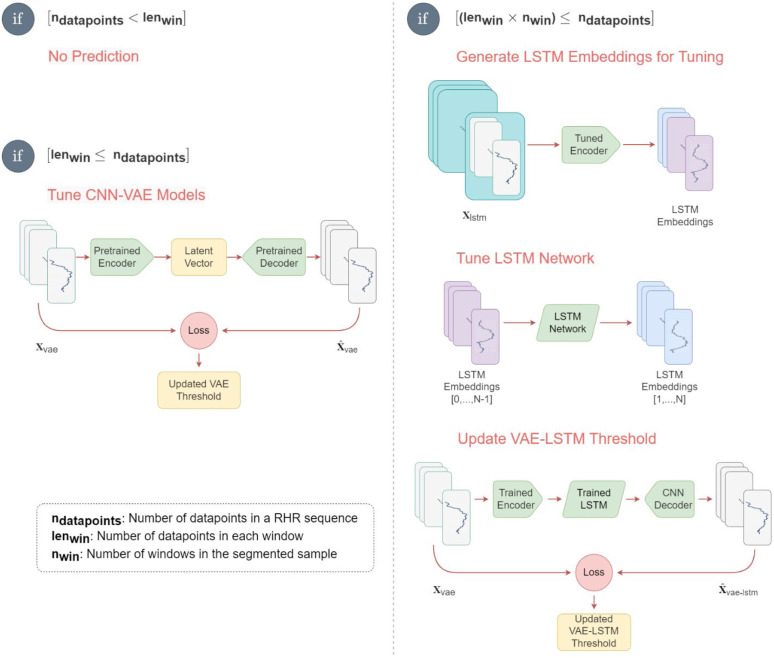
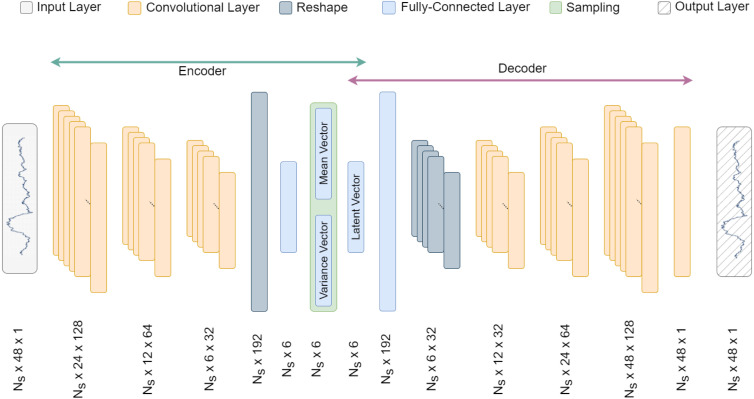
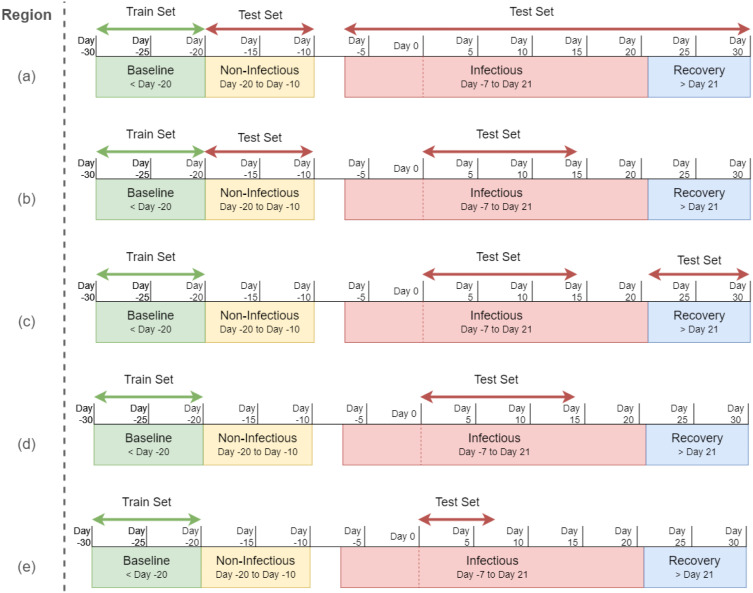
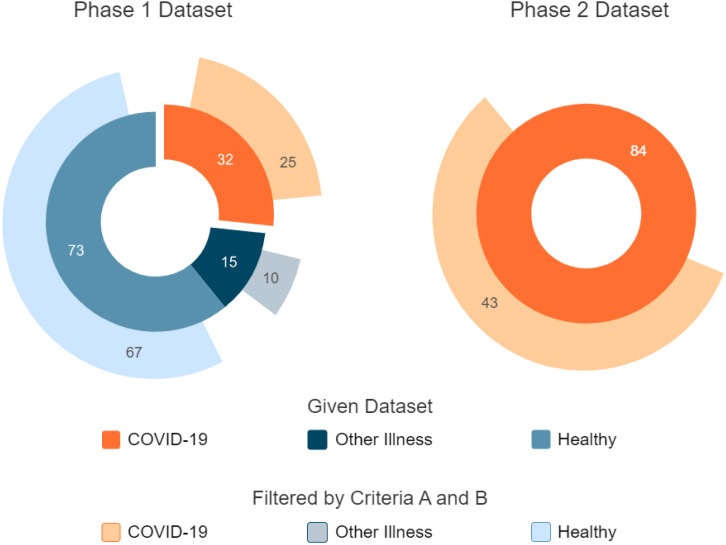
The world is slowly recovering from the Coronavirus disease 2019 (COVID-19) pandemic; however, humanity has experienced one of its According to work by Mishra et al. (2020), the study's first phase included a cohort of 5,262 subjects, with 3,325 Fitbit users constituting the majority. However, among this large cohort of 5,262 subjects, most significant trials in modern times only to learn about its lack of preparedness in the face of a highly contagious pathogen. To better prepare the world for any new mutation of the same pathogen or the newer ones, technological development in the healthcare system is a must. Hence, in this work, PCovNet+, a deep learning framework, was proposed for smartwatches and fitness trackers to monitor the user's Resting Heart Rate (RHR) for the infection-induced anomaly. A convolutional neural network (CNN)-based variational autoencoder (VAE) architecture was used as the primary model along with a long short-term memory (LSTM) network to create latent space embeddings for the VAE. Moreover, the framework employed pre-training using normal data from healthy subjects to circumvent the data shortage problem in the personalized models. This framework was validated on a dataset of 68 COVID-19-infected subjects, resulting in anomalous RHR detection with precision, recall, F-beta, and F-1 score of 0.993, 0.534, 0.9849, and 0.6932, respectively, which is a significant improvement compared to the literature. Furthermore, the PCovNet+ framework successfully detected COVID-19 infection for 74% of the subjects (47% presymptomatic and 27% post-symptomatic detection). The results prove the usability of such a system as a secondary diagnostic tool enabling continuous health monitoring and contact tracing.

摘要

世界正在从2019冠状病毒病(COVID-19)大流行中缓慢恢复;然而,人类经历了现代最重大的试验之一,却只是了解到面对高传染性病原体时准备不足。为了让世界更好地应对同一病原体或新病原体的任何新突变,医疗保健系统的技术发展必不可少。因此,在这项工作中,提出了一种名为PCovNet+的深度学习框架,用于智能手表和健身追踪器,以监测用户静息心率(RHR)的感染诱发异常。基于卷积神经网络(CNN)的变分自编码器(VAE)架构与长短期记忆(LSTM)网络一起用作主要模型,为VAE创建潜在空间嵌入。此外,该框架利用健康受试者的正常数据进行预训练,以规避个性化模型中的数据短缺问题。该框架在一个包含68名COVID-19感染受试者的数据集上得到验证,异常RHR检测的精确率、召回率、F-β和F-1分数分别为0.993、0.534、0.9849和0.6932,与文献相比有显著改进。此外,PCovNet+框架成功检测出74%受试者的COVID-19感染(47%为症状前检测,27%为症状后检测)。结果证明了这样一个系统作为辅助诊断工具在实现持续健康监测和接触者追踪方面的可用性。
https://cdn.ncbi.nlm.nih.gov/pmc/blobs/074c/10047244/dda28f4a2563/gr11_lrg.jpg
https://cdn.ncbi.nlm.nih.gov/pmc/blobs/074c/10047244/6b51c3570bd1/gr1_lrg.jpg
https://cdn.ncbi.nlm.nih.gov/pmc/blobs/074c/10047244/79c3fe3203fd/gr2_lrg.jpg
https://cdn.ncbi.nlm.nih.gov/pmc/blobs/074c/10047244/eb8312fd05c0/gr3_lrg.jpg
https://cdn.ncbi.nlm.nih.gov/pmc/blobs/074c/10047244/d9ffdf57b078/gr4_lrg.jpg
https://cdn.ncbi.nlm.nih.gov/pmc/blobs/074c/10047244/ef14d7133e88/gr5_lrg.jpg
https://cdn.ncbi.nlm.nih.gov/pmc/blobs/074c/10047244/eede574066bf/gr6_lrg.jpg
https://cdn.ncbi.nlm.nih.gov/pmc/blobs/074c/10047244/c5f8826570ca/gr7_lrg.jpg
https://cdn.ncbi.nlm.nih.gov/pmc/blobs/074c/10047244/ee84b10899c6/gr8_lrg.jpg
https://cdn.ncbi.nlm.nih.gov/pmc/blobs/074c/10047244/12fa3d6f0591/gr9_lrg.jpg
https://cdn.ncbi.nlm.nih.gov/pmc/blobs/074c/10047244/8778ac21e678/gr10_lrg.jpg
https://cdn.ncbi.nlm.nih.gov/pmc/blobs/074c/10047244/dda28f4a2563/gr11_lrg.jpg
https://cdn.ncbi.nlm.nih.gov/pmc/blobs/074c/10047244/6b51c3570bd1/gr1_lrg.jpg
https://cdn.ncbi.nlm.nih.gov/pmc/blobs/074c/10047244/79c3fe3203fd/gr2_lrg.jpg
https://cdn.ncbi.nlm.nih.gov/pmc/blobs/074c/10047244/eb8312fd05c0/gr3_lrg.jpg
https://cdn.ncbi.nlm.nih.gov/pmc/blobs/074c/10047244/d9ffdf57b078/gr4_lrg.jpg
https://cdn.ncbi.nlm.nih.gov/pmc/blobs/074c/10047244/ef14d7133e88/gr5_lrg.jpg
https://cdn.ncbi.nlm.nih.gov/pmc/blobs/074c/10047244/eede574066bf/gr6_lrg.jpg
https://cdn.ncbi.nlm.nih.gov/pmc/blobs/074c/10047244/c5f8826570ca/gr7_lrg.jpg
https://cdn.ncbi.nlm.nih.gov/pmc/blobs/074c/10047244/ee84b10899c6/gr8_lrg.jpg
https://cdn.ncbi.nlm.nih.gov/pmc/blobs/074c/10047244/12fa3d6f0591/gr9_lrg.jpg
https://cdn.ncbi.nlm.nih.gov/pmc/blobs/074c/10047244/8778ac21e678/gr10_lrg.jpg
https://cdn.ncbi.nlm.nih.gov/pmc/blobs/074c/10047244/dda28f4a2563/gr11_lrg.jpg

相似文献

1
PCovNet+: A CNN-VAE anomaly detection framework with LSTM embeddings for smartwatch-based COVID-19 detection.PCovNet+:一种用于基于智能手表的COVID-19检测的带有长短期记忆网络嵌入的卷积神经网络-变分自编码器异常检测框架。
Eng Appl Artif Intell. 2023 Jun;122:106130. doi: 10.1016/j.engappai.2023.106130. Epub 2023 Mar 28.
2
PCovNet: A presymptomatic COVID-19 detection framework using deep learning model using wearables data.PCovNet:一种使用可穿戴设备数据的深度学习模型进行无症状 COVID-19 检测的框架。
Comput Biol Med. 2022 Aug;147:105682. doi: 10.1016/j.compbiomed.2022.105682. Epub 2022 Jun 7.
3
DA-LSTM-VAE: Dual-Stage Attention-Based LSTM-VAE for KPI Anomaly Detection.DA-LSTM-VAE:用于关键绩效指标异常检测的基于双阶段注意力机制的长短期记忆变分自编码器
Entropy (Basel). 2022 Nov 5;24(11):1613. doi: 10.3390/e24111613.
4
LSTM-Based VAE-GAN for Time-Series Anomaly Detection.基于长短期记忆网络的变分自编码器生成对抗网络用于时间序列异常检测。
Sensors (Basel). 2020 Jul 3;20(13):3738. doi: 10.3390/s20133738.
5
EEG Classification of Motor Imagery Using a Novel Deep Learning Framework.基于新型深度学习框架的运动想象脑电信号分类
Sensors (Basel). 2019 Jan 29;19(3):551. doi: 10.3390/s19030551.
6
Multi-Channel Multi-Scale Convolution Attention Variational Autoencoder (MCA-VAE): An Interpretable Anomaly Detection Algorithm Based on Variational Autoencoder.多通道多尺度卷积注意力变分自编码器(MCA-VAE):一种基于变分自编码器的可解释异常检测算法。
Sensors (Basel). 2024 Aug 16;24(16):5316. doi: 10.3390/s24165316.
7
Attention Autoencoder for Generative Latent Representational Learning in Anomaly Detection.注意自编码器在异常检测中的生成潜在表示学习。
Sensors (Basel). 2021 Dec 24;22(1):123. doi: 10.3390/s22010123.
8
CNN-LSTM deep learning based forecasting model for COVID-19 infection cases in Nigeria, South Africa and Botswana.基于CNN-LSTM深度学习的尼日利亚、南非和博茨瓦纳新冠肺炎感染病例预测模型。
Health Technol (Berl). 2022;12(6):1259-1276. doi: 10.1007/s12553-022-00711-5. Epub 2022 Nov 15.
9
A deep LSTM autoencoder-based framework for predictive maintenance of a proton radiotherapy delivery system.基于深度 LSTM 自动编码器的质子放射治疗系统预测性维护框架。
Artif Intell Med. 2022 Oct;132:102387. doi: 10.1016/j.artmed.2022.102387. Epub 2022 Aug 30.
10
ResNet-AE for Radar Signal Anomaly Detection.用于雷达信号异常检测的残差神经网络自动编码器
Sensors (Basel). 2022 Aug 19;22(16):6249. doi: 10.3390/s22166249.

引用本文的文献

1
Distribution-based detection of radiographic changes in pneumonia patterns: A COVID-19 case study.基于分布的肺炎模式影像学变化检测:一项COVID-19病例研究。
Heliyon. 2024 Aug 5;10(16):e35677. doi: 10.1016/j.heliyon.2024.e35677. eCollection 2024 Aug 30.
2
Changes in behavior and biomarkers during the diagnostic decision period for COVID-19, influenza, and group A streptococcus (GAS): a two-year prospective cohort study in Israel.新冠病毒、流感和A组链球菌(GAS)诊断决策期内的行为和生物标志物变化:以色列一项为期两年的前瞻性队列研究。
Lancet Reg Health Eur. 2024 May 16;42:100934. doi: 10.1016/j.lanepe.2024.100934. eCollection 2024 Jul.
3

本文引用的文献

1
A comprehensive review of COVID-19 detection techniques: From laboratory systems to wearable devices.COVID-19 检测技术的全面综述:从实验室系统到可穿戴设备。
Comput Biol Med. 2022 Oct;149:106070. doi: 10.1016/j.compbiomed.2022.106070. Epub 2022 Sep 1.
2
Wearables to Fight COVID-19: From Symptom Tracking to Contact Tracing.抗击新冠疫情的可穿戴设备:从症状追踪到接触者追踪
IEEE Pervasive Comput. 2020 Nov 9;19(4):53-60. doi: 10.1109/MPRV.2020.3021321. eCollection 2020 Oct.
3
PCovNet: A presymptomatic COVID-19 detection framework using deep learning model using wearables data.
Recent advances in wearable sensors and data analytics for continuous monitoring and analysis of biomarkers and symptoms related to COVID-19.
可穿戴传感器及数据分析在新冠病毒相关生物标志物和症状连续监测与分析方面的最新进展。
Biophys Rev (Melville). 2023 Jul 19;4(3):031302. doi: 10.1063/5.0140900. eCollection 2023 Sep.
4
A convolutional neural networks based approach for clustering of emotional elements in art design.一种基于卷积神经网络的艺术设计中情感元素聚类方法。
PeerJ Comput Sci. 2023 Sep 6;9:e1548. doi: 10.7717/peerj-cs.1548. eCollection 2023.
5
A Deep Learning Framework for the Detection of Abnormality in Cerebral Blood Flow Velocity Using Transcranial Doppler Ultrasound.一种使用经颅多普勒超声检测脑血流速度异常的深度学习框架。
Diagnostics (Basel). 2023 Jun 8;13(12):2000. doi: 10.3390/diagnostics13122000.
PCovNet:一种使用可穿戴设备数据的深度学习模型进行无症状 COVID-19 检测的框架。
Comput Biol Med. 2022 Aug;147:105682. doi: 10.1016/j.compbiomed.2022.105682. Epub 2022 Jun 7.
4
Machine learning-based optimization of pre-symptomatic COVID-19 detection through smartwatch.基于机器学习的智能手表无症状 COVID-19 检测优化
Sci Rep. 2022 May 12;12(1):7886. doi: 10.1038/s41598-022-11329-y.
5
The performance of wearable sensors in the detection of SARS-CoV-2 infection: a systematic review.可穿戴传感器在 SARS-CoV-2 感染检测中的性能:系统评价。
Lancet Digit Health. 2022 May;4(5):e370-e383. doi: 10.1016/S2589-7500(22)00019-X.
6
Deep Learning for Reliable Classification of COVID-19, MERS, and SARS from Chest X-ray Images.基于胸部X光图像的深度学习对COVID-19、中东呼吸综合征和严重急性呼吸综合征进行可靠分类
Cognit Comput. 2022;14(5):1752-1772. doi: 10.1007/s12559-021-09955-1. Epub 2022 Jan 11.
7
Real-time alerting system for COVID-19 and other stress events using wearable data.利用可穿戴设备数据实现 COVID-19 和其他压力事件的实时预警系统。
Nat Med. 2022 Jan;28(1):175-184. doi: 10.1038/s41591-021-01593-2. Epub 2021 Nov 29.
8
Artificial Intelligence Applied to Chest X-Ray Images for the Automatic Detection of COVID-19. A Thoughtful Evaluation Approach.应用于胸部X光图像以自动检测新冠病毒的人工智能。一种深思熟虑的评估方法。
IEEE Access. 2020 Dec 14;8:226811-226827. doi: 10.1109/ACCESS.2020.3044858. eCollection 2020.
9
Fitbeat: COVID-19 estimation based on wristband heart rate using a contrastive convolutional auto-encoder.Fitbeat:基于腕带心率,使用对比卷积自动编码器进行新冠病毒病估计
Pattern Recognit. 2022 Mar;123:108403. doi: 10.1016/j.patcog.2021.108403. Epub 2021 Oct 26.
10
Wearable Sensors for COVID-19: A Call to Action to Harness Our Digital Infrastructure for Remote Patient Monitoring and Virtual Assessments.用于新冠疫情的可穿戴传感器:呼吁利用我们的数字基础设施进行远程患者监测和虚拟评估。
Front Digit Health. 2020 Jun 23;2:8. doi: 10.3389/fdgth.2020.00008. eCollection 2020.