Centre de Recherche en Reproduction, Développement et Santé Intergénérationnelle (CRDSI), Département des Sciences Animales, Faculté des Sciences de L'agriculture et de L'alimentation,, Université Laval, Québec, QC, G1V 0A6, Canada.
Centre de Recherche du CHU de Québec-Université Laval, Axe Neurosciences, Département de Médecine Moléculaire, Université Laval, Québec, QC, G1V 4G2, Canada.
Sci Rep. 2022 Sep 13;12(1):15403. doi: 10.1038/s41598-022-19723-2.
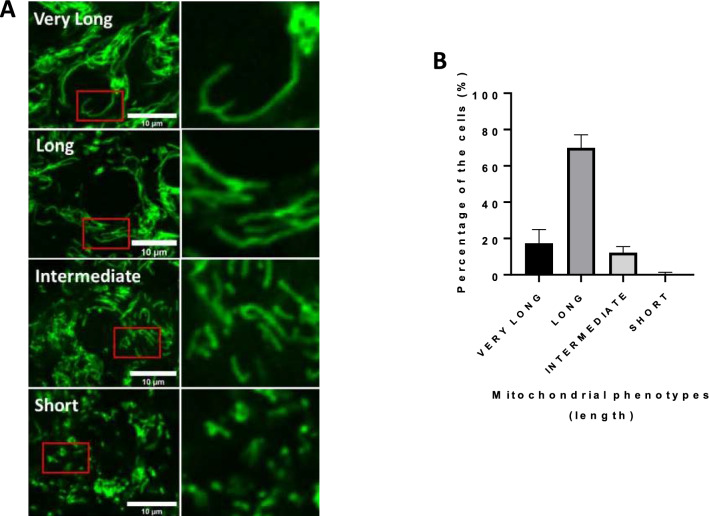
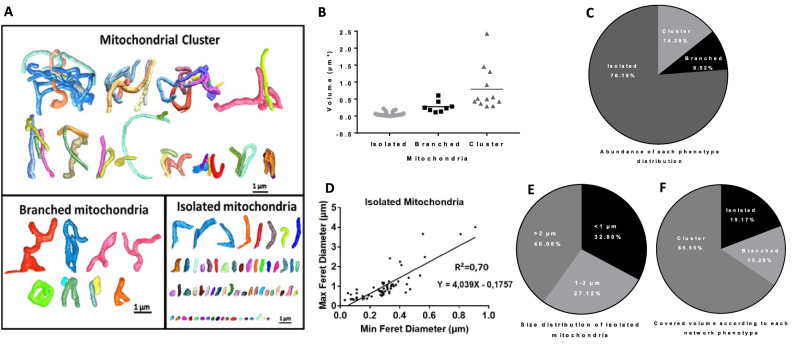
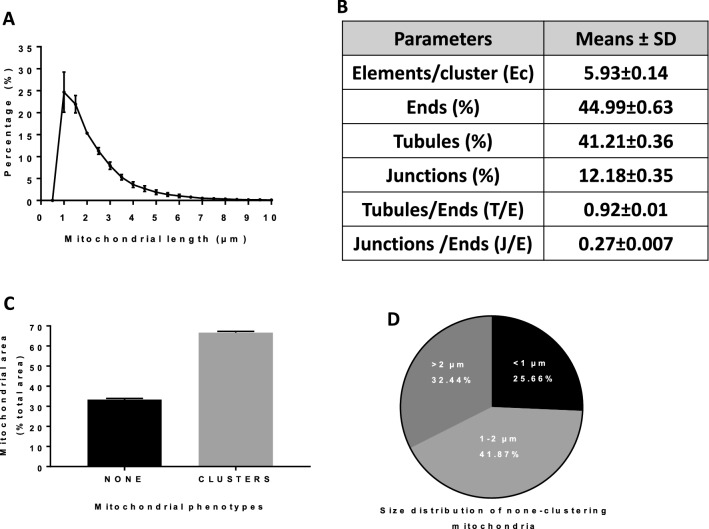
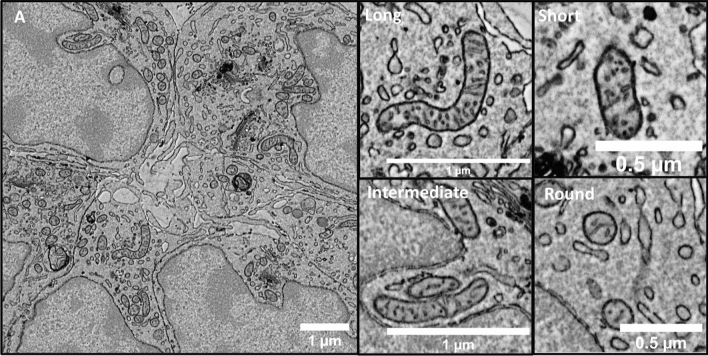
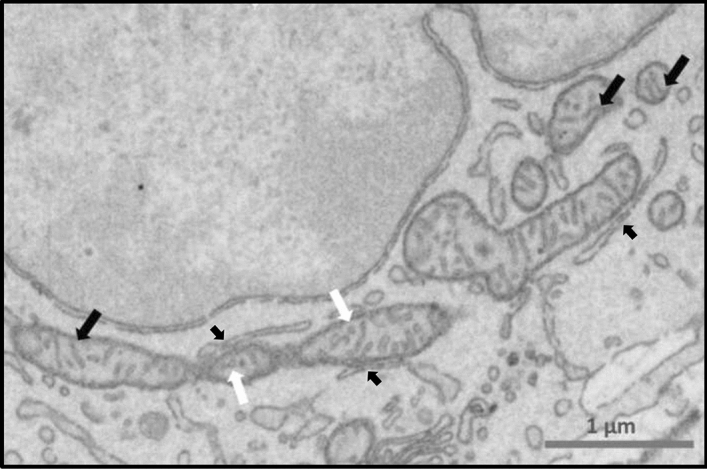
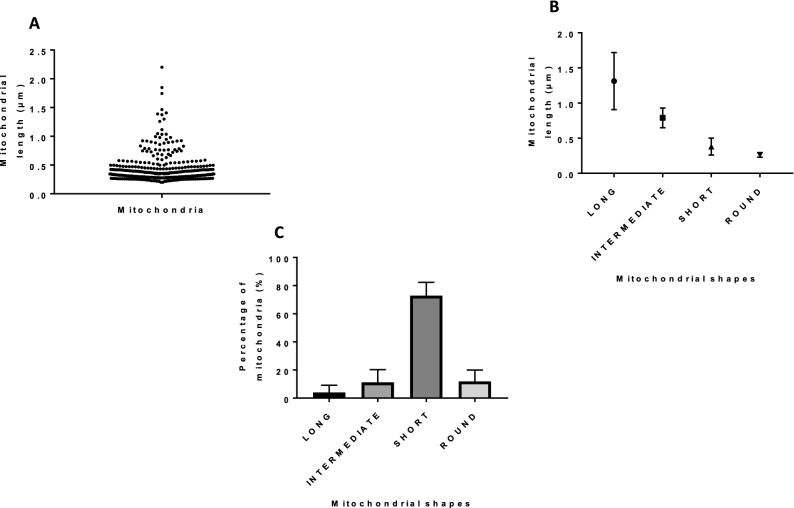
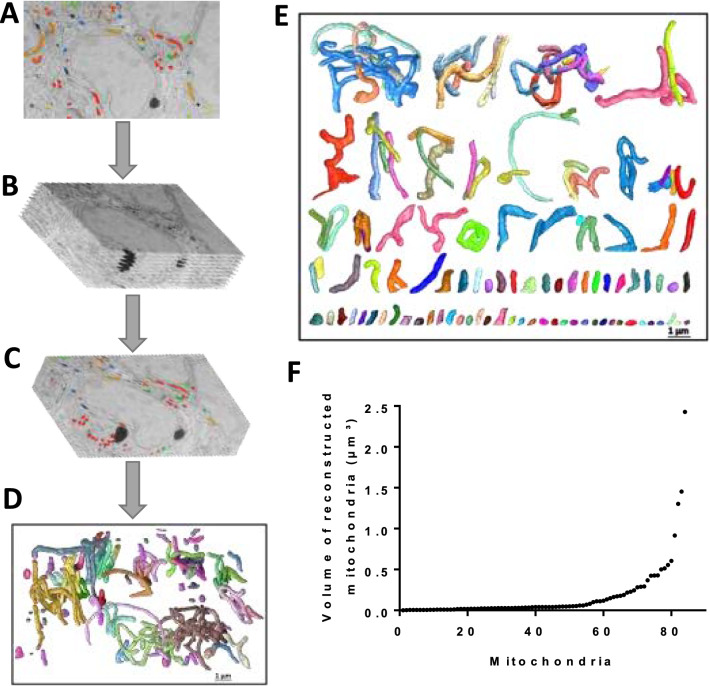
In the ovarian follicle, a bilateral cell-to-cell communication exists between the female germ cell and the cumulus cells which surround the oocyte. This communication allows the transit of small size molecules known to impact oocyte developmental competence. Pyruvate derivatives produced by mitochondria, are one of these transferred molecules. Interestingly, mitochondria may adopt a variety of morphologies to regulate their functions. In this study, we described mitochondrial morphologies in porcine cumulus cells. Active mitochondria were stained with TMRM (Tetramethylrhodamine, Methyl Ester, Perchlorate) and observed with 2D confocal microscopy showing mitochondria of different morphologies such as short, intermediate, long, and very long. The number of mitochondria of each phenotype was quantified in cells and the results showed that most cells contained elongated mitochondria. Scanning electron microscopy (SEM) analysis confirmed at nanoscale resolution the different mitochondrial morphologies including round, short, intermediate, and long. Interestingly, 3D visualisation by focused ion-beam scanning electron microscopy (FIB-SEM) revealed different complex mitochondrial morphologies including connected clusters of different sizes, branched mitochondria, as well as individual mitochondria. Since mitochondrial dynamics is a key regulator of function, the description of the mitochondrial network organisation will allow to further study mitochondrial dynamics in cumulus cells in response to various conditions such as in vitro maturation.
在卵巢卵泡中,雌性生殖细胞与环绕卵母细胞的卵丘细胞之间存在着双向的细胞间通讯。这种通讯允许小分子物质的转运,这些小分子物质已知会影响卵母细胞的发育能力。线粒体产生的丙酮酸衍生物就是这些转运分子之一。有趣的是,线粒体可以采用多种形态来调节其功能。在这项研究中,我们描述了猪卵丘细胞中的线粒体形态。用 TMRM(四甲基罗丹明,甲酯,高氯酸盐)对活性线粒体进行染色,并通过 2D 共聚焦显微镜观察,显示出不同形态的线粒体,如短、中、长和非常长。通过细胞定量分析了每种表型的线粒体数量,结果表明大多数细胞含有伸长的线粒体。扫描电子显微镜(SEM)分析在纳米尺度分辨率上证实了不同的线粒体形态,包括圆形、短、中、长。有趣的是,通过聚焦离子束扫描电子显微镜(FIB-SEM)的 3D 可视化揭示了不同的复杂线粒体形态,包括不同大小的连接簇、分支线粒体以及单个线粒体。由于线粒体动力学是功能的关键调节剂,因此描述线粒体网络组织将允许进一步研究卵丘细胞在各种条件下(如体外成熟)的线粒体动力学。