1Psychological Medicine Laboratory, Université Libre de Bruxelles, Brussels, Belgium.
2Psychiatric Institute, Universitary Hospital Brugmann, Brussels, Belgium.
J Behav Addict. 2022 Sep 16;11(3):831-844. doi: 10.1556/2006.2022.00059. Print 2022 Sep 26.
Experiencing acute stress is common in behavioral addictions such as gambling disorder. Additionally, like most substance-induced addictions, aberrant decision-making wherein a reactive habit-induced response (conceptualized as a Model-free [MF] in reinforcement learning) suppresses a flexible goal-directed response (conceptualized as a Model-based [MB]) is also common in gambling disorder. In the current study we investigated the influence of acute stress on the balance between habitual response and the goal-directed system.
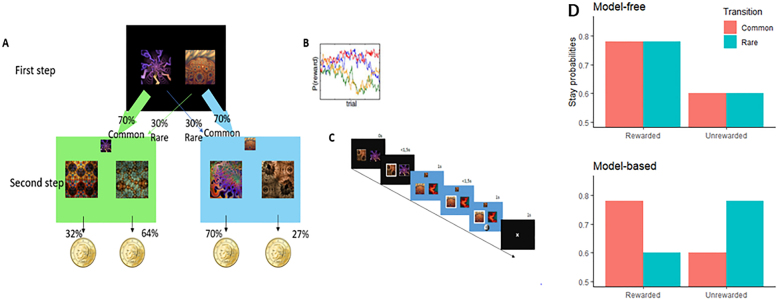
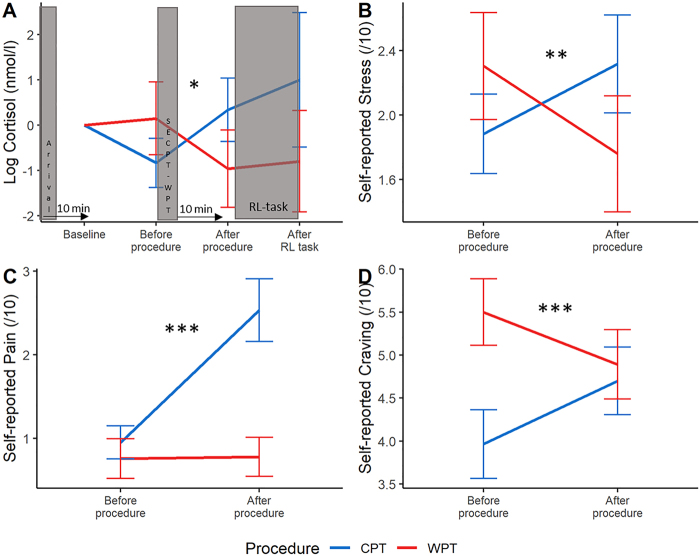
A sample of N = 116 problem gamblers (PG) and healthy controls (HC) performed an acute stress task - the Socially Evaluated Cold pressure task (SECPT) - or a control task. Self-reported stress and salivary cortisol were collected as measures of acute stress. Following the SECPT, participants performed the Two-Step Markov Task to account for the relative contribution of MB and MF strategies. Additionally, verbal working memory and IQ measures were collected to account for their mediating effects on the orchestration between MB/MF and the impact of stress.
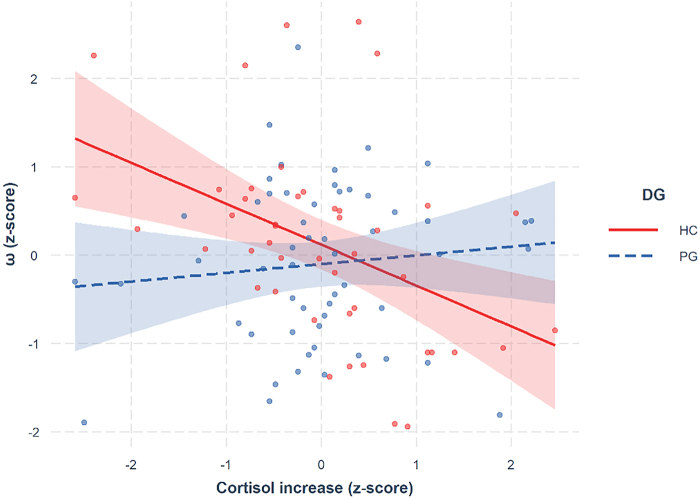
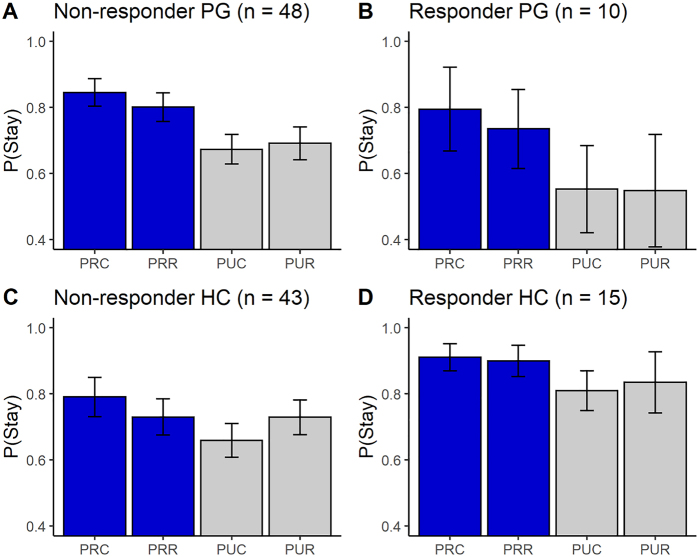
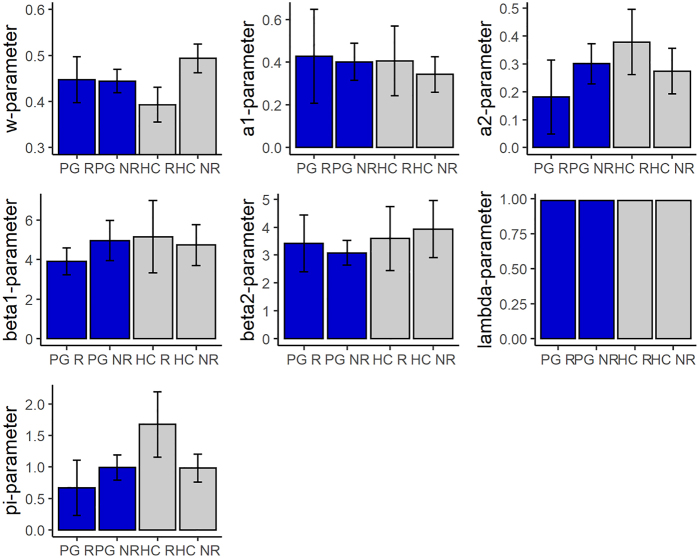
Both groups had comparable baseline and stress-induced cortisol response to the SECPT. Non-stressed PG displayed lower MB learning than HC. MANOVA and regression analyses showed a deleterious effect of stress-induced cortisol response on the orchestration between MB and MF learning in HC but not in PG. These effects remained when controlling for working memory and IQ.
We found an abnormal pattern of modulation of stress on the orchestration between MB and MF learning among PG. Several interpretations and future research directions are discussed.
在行为成瘾(如赌博障碍)中,经历急性应激是很常见的。此外,与大多数物质诱导的成瘾一样,异常的决策也很常见,其中反应性习惯诱导的反应(在强化学习中被概念化为无模型[MF])抑制了灵活的目标导向反应(在强化学习中被概念化为基于模型[MB])。在目前的研究中,我们调查了急性应激对习惯反应和目标导向系统之间平衡的影响。
我们对 N=116 名问题赌徒(PG)和健康对照组(HC)进行了一项急性应激任务——社会评价冷压力任务(SECPT)或控制任务。自我报告的压力和唾液皮质醇被作为急性应激的测量指标进行收集。在 SECPT 之后,参与者执行两步马尔可夫任务,以解释 MB 和 MF 策略的相对贡献。此外,还收集了言语工作记忆和智商测量结果,以解释它们对 MB/MF 之间的协调以及应激影响的中介作用。
两组在 SECPT 中基线和应激诱导的皮质醇反应相当。未受应激的 PG 显示出比 HC 更低的 MB 学习能力。MANOVA 和回归分析显示,应激诱导的皮质醇反应对 HC 中 MB 和 MF 学习之间的协调有负面影响,但对 PG 没有影响。当控制工作记忆和智商时,这些影响仍然存在。
我们发现 PG 中 MB 和 MF 学习之间的应激调节模式异常。讨论了几种解释和未来的研究方向。