Li Yuying, Li Tianfu, Zhai Duanyang, Xie Chuanbo, Kuang Xiaying, Lin Ying, Shao Nan
Breast Disease Center, The First Affiliated Hospital, Sun Yat-sen University, Guangzhou, China.
Laboratory of Surgery, The First Affiliated Hospital, Sun Yat-sen University, Guangzhou, China.
Front Oncol. 2022 Sep 2;12:956999. doi: 10.3389/fonc.2022.956999. eCollection 2022.
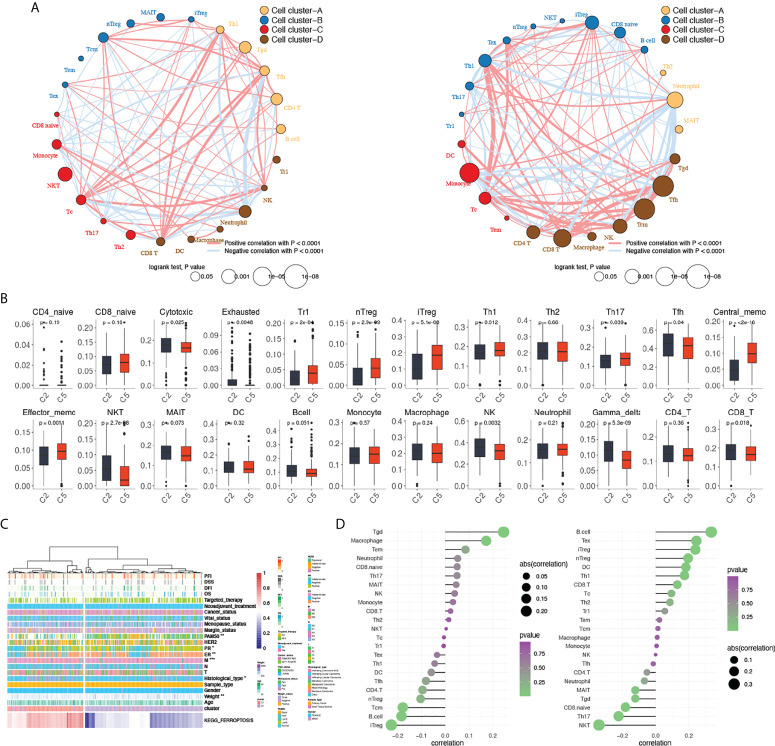
Clinical significance and biological functions of the ferroptosis pathway were addressed in all aspect of cancer regarding multi-omics level; however, the overall status of ferroptosis pathway alteration was hard to evaluate. The aim of this study is to comprehensively analyze the putative biological, pathological, and clinical functions of the ferroptosis pathway in breast cancer on a pathway level. By adopting the bioinformatic algorithm "pathifier", we quantified five programmed cell death (PCD) pathways (KO04210 Apoptosis; KO04216 Ferroptosis; KO04217 Necroptosis; GO:0070269 Pyroptosis; GO:0048102 Autophagic cell death) in breast cancer patients, and we featured the clinical characteristics and prognostic value of each pathway in breast cancer and found significantly activated PCD in cancer patients, among which ferroptosis demonstrated a significant correlation with the prognosis of breast cancer. Correlation analysis between PCD pathways identified intra-tumor heterogeneity of breast cancer. Therefore, clustering of patients based on the status of PCD pathways was done. Comparisons between subgroups highlighted specifically activated ferroptosis in cluster 2 patients, which showed the distinct status of tumor immunity and microenvironment from other clusters, indicating putative correlations with ferroptosis. NDUFA13 was identified and selected as a putative biomarker for cluster 2 patients. Experimental validations were executed on cellular level and NDUFA13 showed an important role in regulating ferroptosis activation and can work as a biomarker for ferroptosis pathway status. In conclusion, the status of the ferroptosis pathway significantly correlated with the clinical outcomes and intra-tumor heterogeneity of breast cancer, and NDUFA13 expression was identified as a positive biomarker for ferroptosis pathway activation in breast cancer patients.
在癌症的多组学层面,铁死亡途径的临床意义和生物学功能在各个方面都得到了探讨;然而,铁死亡途径改变的总体状况难以评估。本研究的目的是在途径水平上全面分析乳腺癌中铁死亡途径假定的生物学、病理学和临床功能。通过采用生物信息算法“pathifier”,我们对乳腺癌患者的五条程序性细胞死亡(PCD)途径(KO04210凋亡;KO04216铁死亡;KO04217坏死性凋亡;GO:0070269焦亡;GO:0048102自噬性细胞死亡)进行了量化,并描述了每条途径在乳腺癌中的临床特征和预后价值,发现癌症患者中PCD显著激活,其中铁死亡与乳腺癌的预后显著相关。PCD途径之间的相关性分析确定了乳腺癌的肿瘤内异质性。因此,根据PCD途径的状态对患者进行了聚类。亚组之间的比较突出了第2组患者中特异性激活的铁死亡,这表明其肿瘤免疫和微环境与其他组不同,提示与铁死亡存在假定的相关性。鉴定并选择NDUFA13作为第2组患者的假定生物标志物。在细胞水平上进行了实验验证,NDUFA13在调节铁死亡激活中发挥重要作用,可作为铁死亡途径状态的生物标志物。总之,铁死亡途径的状态与乳腺癌的临床结局和肿瘤内异质性显著相关,NDUFA13表达被确定为乳腺癌患者铁死亡途径激活的阳性生物标志物。