Han Jianan, Dong Shaoyun, Liu Xiaoping, Shi Yanxia, Beckles Diane M, Gu Xingfang, Miao Han, Zhang Shengping
Institute of Vegetables and Flowers, Chinese Academy of Agricultural Sciences, Beijing, China.
Department of Plant Sciences, University of California, Davis, Davis, CA, United States.
Front Plant Sci. 2022 Sep 2;13:968811. doi: 10.3389/fpls.2022.968811. eCollection 2022.
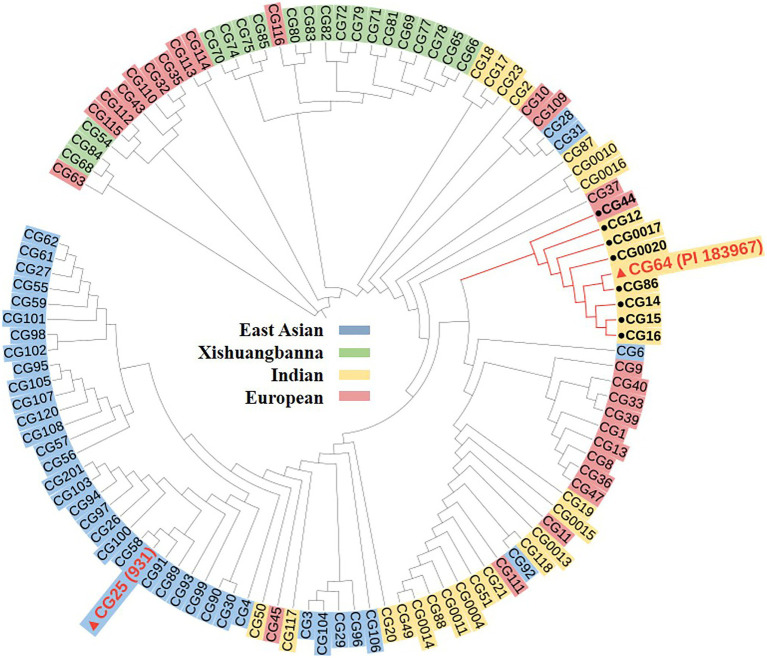
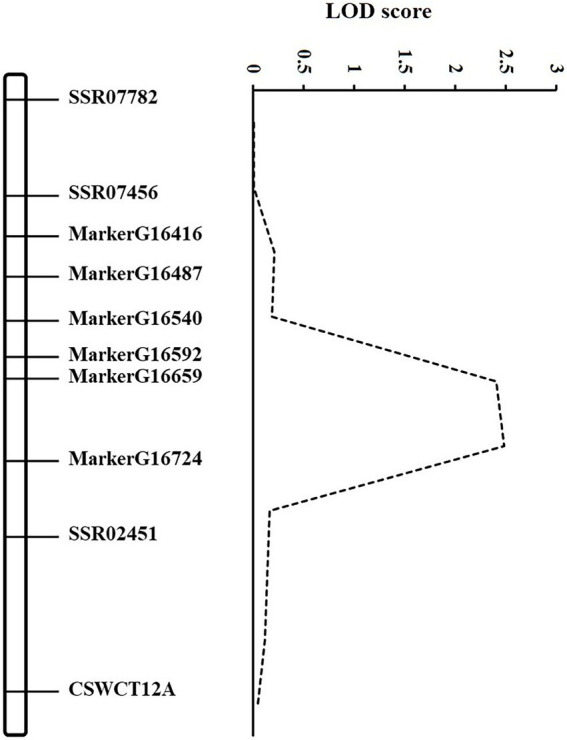
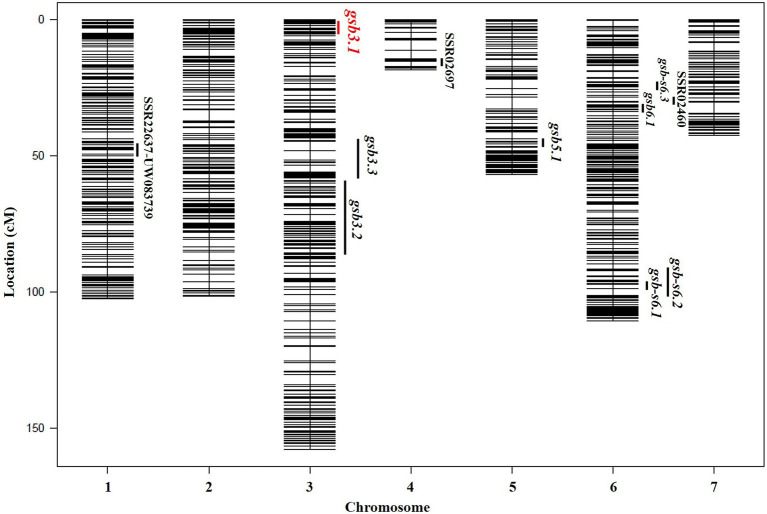
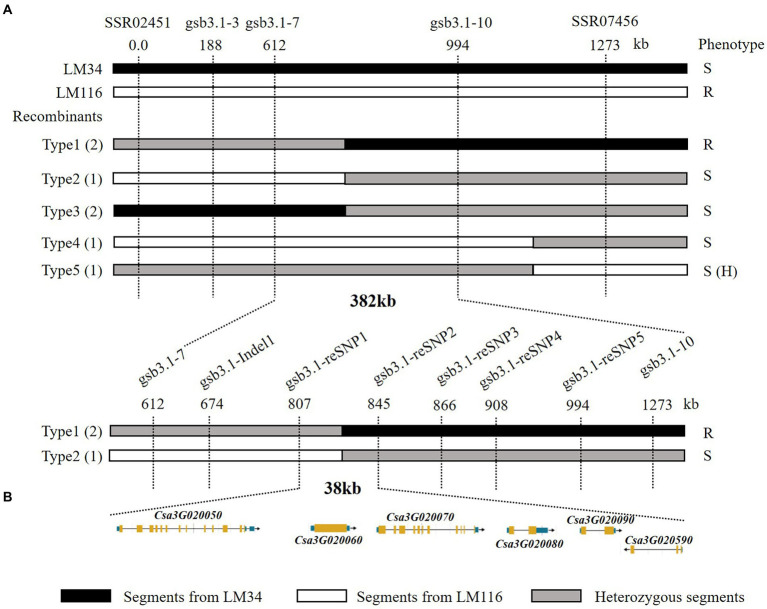
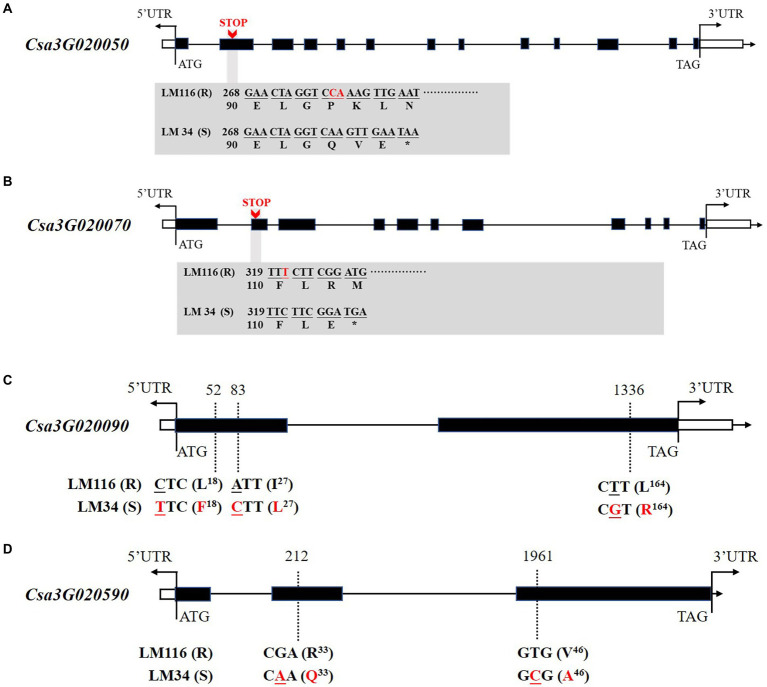
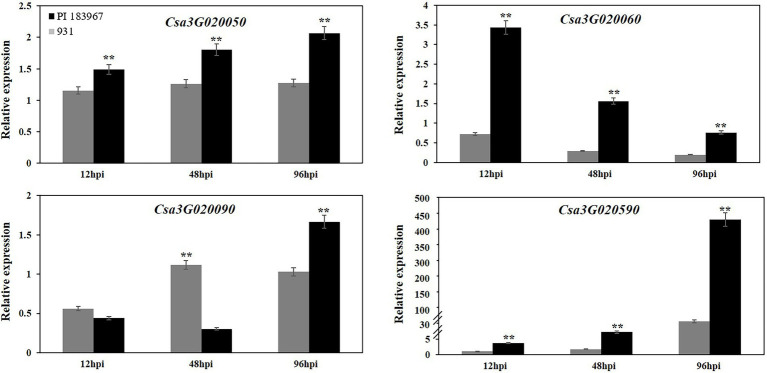
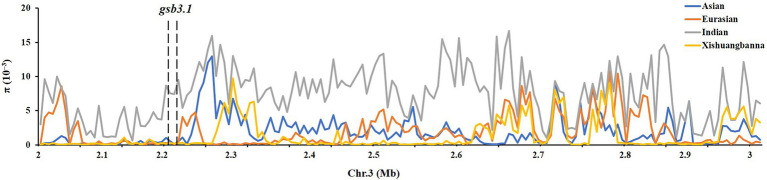
Gummy stem blight (GSB), caused by , is one of the most devastating diseases that severely reduces cucumber production. Developing resistant varieties would be an effective strategy to control GSB. Although several GSB-resistant QTLs have been reported, causal genes for GSB resistance have not yet been identified in cucumber. A novel loci for seedling GSB resistance from the "PI 183967" genotype was previously identified in a 1.7-Mb interval on chromosome 3. In this study, we developed a residual heterozygous line-derived strategy from Recombinant Inbred Lines to perform fine mapping, and with this approach, the locus was narrowed to a 38 kb interval. There were six predicted genes at the locus, four of which differed in expression in the GSB-resistant compared to the susceptible lines after fungal inoculation. These candidate genes (, , , and ) within the locus could be helpful for the genetic study of GSB resistance and marker-assisted selection in cucumber. Phylogenetic analyses indicated that the resistant allele may uniquely exist in the wild species present in the Indian group, and that nucleotide diversity was significantly reduced in cultivated accessions. Therefore, the allele could be introgressed into existing commercial cultivars and combined with other resistance QTLs to provide broad-spectrum and robust GSB resistance in cucumber.
由[病原体名称未给出]引起的蔓枯病(GSB)是最具毁灭性的病害之一,严重降低黄瓜产量。培育抗病品种将是控制蔓枯病的有效策略。尽管已报道了几个抗蔓枯病的QTL,但黄瓜中抗蔓枯病的因果基因尚未确定。先前在3号染色体上1.7 Mb区间内从“PI 183967”基因型中鉴定出一个新的幼苗抗蔓枯病基因座。在本研究中,我们从重组自交系开发了一种剩余杂合体系衍生策略来进行精细定位,通过这种方法,该基因座被缩小到38 kb区间。该基因座有六个预测基因,其中四个在接种真菌后,抗病品系与感病品系中的表达存在差异。该基因座内的这些候选基因([基因名称未给出])可能有助于黄瓜抗蔓枯病的遗传研究和标记辅助选择。系统发育分析表明,抗性[基因名称未给出]等位基因可能仅存在于印度组的野生种中,并且在栽培品种中核苷酸多样性显著降低。因此,[基因名称未给出]等位基因可以导入现有的商业品种中,并与其他抗性QTL结合,为黄瓜提供广谱且稳定的抗蔓枯病能力。