Abramenkovs Andris, Hariri Mehran, Spiegelberg Diana, Nilsson Sten, Stenerlöw Bo
Department of Immunology, Genetics and Pathology, Rudbeck Laboratory, Uppsala University, Uppsala SE-75185, Sweden.
Department of Immunology, Genetics and Pathology, Rudbeck Laboratory, Uppsala University, Uppsala SE-75185, Sweden.
Transl Oncol. 2022 Dec;26:101543. doi: 10.1016/j.tranon.2022.101543. Epub 2022 Sep 18.
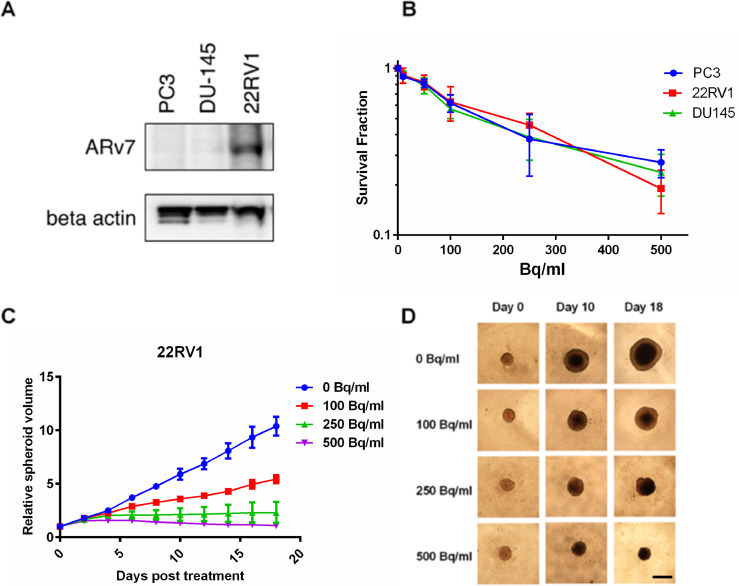
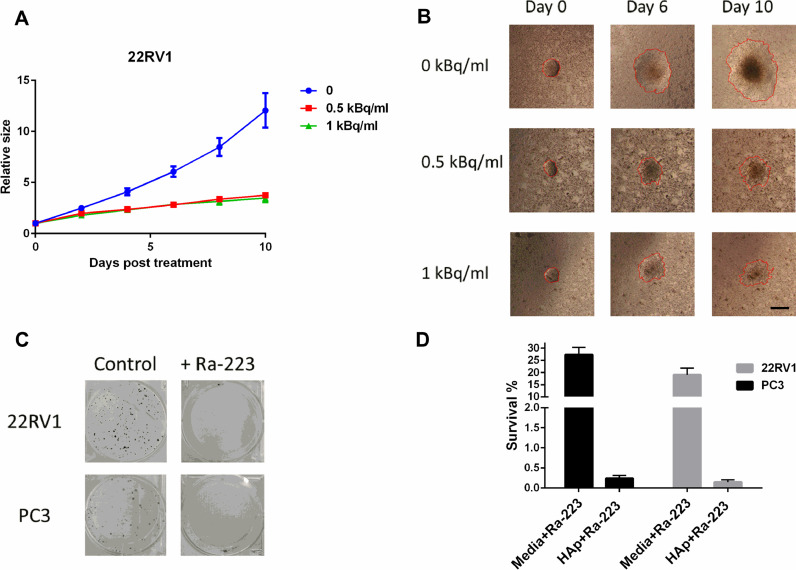
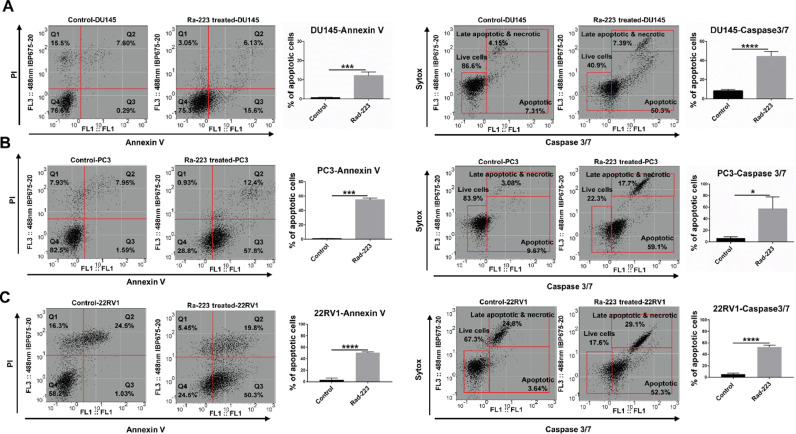
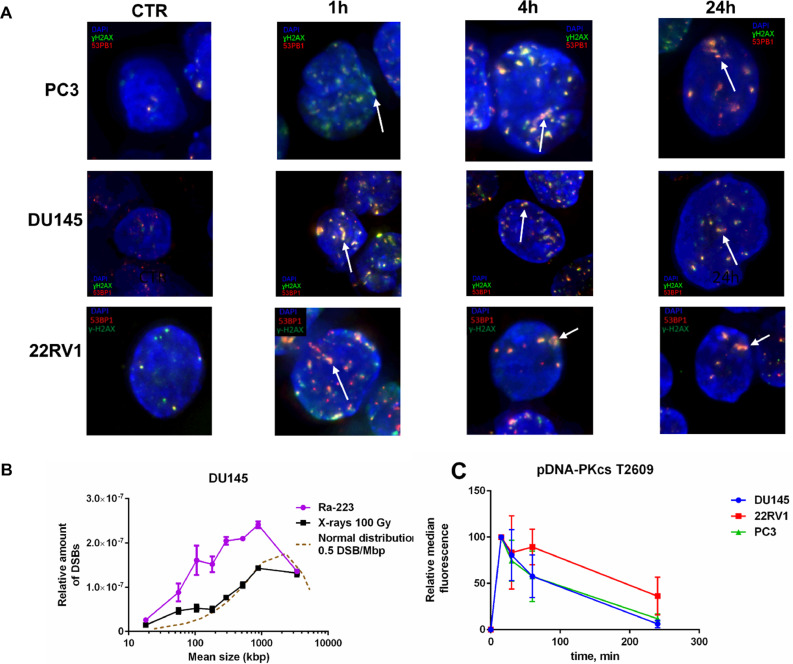
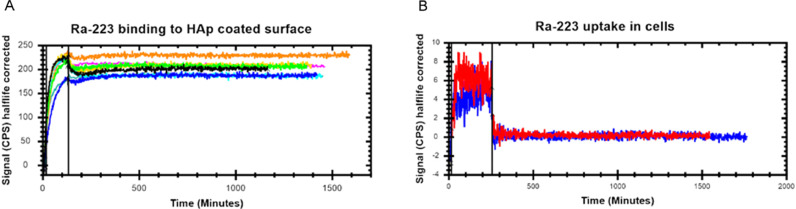
The bone-seeking radiopharmaceutical Xofigo (Radium-223 dichloride) has demonstrated both extended survival and palliative effects in treatment of bone metastases in prostate cancer. The alpha-particle emitter Ra-223, targets regions undergoing active bone remodeling and strongly binds to bone hydroxyapatite (HAp). However, the toxicity mechanism and properties of Ra-223 binding to hydroxyapatite are not fully understood. By exposing 2D and 3D (spheroid) prostate cancer cell models to free and HAp-bound Ra-223 we here studied cell toxicity, apoptosis and formation and repair of DNA double-strand breaks (DSBs). The rapid binding with a high affinity of Ra-223 to bone-like HAp structures was evident (KD= 19.2 × 10 M) and almost no dissociation was detected within 24 h. Importantly, there was no significant uptake of Ra-223 in cells. The Ra-223 alpha-particle decay produced track-like distributions of the DNA damage response proteins 53BP1 and ɣH2AX induced high amounts of clustered DSBs in prostate cancer cells and activated DSB repair through non-homologous end-joining (NHEJ). Ra-223 inhibited growth of prostate cancer cells, independent of cell type, and induced high levels of apoptosis. In summary, we suggest the high cell killing efficacy of the Ra-223 was attributed to the clustered DNA damaged sites induced by α-particles.
亲骨性放射性药物Xofigo(二氯化镭-223)已在前列腺癌骨转移的治疗中显示出延长生存期和姑息治疗效果。α粒子发射体镭-223靶向进行活跃骨重塑的区域,并与骨羟基磷灰石(HAp)紧密结合。然而,镭-223与羟基磷灰石结合的毒性机制和特性尚未完全明确。通过将二维和三维(球体)前列腺癌细胞模型暴露于游离的和与HAp结合的镭-223中,我们在此研究了细胞毒性、细胞凋亡以及DNA双链断裂(DSB)的形成与修复。镭-223与类骨HAp结构的快速高亲和力结合很明显(KD = 19.2×10 M),并且在24小时内几乎未检测到解离。重要的是,细胞对镭-223没有明显摄取。镭-223的α粒子衰变产生了DNA损伤反应蛋白53BP1和ɣH2AX的轨迹样分布,在前列腺癌细胞中诱导了大量成簇的DSB,并通过非同源末端连接(NHEJ)激活了DSB修复。镭-223抑制前列腺癌细胞生长,与细胞类型无关,并诱导高水平的细胞凋亡。总之,我们认为镭-223的高细胞杀伤效力归因于α粒子诱导的成簇DNA损伤位点。