Li Dan, Wang Guannan, Peng Yongjin, Chen Zhenhua, Gao Xianhui, Cheng Liming, Mei Xifan
Department of Chemistry, The Key Laboratory of Medical Tissue Engineering of Liaoning Province, Jinzhou Medical University Jinzhou 121001 China
Department of Orthopedics, Tongji Hospital Affiliated to Tongji University School of Medicine Key Laboratory of Spine & Spinal Cord Injury Repair and Regeneration, Tongji University Shang-hai 200065 China.
Nanoscale Adv. 2018 Dec 3;1(3):1086-1095. doi: 10.1039/c8na00224j. eCollection 2019 Mar 12.
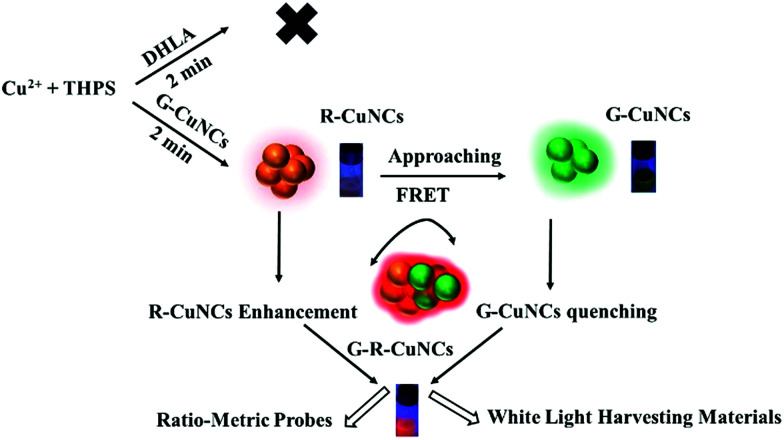
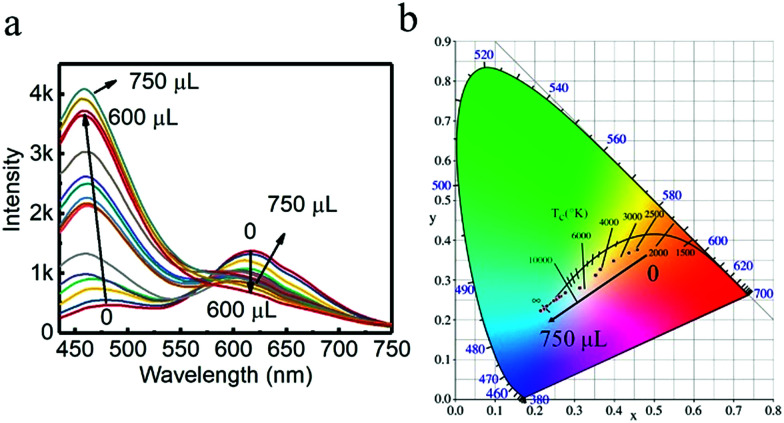
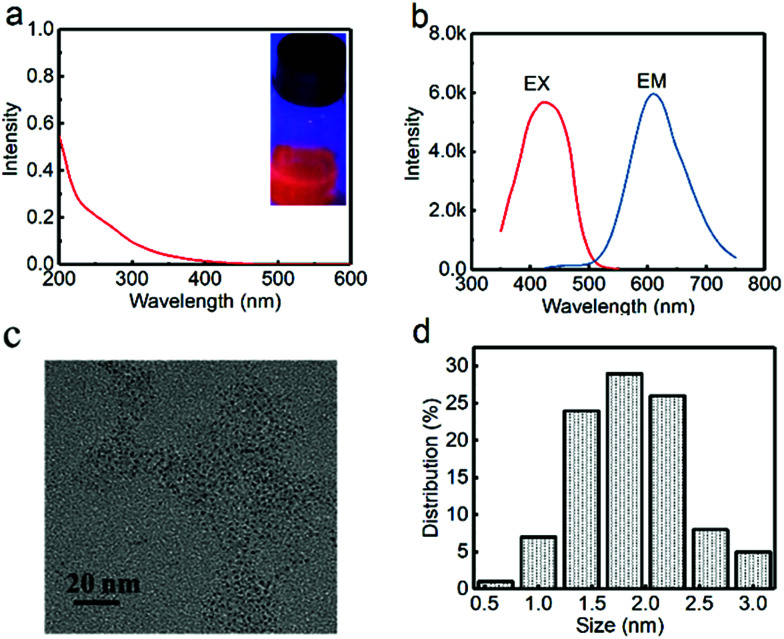
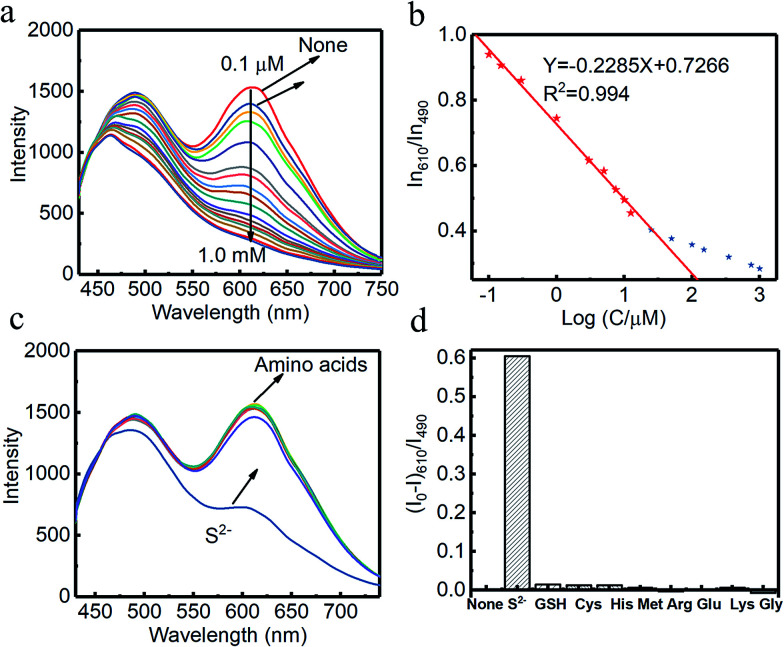
Herein, we developed a special strategy for the fast sensitization of red emitting copper nanoclusters with the assistance of green emitting copper nanoclusters. Compared to most previous methods based on AIE, which do not maintain the water solubility or tiny size of nanoclusters, the charming features of the copper nanoclusters were retained after the fabrication. Furthermore, the product was employed for the detection of sulphide, which revealed its ratiometric sensing ability in water since the ratio of the intensity change for green and red emission was related to the sulphide concentration. In addition, after the addition of Zn, the green and red emission was either enhanced or quenched the corresponding mechanism. This enables the facile fabrication of promising white light-harvesting materials since the species of the emitting color can be simply tuned.
在此,我们开发了一种特殊策略,借助绿色发光铜纳米簇实现红色发光铜纳米簇的快速敏化。与大多数基于聚集诱导发光(AIE)的先前方法不同,这些方法无法保持纳米簇的水溶性或微小尺寸,而在制备后铜纳米簇的迷人特性得以保留。此外,该产物用于检测硫化物,这表明其在水中具有比率传感能力,因为绿色和红色发射强度变化的比率与硫化物浓度相关。此外,添加锌后,绿色和红色发射要么增强要么猝灭,相应的机制也是如此。这使得能够轻松制备有前景的白光捕获材料,因为发射颜色的种类可以简单调节。