Yu Qi, Gao Pengli, Zhang Kenneth Yin, Tong Xiao, Yang Huiran, Liu Shujuan, Du Jing, Zhao Qiang, Huang Wei
Key Laboratory for Organic Electronics and Information Displays and Institute of Advanced Materials, Nanjing University of Posts and Telecommunications, Nanjing 210023, China.
Key Laboratory of Flexible Electronics and Institute of Advanced Materials, Jiangsu National Synergetic Innovation Center for Advanced Materials, Nanjing Tech University, Nanjing 211816, China.
Light Sci Appl. 2017 Dec 1;6(12):e17107. doi: 10.1038/lsa.2017.107. eCollection 2017 Dec.
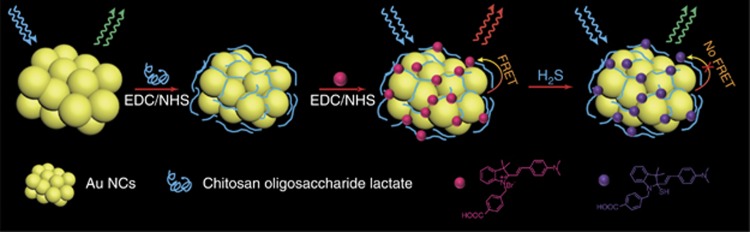
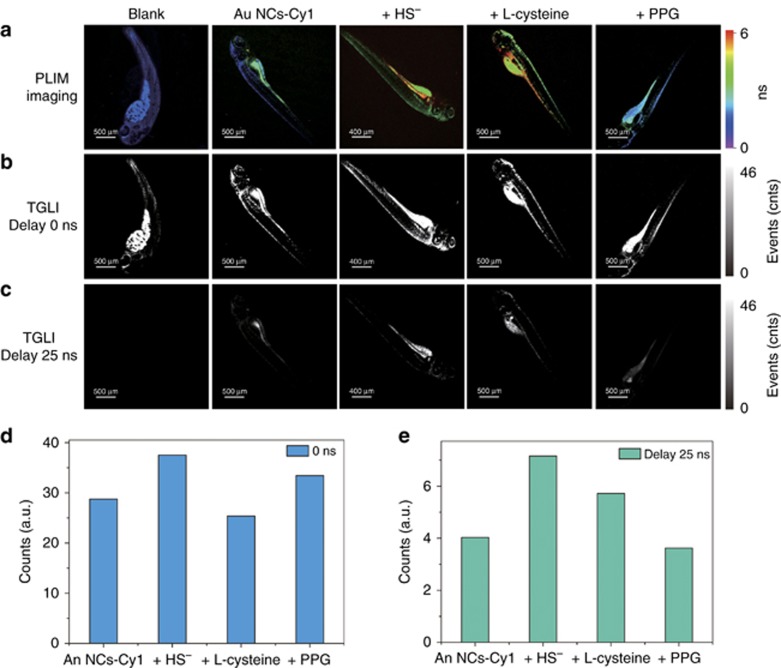
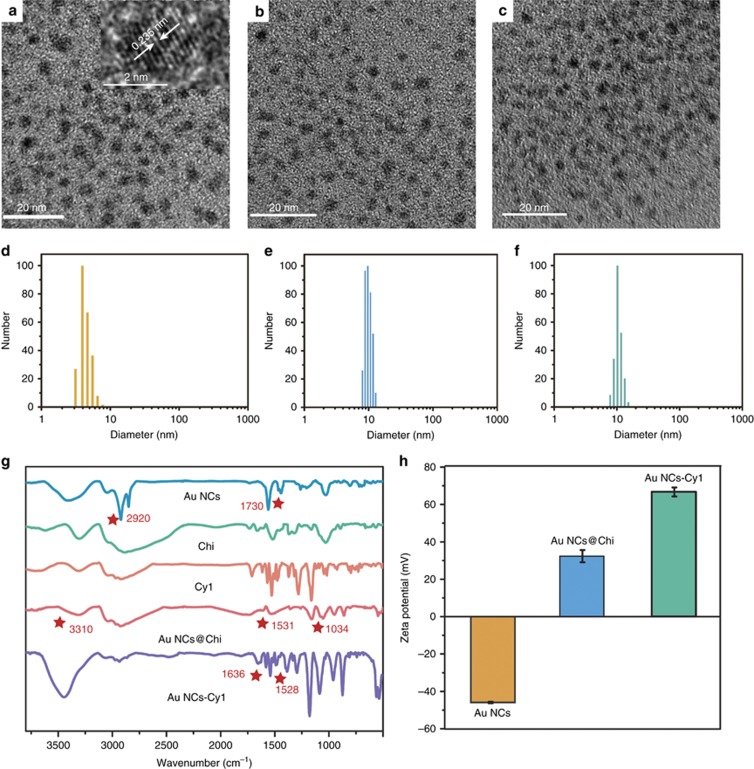
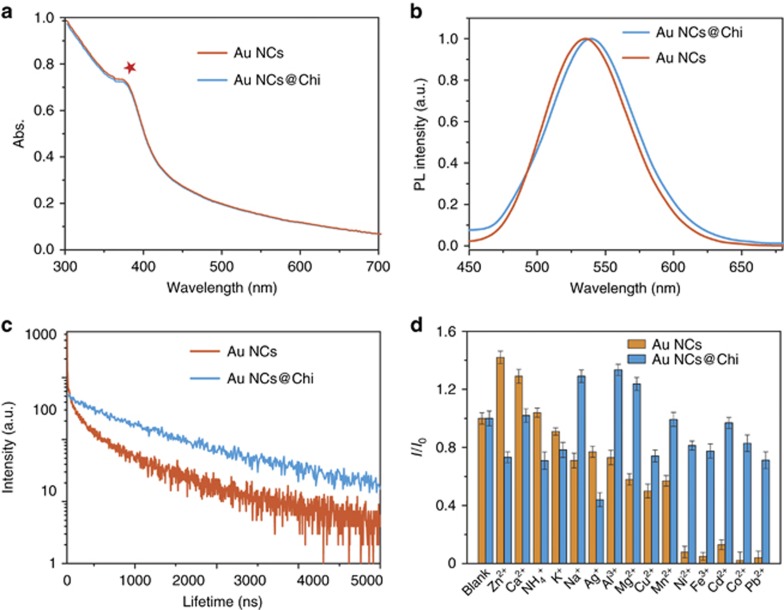
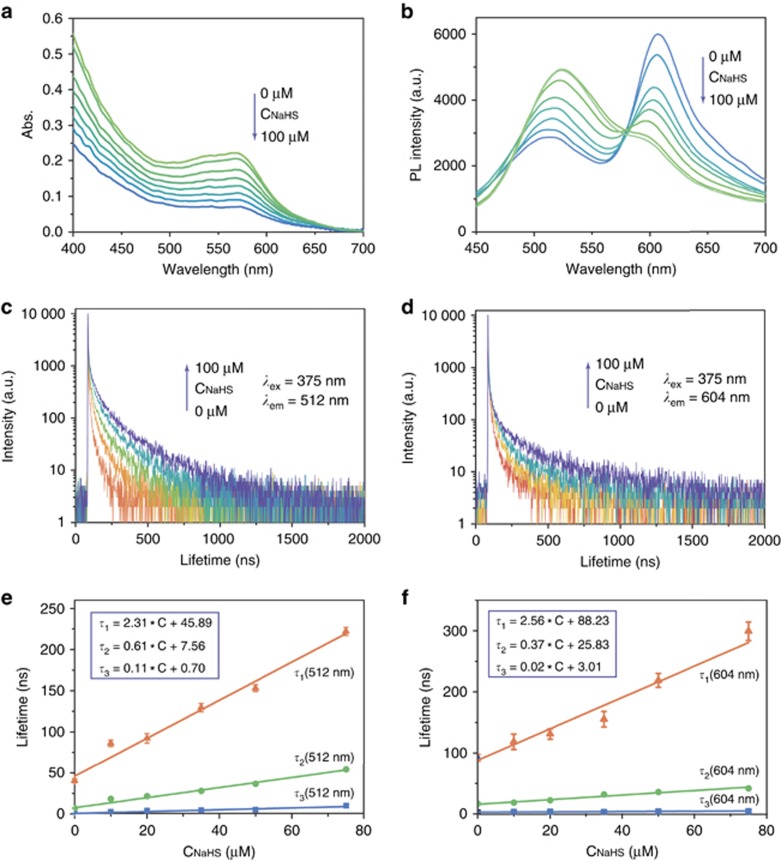
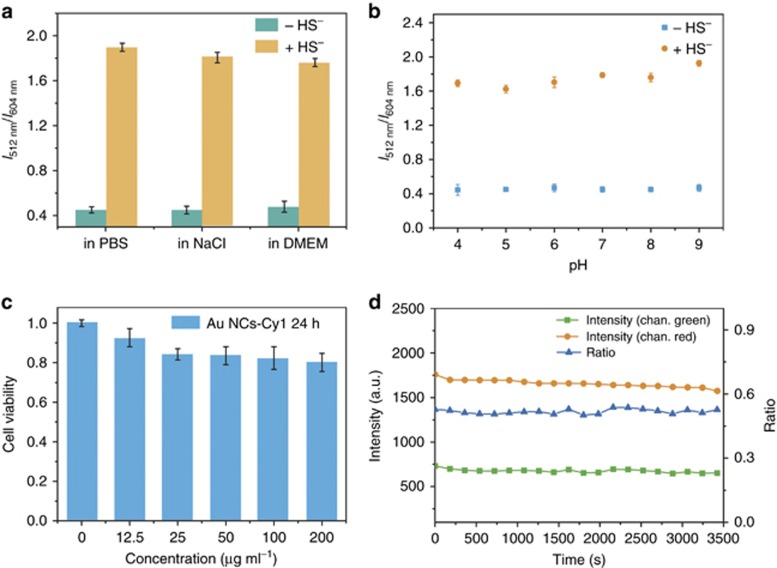
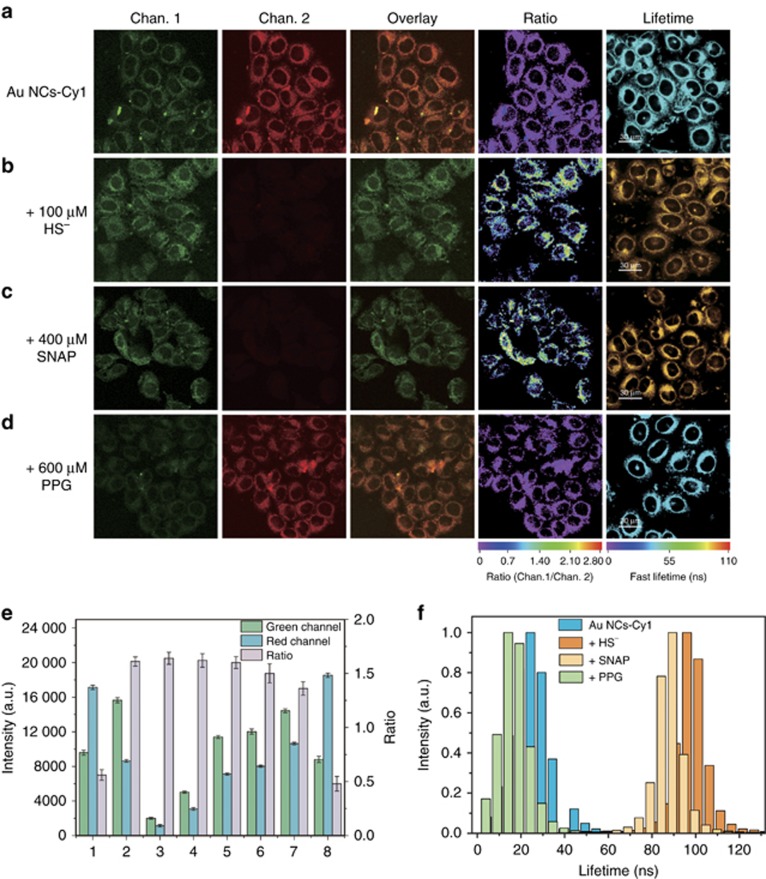
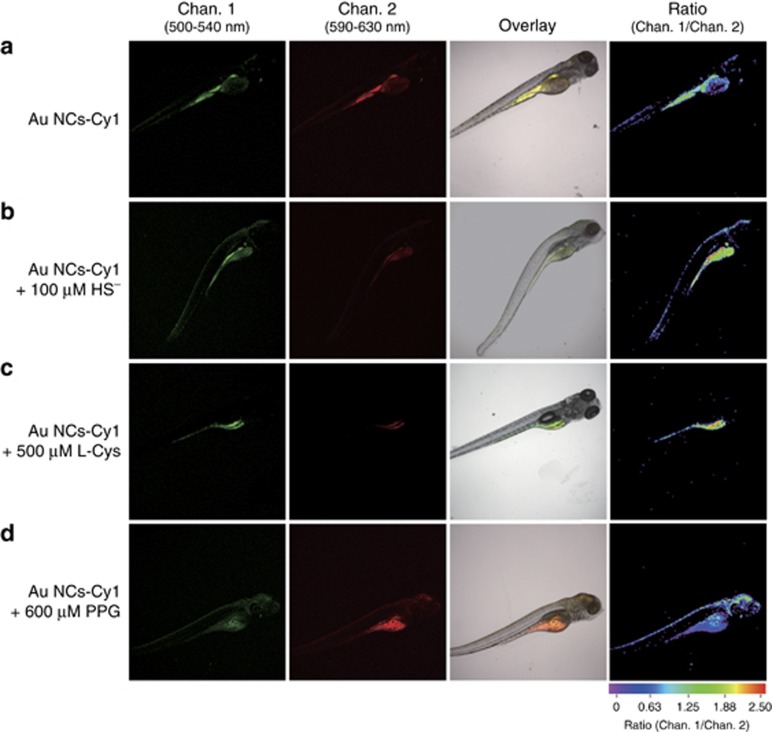
Gold nanoclusters (Au NCs) are promising luminescent nanomaterials due to their outstanding optical properties. However, their relatively low quantum yields and environment-dependent photoluminescence properties have limited their biological applications. To address these problems, we developed a novel strategy to prepare chitosan oligosaccharide lactate (Chi)-functionalized Au NCs (Au NCs@Chi), which exhibited emission with enhanced quantum yield and elongated emission lifetime as compared to the Au NCs, as well as exhibited environment-independent photoluminescence properties. In addition, utilizing the free amino groups of Chi onto Au NCs@Chi, we designed a FRET-based sensing platform for the detection of hydrogen sulfide (HS). The Au NCs and the specific HS-sensitive merocyanine compound were respectively employed as an energy donor and acceptor in the platform. The addition of HS induced changes in the emission profile and luminescence lifetime of the platform with high sensitivity and selectivity. Utilization of the platform was demonstrated to detect exogenous and endogenous HS and through wavelength-ratiometric and time-resolved luminescence imaging (TLI). Compared to previously reported luminescent molecules, the platform was less affected by experimental conditions and showed minimized autofluorescence interference and improved accuracy of detection.
金纳米团簇(Au NCs)因其出色的光学性质而成为有前景的发光纳米材料。然而,其相对较低的量子产率和依赖环境的光致发光性质限制了它们的生物应用。为了解决这些问题,我们开发了一种新策略来制备壳寡糖乳酸盐(Chi)功能化的金纳米团簇(Au NCs@Chi),与Au NCs相比,其发射具有增强的量子产率和延长的发射寿命,并且表现出不依赖环境的光致发光性质。此外,利用Au NCs@Chi上Chi的游离氨基,我们设计了一种基于荧光共振能量转移(FRET)的传感平台用于检测硫化氢(HS)。在该平台中,Au NCs和特定的对HS敏感的部花青化合物分别用作能量供体和受体。HS的加入会引起该平台发射谱和发光寿命的变化,具有高灵敏度和选择性。该平台通过波长比率法和时间分辨发光成像(TLI)被证明可用于检测外源性和内源性HS。与先前报道的发光分子相比,该平台受实验条件的影响较小,表现出最小化的自发荧光干扰并提高了检测准确性。