Department of Pediatrics, Division of Rheumatology and Immunology.
Center for Pharmacogenomics, Department of Medicine, and.
JCI Insight. 2022 Nov 8;7(21):e162695. doi: 10.1172/jci.insight.162695.
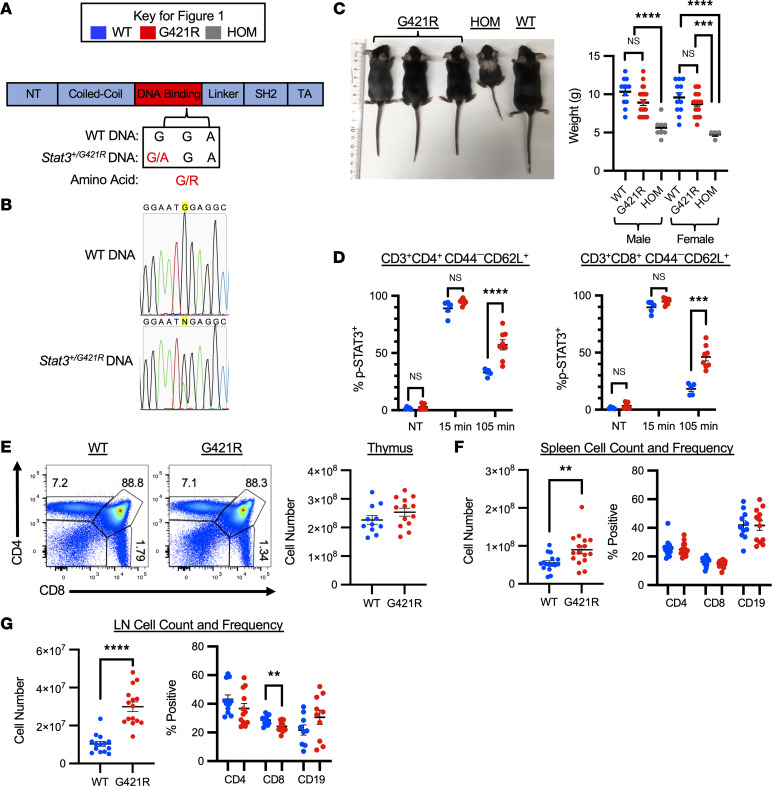
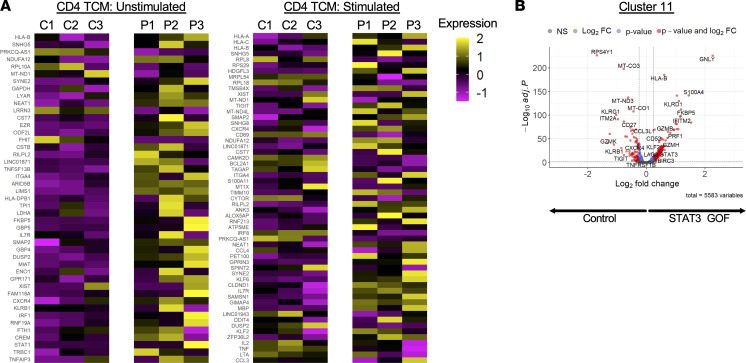
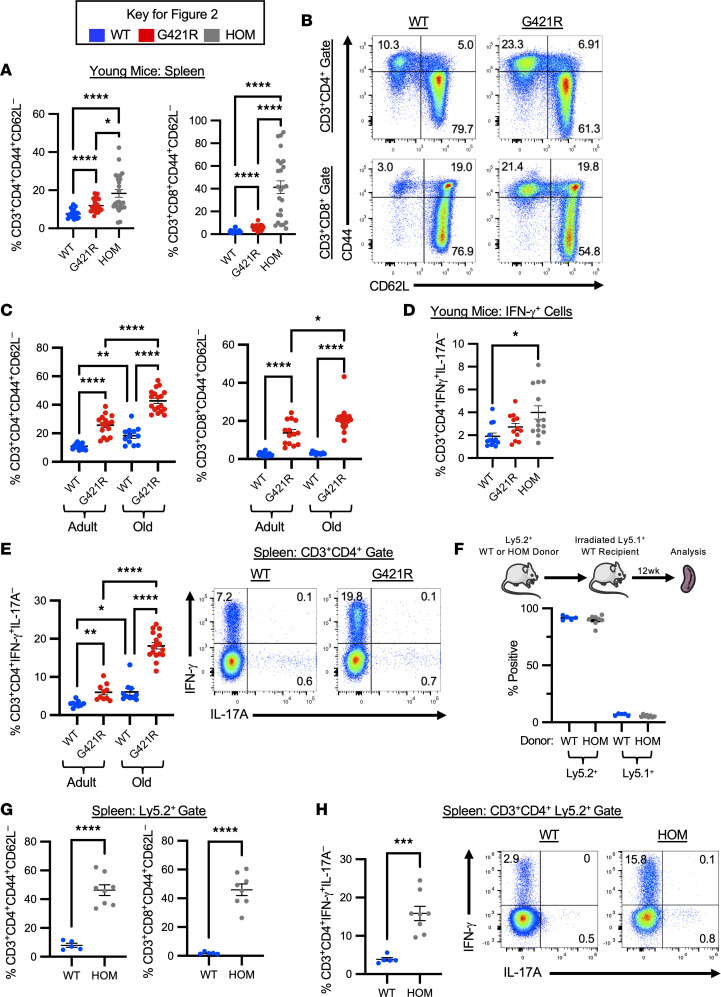
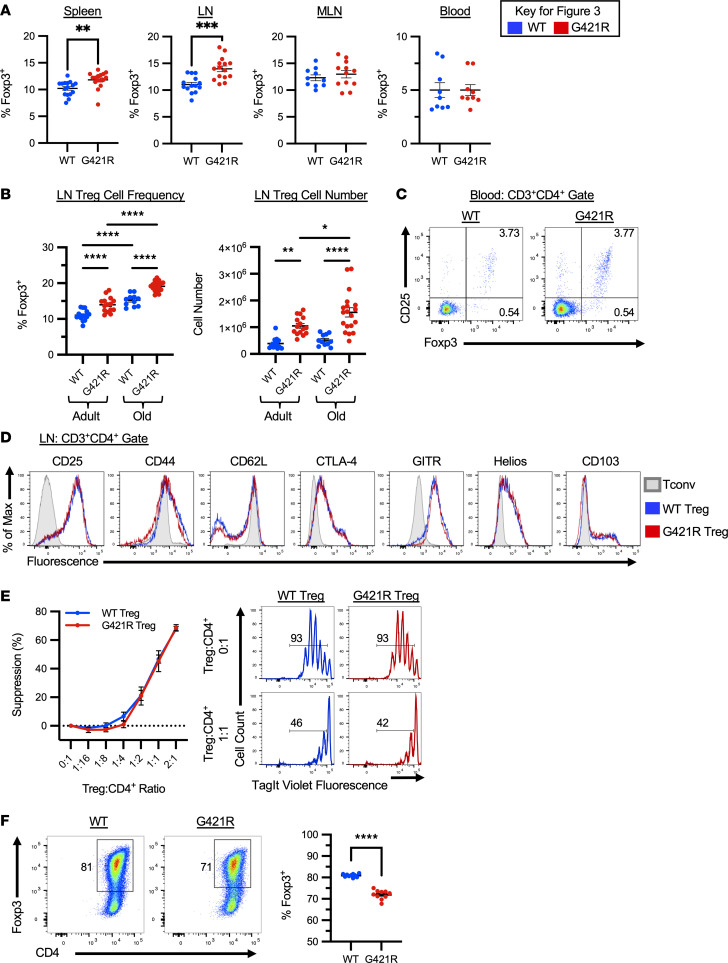
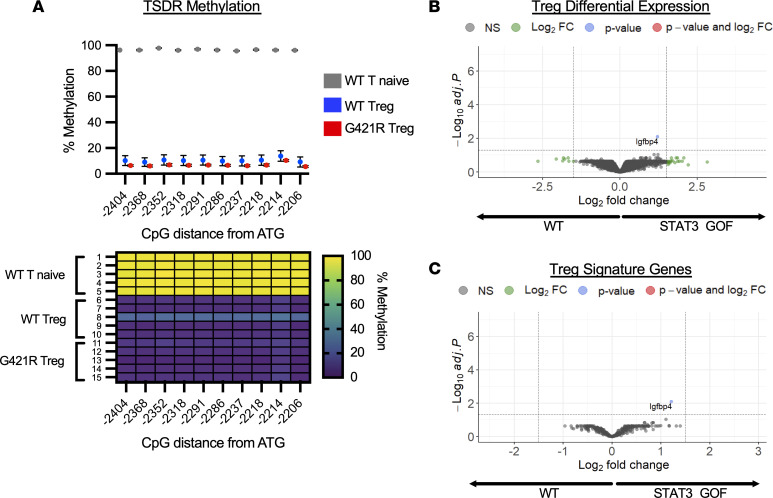
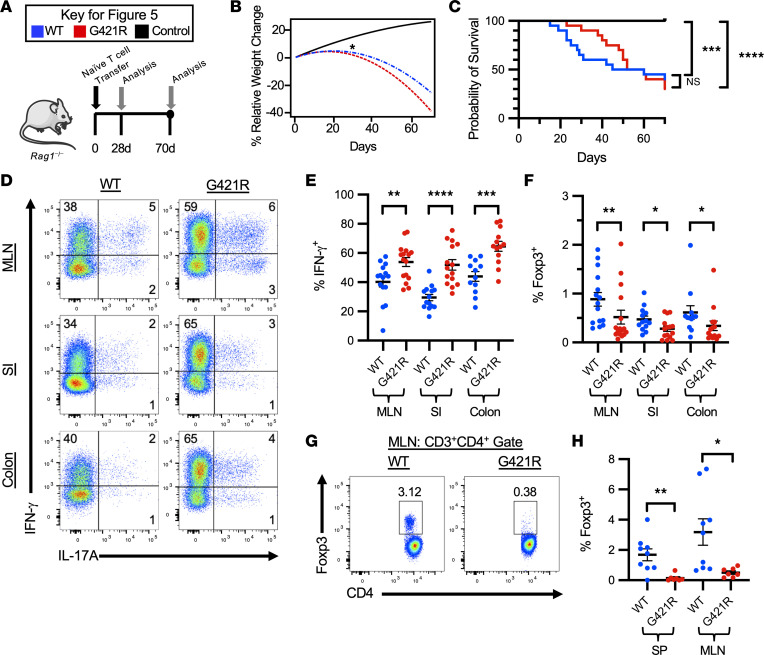
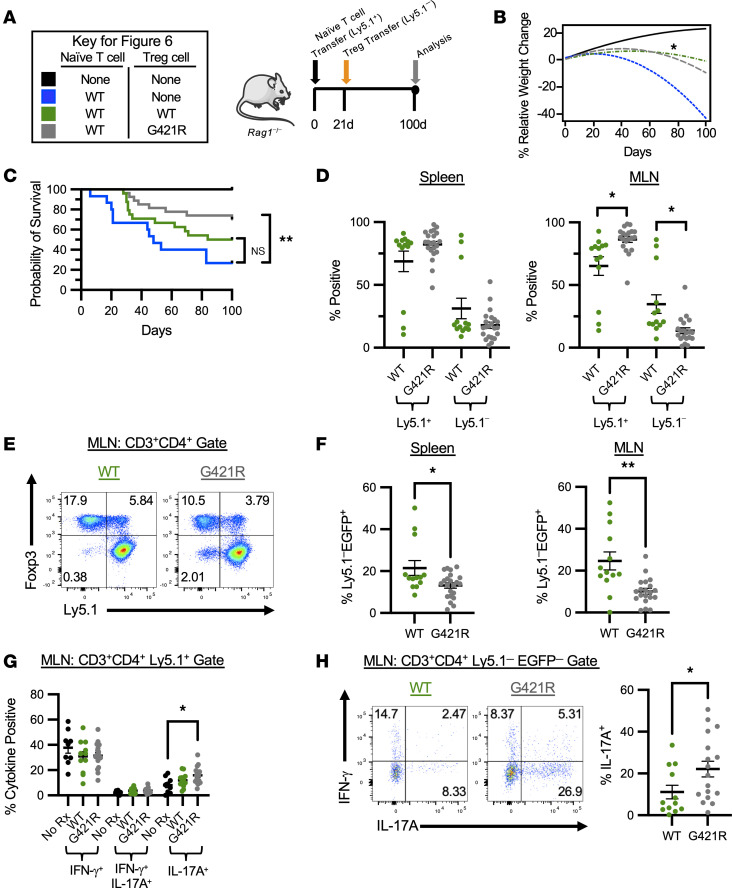
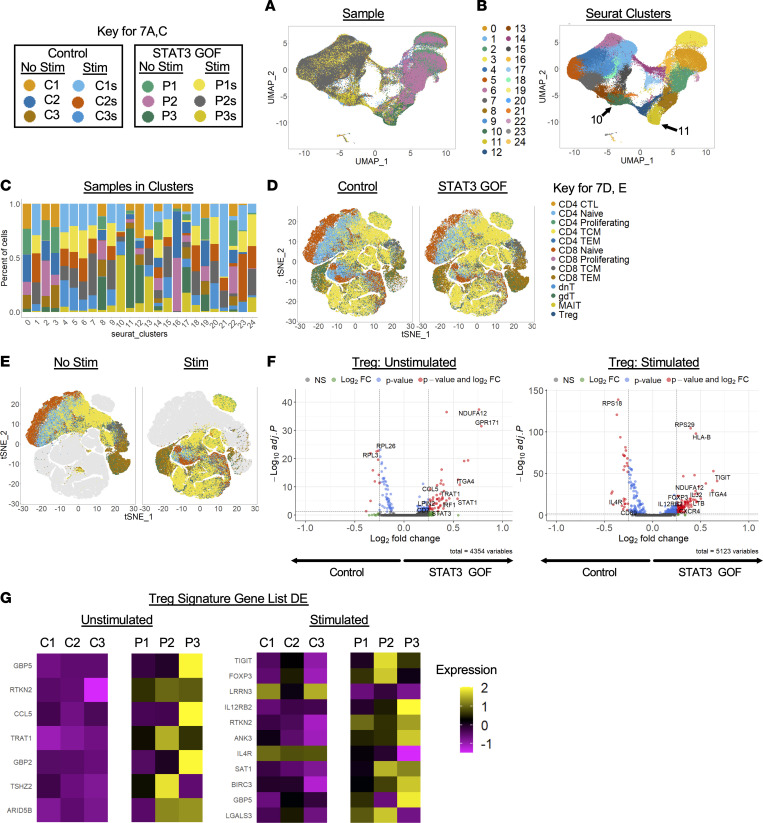
Primary immune regulatory disorders (PIRD) represent a group of disorders characterized by immune dysregulation, presenting with a wide range of clinical disease, including autoimmunity, autoinflammation, or lymphoproliferation. Autosomal dominant germline gain-of-function (GOF) variants in STAT3 result in a PIRD with a broad clinical spectrum. Studies in patients have documented a decreased frequency of FOXP3+ Tregs and an increased frequency of Th17 cells in some patients with active disease. However, the mechanisms of disease pathogenesis in STAT3 GOF syndrome remain largely unknown, and treatment is challenging. We developed a knock-in mouse model harboring a de novo pathogenic human STAT3 variant (p.G421R) and found these mice developed T cell dysregulation, lymphoproliferation, and CD4+ Th1 cell skewing. Surprisingly, Treg numbers, phenotype, and function remained largely intact; however, mice had a selective deficiency in the generation of iTregs. In parallel, we performed single-cell RNA-Seq on T cells from STAT3 GOF patients. We demonstrate only minor changes in the Treg transcriptional signature and an expanded, effector CD8+ T cell population. Together, these findings suggest that Tregs are not the primary driver of disease and highlight the importance of preclinical models in the study of disease mechanisms in rare PIRD.
原发性免疫调节紊乱(PIRD)是一组以免疫失调为特征的疾病,其临床表现广泛,包括自身免疫、自身炎症或淋巴增生。STAT3 常染色体显性种系获得性功能变异(GOF)导致具有广泛临床谱的 PIRD。患者研究记录了一些活动性疾病患者中 FOXP3+Tregs 的频率降低和 Th17 细胞的频率增加。然而,STAT3 GOF 综合征发病机制的机制在很大程度上仍然未知,治疗具有挑战性。我们开发了一种携带从头致病性人类 STAT3 变异(p.G421R)的基因敲入小鼠模型,发现这些小鼠发生 T 细胞失调、淋巴增生和 CD4+Th1 细胞偏斜。令人惊讶的是,Treg 数量、表型和功能基本保持完整;然而,小鼠在 iTreg 的产生中存在选择性缺陷。同时,我们对 STAT3 GOF 患者的 T 细胞进行了单细胞 RNA-Seq。我们仅证明 Treg 转录特征有微小变化,效应性 CD8+T 细胞群体扩大。总之,这些发现表明 Tregs 不是疾病的主要驱动因素,并强调了临床前模型在研究罕见 PIRD 中的疾病机制中的重要性。