
PCSK-9 抑制剂在急性缺血性脑卒中患者管理中的作用的最新进展。
Recent Advances on the Roles of PCSK-9 Inhibitors in the Management of Acute Ischemic Stroke Patients.
机构信息
Department of Neuroscience, University of Medicine, and Pharmacy "Iuliu Hațieganu", 400012 Cluj-Napoca, Romania.
Research Center for Functional Genomics, Biomedicine and Translational Medicine, University of Medicine, and Pharmacy "Iuliu Hațieganu", 400337 Cluj-Napoca, Romania.
出版信息
Int J Mol Sci. 2022 Sep 6;23(18):10221. doi: 10.3390/ijms231810221.
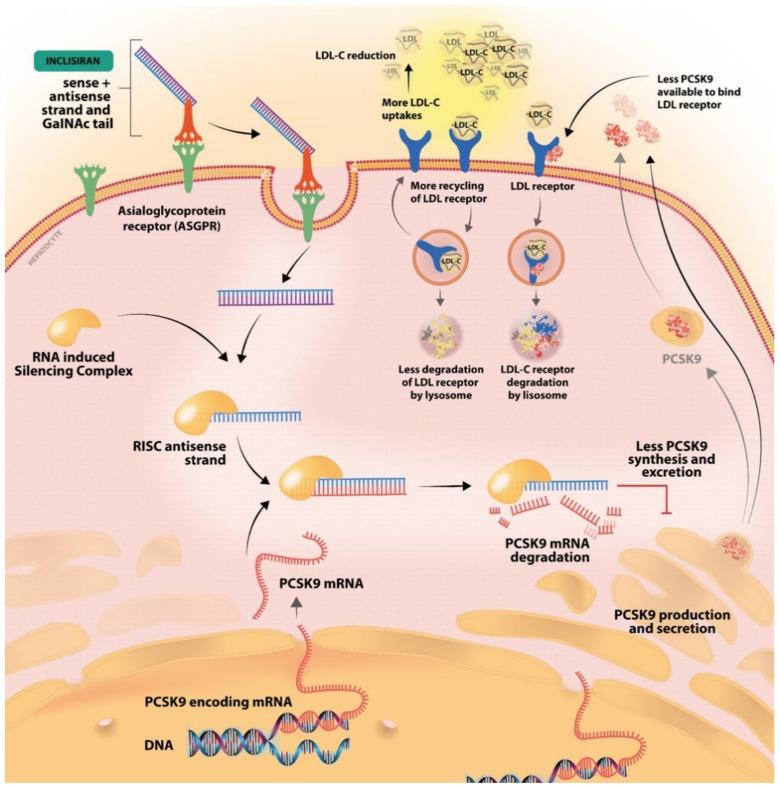
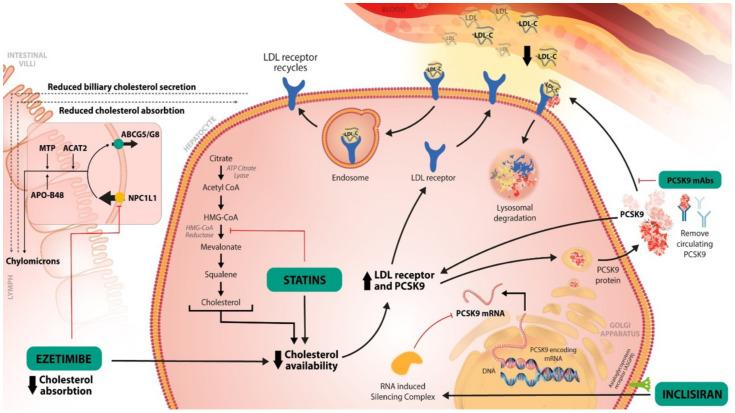
Acute ischemic stroke (AIS) represents an important cause of disability and death. Since only a minor percentage of patients with AIS are eligible for acute therapy, the management of risk factors is mandatory. An important risk factor of AIS is hyperlipemia. The current guidelines recommend a strict correction of it. Statins are recommended as the first-line treatment, while proprotein convertase subtilin/kexin type 9 (PCSK-9) inhibitors are administered as a second or even third option when the goal for a low-density lipoprotein cholesterol (LDL-C) level is not achieved. PCSK-9 inhibitors effectively decrease the LDL-C levels through the inhibition of PCSK-9-LDL-receptor complex formation. The in-depth understanding of the PCSK-9 protein mechanism in the metabolism of LDL-C led to the development of effective targeted approaches. Furthermore, a better understanding of the LDL-C metabolic pathway led to the development of newer approaches, which increased the therapeutic options. This article aims to offer an overview of the PCSK-9 inhibitors and their mechanism in reducing the LDL-C levels. Moreover, we will present the main indications of the current guidelines for patients with hyperlipemia and for those who have suffered an acute ischemic stroke, as well as the importance of LDL-C reduction in decreasing the rate of a recurrence.
急性缺血性脑卒中(AIS)是导致残疾和死亡的重要原因。由于只有少数 AIS 患者适合进行急性治疗,因此必须控制危险因素。AIS 的一个重要危险因素是高脂血症。目前的指南建议严格纠正这种情况。他汀类药物被推荐作为一线治疗药物,而当未能达到低密度脂蛋白胆固醇(LDL-C)水平的目标时,前蛋白转化酶枯草溶菌素/糜蛋白酶 9(PCSK-9)抑制剂则被作为二线甚至三线药物使用。PCSK-9 抑制剂通过抑制 PCSK-9-LDL 受体复合物的形成,有效降低 LDL-C 水平。对 LDL-C 代谢中 PCSK-9 蛋白机制的深入了解,导致了有效的靶向治疗方法的发展。此外,对 LDL-C 代谢途径的更好理解导致了更新的治疗方法的发展,从而增加了治疗选择。本文旨在概述 PCSK-9 抑制剂及其降低 LDL-C 水平的作用机制。此外,我们还将介绍当前高脂血症患者和急性缺血性脑卒中患者的指南主要适应证,以及降低 LDL-C 水平对降低复发率的重要性。
 Zotero 插件