Suzuki Hiromi, Yasuda Saneyuki, Htun Yinmon, Aye Nant San San, Oo Hnin, Oo Thet Paing, Htut Zaw Lin, Koyano Kosuke, Nakamura Shinji, Kusaka Takashi
Department of Hygiene, Faculty of Medicine, Kagawa University, Kagawa, Japan.
Post Graduate Clinical Education Center, Kagawa University Hospital, Kagawa, Japan.
Front Pediatr. 2022 Sep 6;10:947066. doi: 10.3389/fped.2022.947066. eCollection 2022.
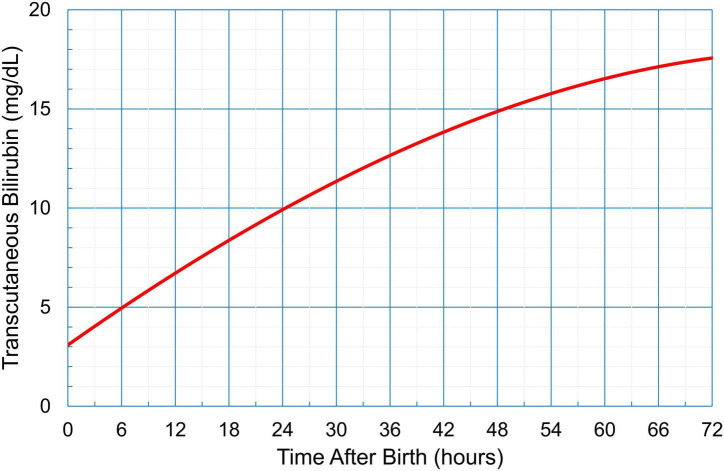
Neonatal hyperbilirubinemia is a significant health problem in Myanmar. We introduced transcutaneous bilirubin (TcB) measurements in 2017 and developed an hour-specific TcB nomogram for early detection and treatment of hyperbilirubinemia in Myanmar neonates. This study aimed to evaluate whether our screening method for hyperbilirubinemia decreased the requirement of blood exchange therapy (ET).
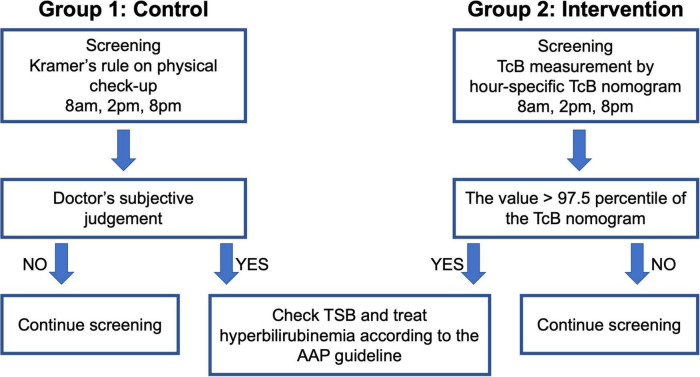
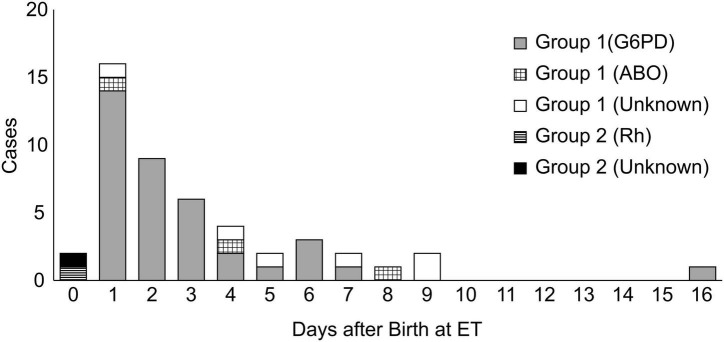
This retrospective cohort study was conducted at the Central Women's Hospital, Yangon. Two groups were included as follows: group 1 (control group; comprising infants born in 2016 and screened on the basis of Kramer's rule), and group 2 (intervention group; comprising infants born in 2019 and screened by TcB measurement using a nomogram). The number of ETs was analyzed based on causes of hyperbilirubinemia and number of days after birth.
Groups 1 and 2 comprised 12,968 and 10,090 infants, respectively. Forty-six and two infants in Groups 1 and 2, respectively, required an ET. The odds ratio for ET was 18.0 (Group 1 to Group 2; 95% confidence interval [CI]: 4.8-67.1; = 0.000). Serum bilirubin values at the time ET was administered were significantly higher in Group 1 than those in Group 2 (median: 23.0 and 16.8, respectively).
The management of hyperbilirubinemia using our screening method (TcB Nomogram) can effectively reduce the need for ET in neonates in Myanmar.
新生儿高胆红素血症是缅甸一个严重的健康问题。我们于2017年引入经皮胆红素(TcB)测量,并为缅甸新生儿开发了一个特定小时的TcB列线图,用于早期检测和治疗高胆红素血症。本研究旨在评估我们的高胆红素血症筛查方法是否降低了换血疗法(ET)的需求。
这项回顾性队列研究在仰光中央妇女医院进行。纳入两组如下:第1组(对照组;包括2016年出生并根据克莱默法则进行筛查的婴儿)和第2组(干预组;包括2019年出生并使用列线图通过TcB测量进行筛查的婴儿)。根据高胆红素血症的病因和出生后天数分析ET的次数。
第1组和第2组分别包括12968名和10090名婴儿。第1组和第2组分别有46名和2名婴儿需要进行ET。ET的优势比为18.0(第1组与第2组;95%置信区间[CI]:4.8 - 67.1;P = 0.000)。进行ET时第1组的血清胆红素值显著高于第2组(中位数:分别为23.0和16.8)。
使用我们的筛查方法(TcB列线图)管理高胆红素血症可有效减少缅甸新生儿对ET的需求。