Pappada Scott M, Papadimos Thomas J, Khuder Sadik, Mack Sean T, Beachy Peyton Z, Casabianca Andrew B
University of Toledo College of Medicine and Life Sciences, Department of Anesthesiology, Toledo, OH, USA.
University of Toledo College of Medicine and Life Sciences, Toledo, OH, USA.
Anesthesiol Res Pract. 2022 Sep 13;2022:8635454. doi: 10.1155/2022/8635454. eCollection 2022.
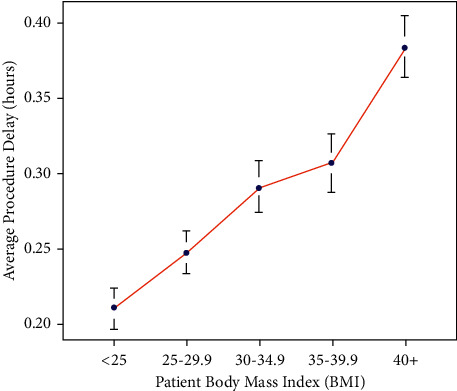
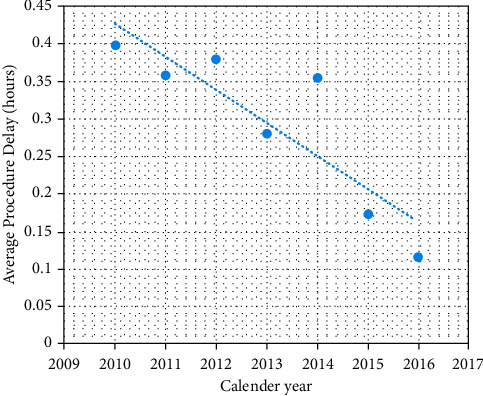
The operating room (OR) is considered a major cost center and revenue generator for hospitals. Multiple factors contribute to OR delays and impact patient safety, patient satisfaction scores, and hospital financial performance. Reducing OR delays allows better utilization of OR resources and staffing and improves patient satisfaction while decreasing operating costs. Accurate scheduling can be the basis to achieve these goals. The objective of this initial study was to identify factors not normally documented in the electronic health record (EHR) that may contribute to or be indicators of OR delays. . A retrospective data analysis was performed analyzing 67,812 OR cases from 12 surgical specialties at a small university medical center from 2010 through the first quarter of 2017. Data from the hospital's EHR were exported and subjected to statistical analysis using Statistical Analysis System (SAS) software (SAS Institute, Cary, NC). . Statistical analysis of the extracted EHR data revealed factors that were associated with OR delays including, surgical specialty, preoperative assessment testing, patient body mass index, American Society of Anesthesiologists (ASA) physical status classification, daily procedure count, and calendar year. . Delays hurt OR efficiency on many levels. Identifying those factors may reduce delays and better accommodate the needs of surgeons, staff, and patients thereby leading to improved patient's outcomes and patient satisfaction. Reducing delays can decrease operating costs and improve the financial position of the operating theater as well as that of the hospital. Anesthesiology teams can play a key role in identifying factors that cause delays and implementing mitigating efficiencies.
手术室被视为医院的主要成本中心和收入来源。多种因素导致手术室延误,并影响患者安全、患者满意度评分以及医院的财务表现。减少手术室延误能够更好地利用手术室资源和人员配置,提高患者满意度,同时降低运营成本。准确的排班是实现这些目标的基础。这项初步研究的目的是确定电子健康记录(EHR)中通常未记录的、可能导致手术室延误或作为其指标的因素。对一所小型大学医学中心2010年至2017年第一季度12个外科专业的67812例手术室病例进行了回顾性数据分析。从医院的电子健康记录中导出数据,并使用统计分析系统(SAS)软件(SAS Institute,北卡罗来纳州卡里)进行统计分析。对提取的电子健康记录数据进行统计分析,揭示了与手术室延误相关的因素,包括手术专科、术前评估测试、患者体重指数、美国麻醉医师协会(ASA)身体状况分类、每日手术数量和日历年份。延误在多个层面损害手术室效率。识别这些因素可能减少延误,并更好地满足外科医生、工作人员和患者的需求,从而改善患者的治疗结果和患者满意度。减少延误可以降低运营成本,改善手术室以及医院的财务状况。麻醉团队在识别导致延误的因素并实施缓解效率措施方面可以发挥关键作用。