Molecular Pathology Unit, Cancer Research Centre, Institute for Medical Research, National Institutes of Health, Ministry of Health Malaysia, Setia Alam, 40170, Shah Alam, Selangor, Malaysia.
Asia Metropolitan University, Bandar Baru Seri Alam, 81750, Johor Bahru, Johor, Malaysia.
Respir Med. 2022 Oct;202:106986. doi: 10.1016/j.rmed.2022.106986. Epub 2022 Sep 16.
There are conflicting reports on the results of several of the latest clinical trials related to the use of baricitinib in the management of COVID-19 patients. The aim of the current systematic review and meta-analysis was to evaluate the efficacy of baricitinib in COVID-19 patients.
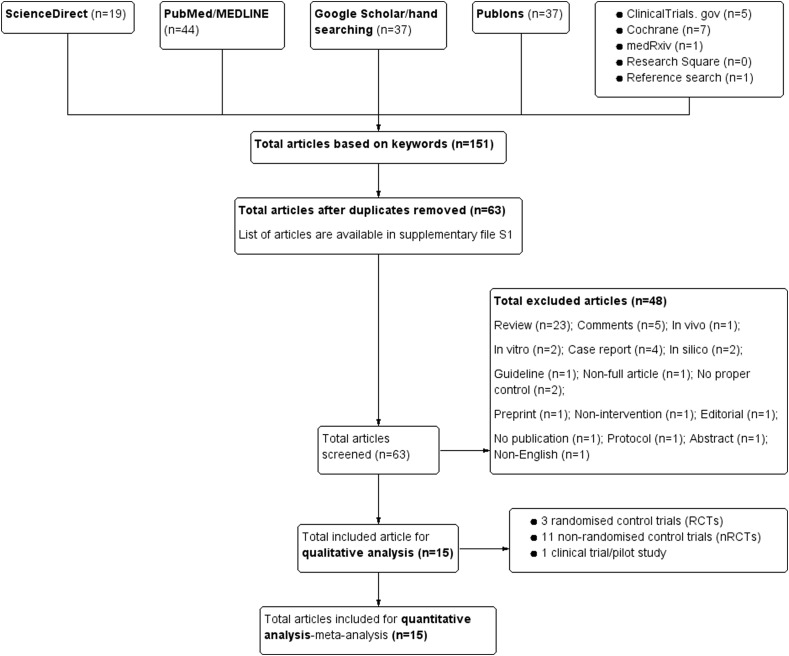
Databases like ScienceDirect, PubMed/Medline, Publons, Google Scholar and other sources like ClinicalTrials.gov, Cochrane, medRxiv, Research Square and reference lists were thoroughly searched.
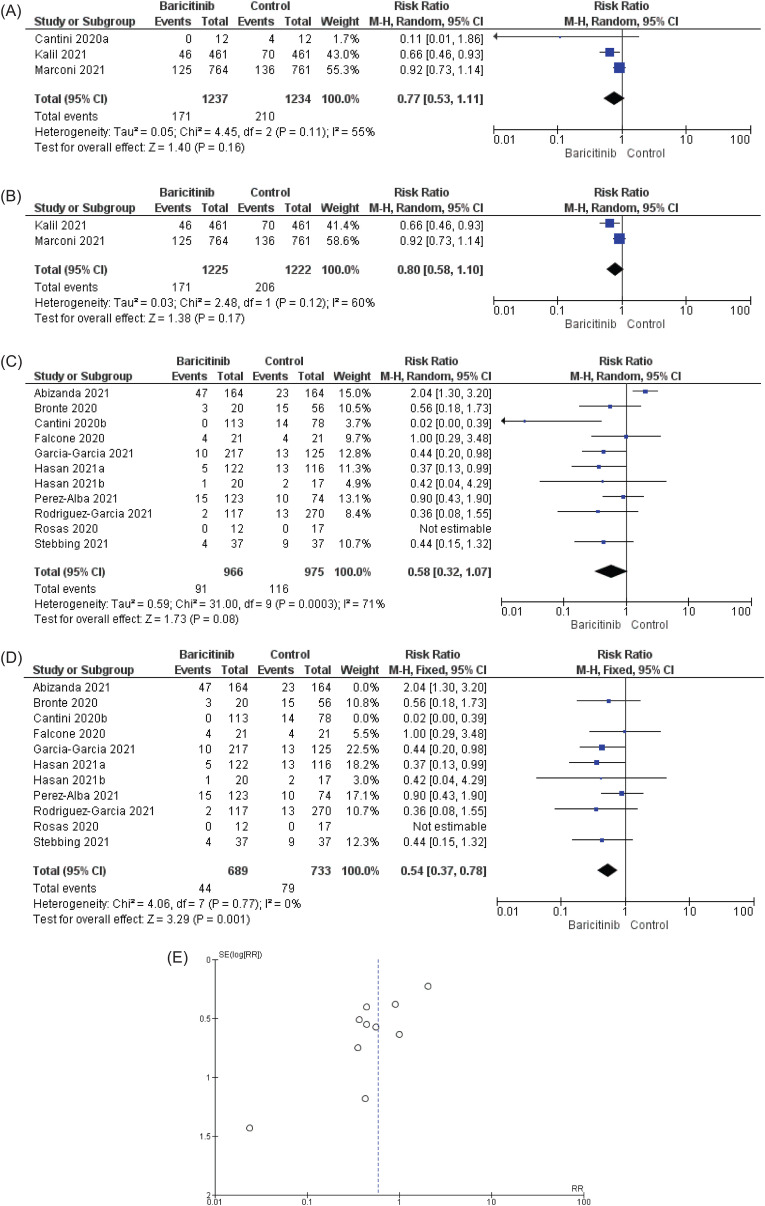
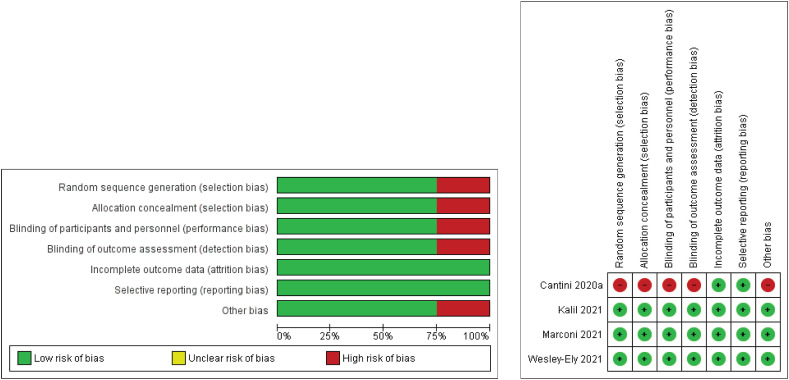
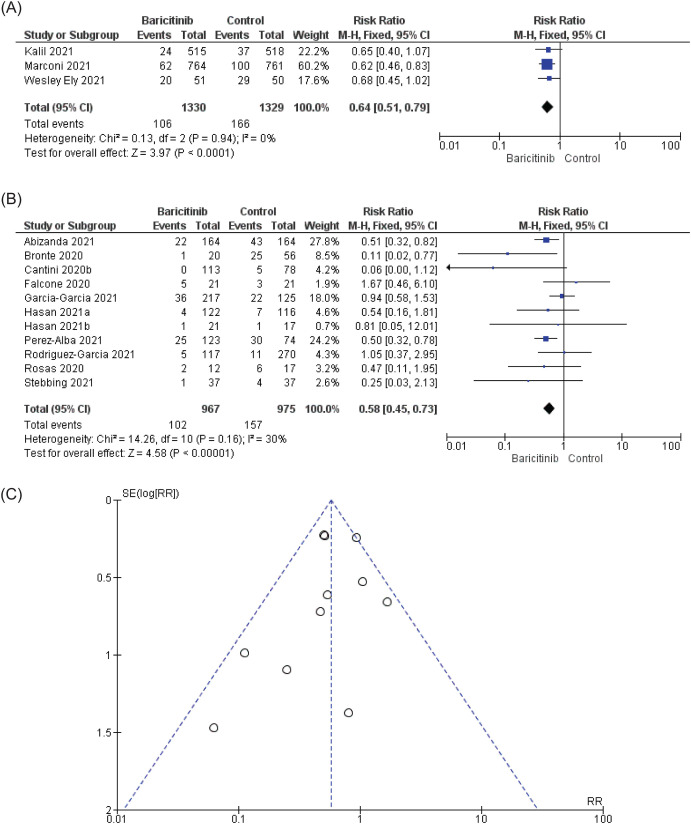
Fifteen (15) articles which met the inclusion criteria were qualitatively and quantitatively analysed. Based on Cochrane and Newcastle-Ottawa Scale (NOS) risk of bias (RoB) analyses, 14/15 articles are grouped as high-quality. Meta-analyses revealed that randomised control trials (RCTs) and non-randomised control trials (nRCTs) statistically significantly reduced the mortality rate in COVID-19 patients, with a risk ratio (RR) in the fixed-effect model was RR = 0.64 [95% CI: 0.51 to 0.79; p < 0.0001] and RR = 0.58 [95% CI: 0.45 to 0.73; p < 0.00001], respectively, with insignificant heterogeneity and no publication bias found. For block/reduce disease progression (BDP), baricitinib did not statistically significantly reduce disease progression for RCTs. The RR in the random effect model was RR = 0.80 [95% CI: 0.58 to 1.10: p = 0.17], with significant heterogeneity, where I was 60%. On the other hand, baricitinib statistically significantly reduced disease progression in nRCTs, as the RR of the fixed effect model was RR = 0.54 [95% CI: 0.37 to 0.78; p = 0.001] with insignificant heterogeneity.
The current meta-analyses revealed that baricitinib statistically significantly reduced mortality rate and disease progression in COVID-19 patients.
CRD42021281556.
最近几项关于巴瑞替尼治疗 COVID-19 患者的临床试验结果存在相互矛盾的报告。本系统评价和荟萃分析的目的是评估巴瑞替尼治疗 COVID-19 患者的疗效。
我们全面检索了 ScienceDirect、PubMed/Medline、Publons、Google Scholar 等数据库以及 ClinicalTrials.gov、Cochrane、medRxiv、Research Square 等其他来源,并查阅了参考文献列表。
符合纳入标准的 15 篇文章进行了定性和定量分析。根据 Cochrane 和 Newcastle-Ottawa 量表(NOS)风险偏倚(RoB)分析,15 篇文章中有 14 篇被归类为高质量文章。荟萃分析显示,随机对照试验(RCT)和非随机对照试验(nRCT)在统计学上显著降低了 COVID-19 患者的死亡率,固定效应模型下的风险比(RR)为 RR=0.64[95%CI:0.51 至 0.79;p<0.0001],RR=0.58[95%CI:0.45 至 0.73;p<0.00001],异质性不显著,且未发现发表偏倚。对于阻止/减缓疾病进展(BDP),巴瑞替尼在 RCT 中并未在统计学上显著减缓疾病进展。随机效应模型下的 RR 为 RR=0.80[95%CI:0.58 至 1.10:p=0.17],异质性显著,I2 为 60%。另一方面,巴瑞替尼在 nRCT 中在统计学上显著减缓了疾病进展,固定效应模型下的 RR 为 RR=0.54[95%CI:0.37 至 0.78;p=0.001],异质性不显著。
目前的荟萃分析显示,巴瑞替尼在 COVID-19 患者中在统计学上显著降低了死亡率和疾病进展。
PROSPERO 注册号:CRD42021281556。