Advanced Regenerative Manufacturing Institute, Manchester, NH 03101, United States of America.
Chemical and Biological Engineering and Biomedical Engineering, Colorado State University, Fort Collins, CO 80521, United States of America.
Biofabrication. 2022 Oct 27;15(1). doi: 10.1088/1758-5090/ac94a1.
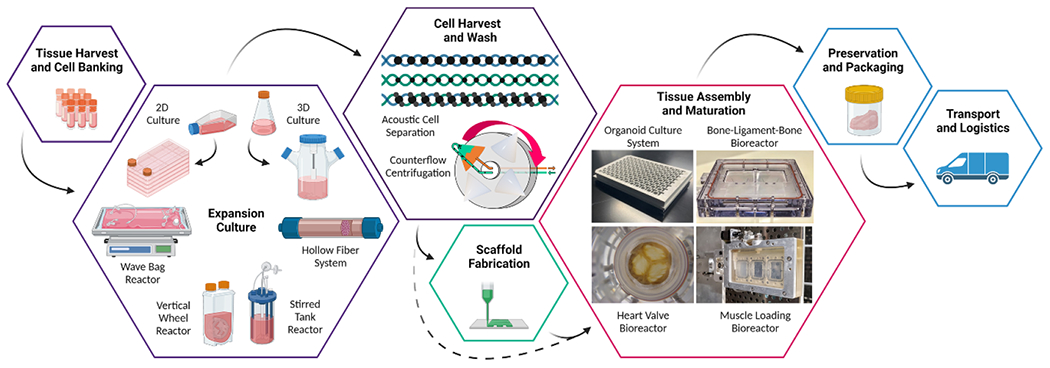
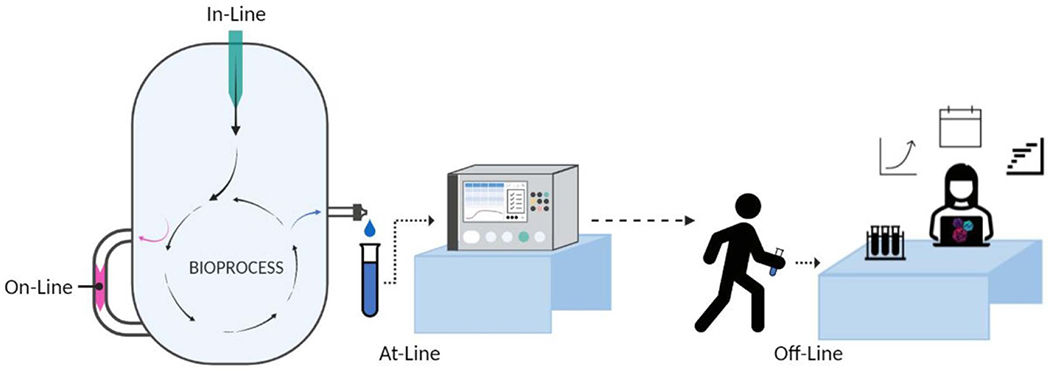
The use of engineered cells, tissues, and organs has the opportunity to change the way injuries and diseases are treated. Commercialization of these groundbreaking technologies has been limited in part by the complex and costly nature of their manufacture. Process-related variability and even small changes in the manufacturing process of a living product will impact its quality. Without real-time integrated detection, the magnitude and mechanism of that impact are largely unknown. Real-time and non-destructive sensor technologies are key for in-process insight and ensuring a consistent product throughout commercial scale-up and/or scale-out. The application of a measurement technology into a manufacturing process requires cell and tissue developers to understand the best way to apply a sensor to their process, and for sensor manufacturers to understand the design requirements and end-user needs. Furthermore, sensors to monitor component cells' health and phenotype need to be compatible with novel integrated and automated manufacturing equipment. This review summarizes commercially relevant sensor technologies that can detect meaningful quality attributes during the manufacturing of regenerative medicine products, the gaps within each technology, and sensor considerations for manufacturing.
工程细胞、组织和器官的应用有机会改变人们治疗损伤和疾病的方式。这些开创性技术的商业化在一定程度上受到其制造的复杂性和高成本的限制。在制造过程中,与工艺相关的可变性甚至是微小的变化都会影响产品的质量。如果没有实时集成检测,那么这种影响的程度和机制在很大程度上是未知的。实时和非破坏性传感器技术是实现过程洞察和确保商业扩产和/或扩能过程中产品一致性的关键。测量技术在制造过程中的应用需要细胞和组织开发者了解将传感器应用于其工艺的最佳方法,同时也需要传感器制造商了解设计要求和最终用户的需求。此外,用于监测组件细胞健康和表型的传感器需要与新型集成和自动化制造设备兼容。本文综述了可用于检测再生医学产品制造过程中有意义的质量属性的商业相关传感器技术、每种技术的差距,以及制造过程中的传感器考虑因素。