Department of Information Engineering and Computer Science, University of Trento, Trento, Italy.
Institute of Clinical Physiology, National Research Council, Pisa, Italy.
Ultrasound Med Biol. 2022 Dec;48(12):2398-2416. doi: 10.1016/j.ultrasmedbio.2022.07.007. Epub 2022 Sep 23.
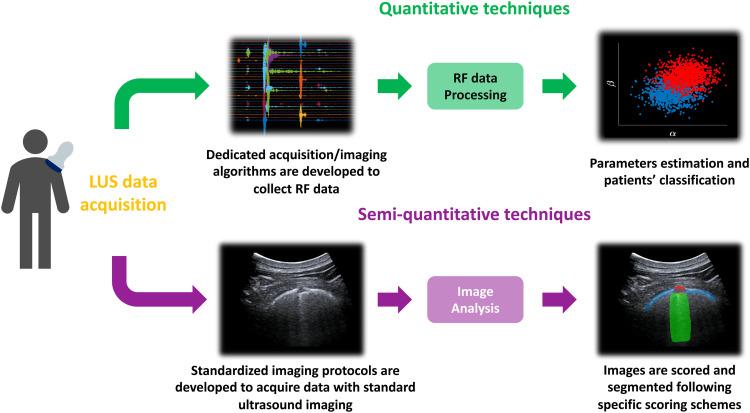
Lung ultrasound (LUS) has been increasingly expanding since the 1990s, when the clinical relevance of vertical artifacts was first reported. However, the massive spread of LUS is only recent and is associated with the coronavirus disease 2019 (COVID-19) pandemic, during which semi-quantitative computer-aided techniques were proposed to automatically classify LUS data. In this review, we discuss the state of the art in LUS, from semi-quantitative image analysis approaches to quantitative techniques involving the analysis of radiofrequency data. We also discuss recent in vitro and in silico studies, as well as research on LUS safety. Finally, conclusions are drawn highlighting the potential future of LUS.
自 20 世纪 90 年代首次报道垂直伪影的临床相关性以来,肺部超声(LUS)的应用一直在不断扩展。然而,LUS 的广泛传播只是最近的事,与 2019 年冠状病毒病(COVID-19)大流行有关,在此期间提出了半定量计算机辅助技术来自动分类 LUS 数据。在这篇综述中,我们讨论了 LUS 的最新技术,包括半定量图像分析方法和涉及射频数据分析的定量技术。我们还讨论了最近的体外和计算机模拟研究以及 LUS 安全性研究。最后,得出了结论,强调了 LUS 的潜在未来。