• 文献检索
  • 文档翻译
  • 深度研究
  • 学术资讯
  • Suppr Zotero 插件Zotero 插件
  • 邀请有礼
  • 套餐&价格
  • 历史记录
应用&插件
Suppr Zotero 插件Zotero 插件浏览器插件Mac 客户端Windows 客户端微信小程序
定价
高级版会员购买积分包购买API积分包
服务
文献检索文档翻译深度研究API 文档MCP 服务
关于我们
关于 Suppr公司介绍联系我们用户协议隐私条款
关注我们

Suppr 超能文献

核心技术专利:CN118964589B侵权必究
粤ICP备2023148730 号-1Suppr @ 2026

文献检索

告别复杂PubMed语法,用中文像聊天一样搜索,搜遍4000万医学文献。AI智能推荐,让科研检索更轻松。

立即免费搜索

文件翻译

保留排版,准确专业,支持PDF/Word/PPT等文件格式,支持 12+语言互译。

免费翻译文档

深度研究

AI帮你快速写综述,25分钟生成高质量综述,智能提取关键信息,辅助科研写作。

立即免费体验

探索移动健康干预措施的接受度状况。

Exploring the State-of-Receptivity for mHealth Interventions.

作者信息

Künzler Florian, Mishra Varun, Kramer Jan-Niklas, Kotz David, Fleisch Elgar, Kowatsch Tobias

机构信息

ETH Zürich.

Dartmouth College.

出版信息

Proc ACM Interact Mob Wearable Ubiquitous Technol. 2019 Dec;3(4). doi: 10.1145/3369805. Epub 2020 Sep 14.

DOI:10.1145/3369805
PMID:36159209
原文链接:https://pmc.ncbi.nlm.nih.gov/articles/PMC9494762/
Abstract

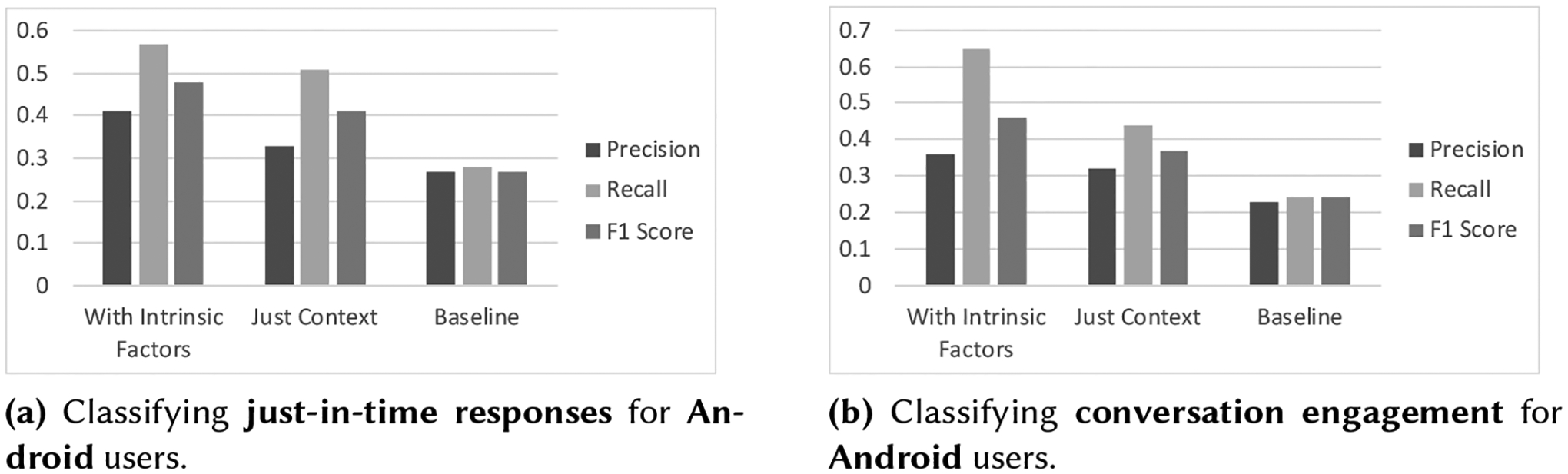
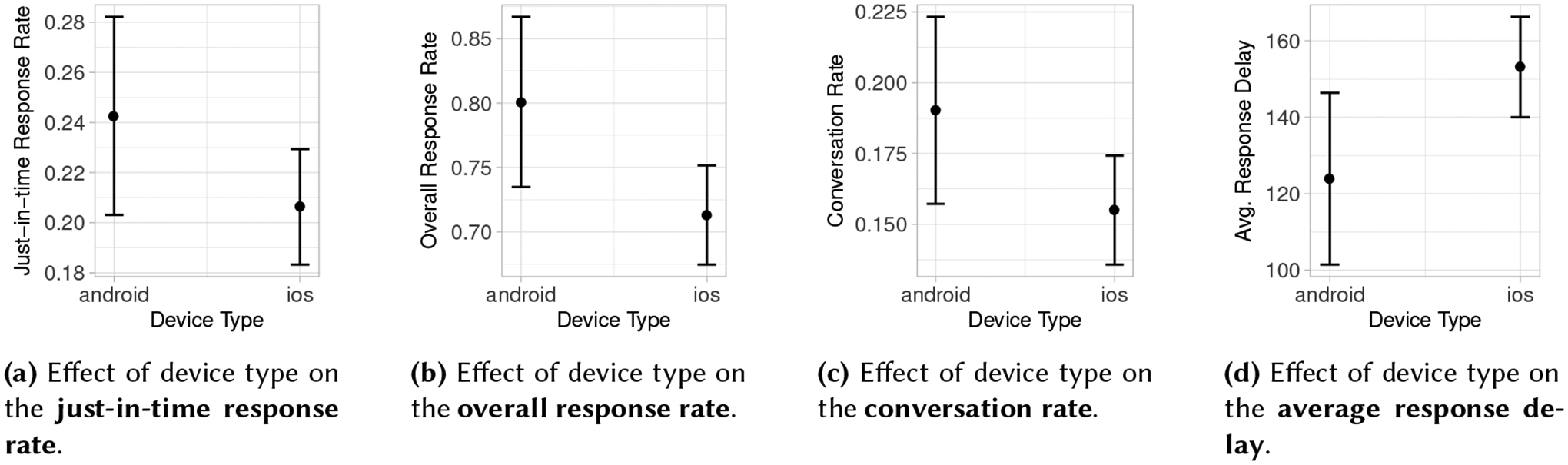
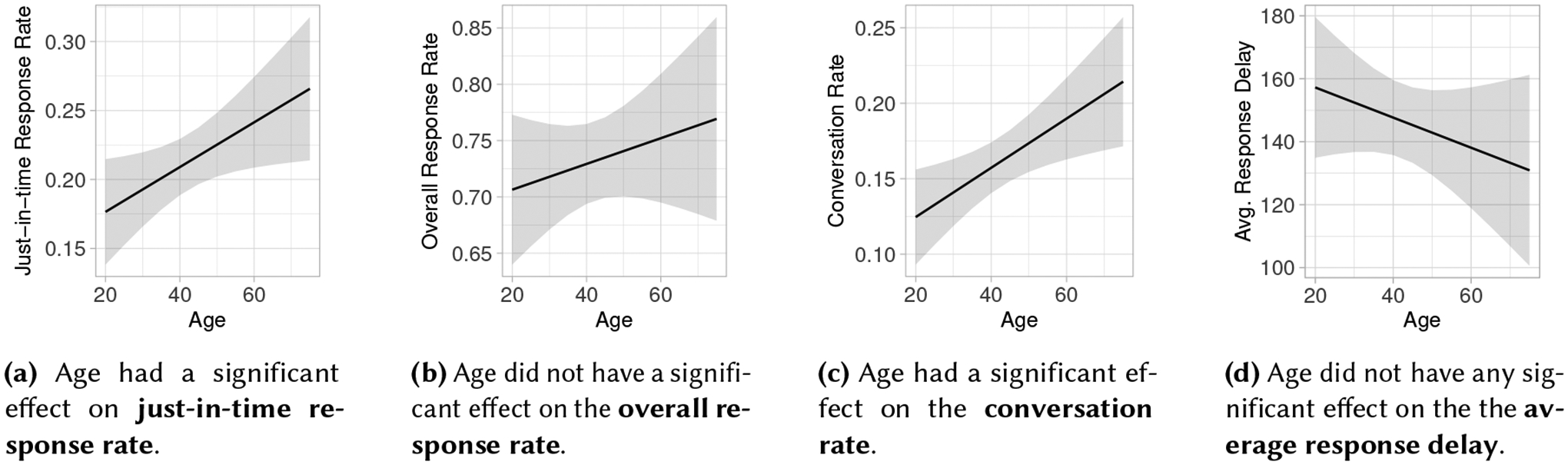
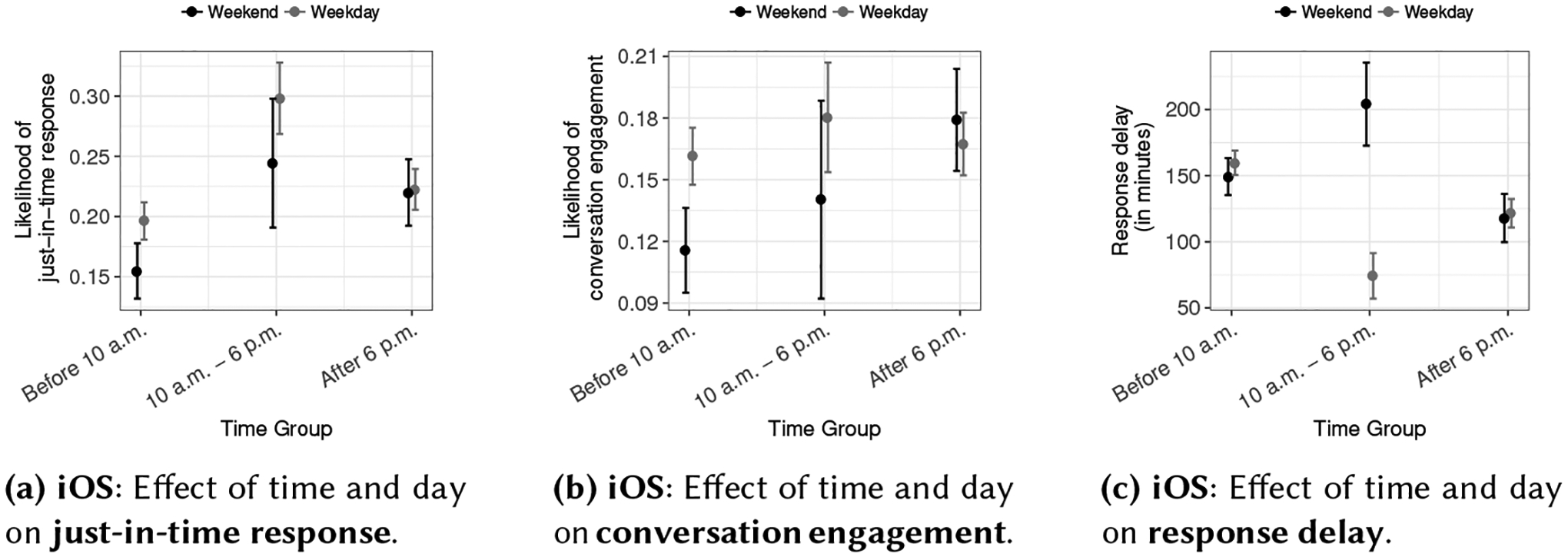
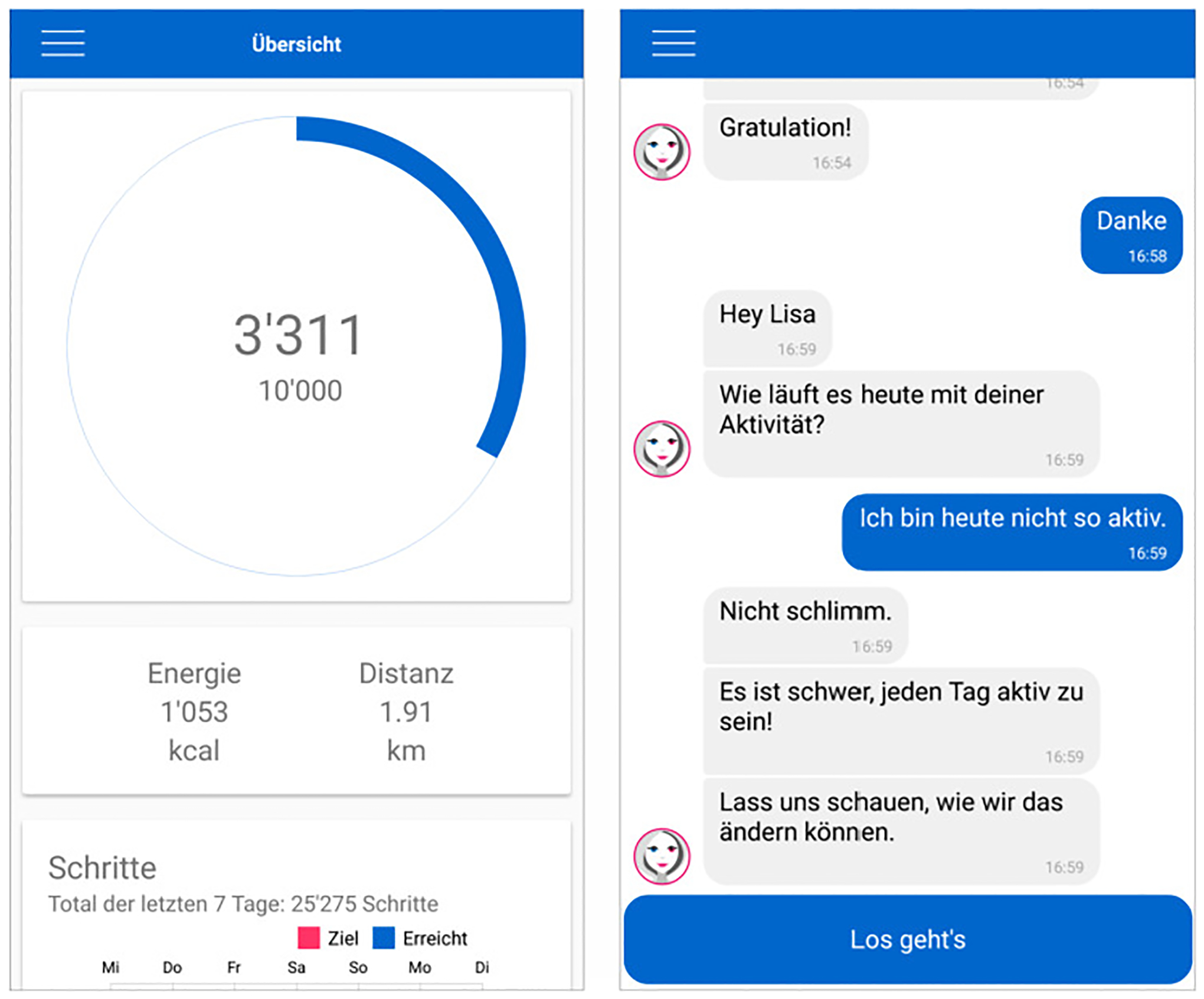
Recent advancements in sensing techniques for mHealth applications have led to successful development and deployments of several mHealth intervention designs, including Just-In-Time Adaptive Interventions (JITAI). JITAIs show great potential because they aim to provide the right type and amount of support, at the right time. Timing the delivery of a JITAI such as the user is receptive and available to engage with the intervention is crucial for a JITAI to succeed. Although previous research has extensively explored the role of context in users' responsiveness towards generic phone notifications, it has not been thoroughly explored for actual mHealth interventions. In this work, we explore the factors affecting users' towards JITAIs. To this end, we conducted a study with 189 participants, over a period of 6 weeks, where participants received interventions to improve their physical activity levels. The interventions were delivered by a chatbot-based digital coach - Ally - which was available on Android and iOS platforms. We define several metrics to gauge receptivity towards the interventions, and found that (1) several participant-specific characteristics (age, personality, and device type) show significant associations with the overall participant receptivity over the course of the study, and that (2) several contextual factors (day/time, phone battery, phone interaction, physical activity, and location), show significant associations with the participant receptivity, in-the-moment. Further, we explore the relationship between the effectiveness of the intervention and receptivity towards those interventions; based on our analyses, we speculate that being receptive to interventions helped participants achieve physical activity goals, which in turn motivated participants to be more receptive to future interventions. Finally, we build machine-learning models to detect receptivity, with up to a 77% increase in F1 score over a biased random classifier.

摘要

用于移动健康应用的传感技术的最新进展已促成了几种移动健康干预设计的成功开发与部署,包括即时自适应干预(JITAI)。JITAI显示出巨大潜力,因为它们旨在在正确的时间提供正确类型和数量的支持。在用户接受并能够参与干预时适时交付JITAI对于其成功至关重要。尽管先前的研究广泛探讨了情境在用户对一般手机通知的响应中的作用,但对于实际的移动健康干预尚未进行深入研究。在这项工作中,我们探索影响用户对JITAI反应的因素。为此,我们对189名参与者进行了为期6周的研究,参与者接受干预以提高他们的身体活动水平。干预由基于聊天机器人的数字教练——Ally提供,它可在安卓和iOS平台上使用。我们定义了几个指标来衡量对干预的接受度,发现:(1)在研究过程中,几个参与者特定的特征(年龄、个性和设备类型)与参与者的总体接受度显示出显著关联;(2)几个情境因素(日期/时间、手机电量、手机交互、身体活动和位置)在当下与参与者的接受度显示出显著关联。此外,我们探索了干预效果与对这些干预的接受度之间的关系;基于我们的分析,我们推测接受干预有助于参与者实现身体活动目标,这反过来又促使参与者更愿意接受未来的干预。最后,我们构建机器学习模型来检测接受度,与有偏差的随机分类器相比,F1分数提高了77%。
https://cdn.ncbi.nlm.nih.gov/pmc/blobs/a3e2/9494762/6d08aa5f8f7b/nihms-1818419-f0017.jpg
https://cdn.ncbi.nlm.nih.gov/pmc/blobs/a3e2/9494762/facf5fe1663a/nihms-1818419-f0001.jpg
https://cdn.ncbi.nlm.nih.gov/pmc/blobs/a3e2/9494762/639cae6aec31/nihms-1818419-f0002.jpg
https://cdn.ncbi.nlm.nih.gov/pmc/blobs/a3e2/9494762/198e5b63192f/nihms-1818419-f0003.jpg
https://cdn.ncbi.nlm.nih.gov/pmc/blobs/a3e2/9494762/d63efbc6b89d/nihms-1818419-f0004.jpg
https://cdn.ncbi.nlm.nih.gov/pmc/blobs/a3e2/9494762/2a90b4892b9c/nihms-1818419-f0005.jpg
https://cdn.ncbi.nlm.nih.gov/pmc/blobs/a3e2/9494762/63c3d889588b/nihms-1818419-f0006.jpg
https://cdn.ncbi.nlm.nih.gov/pmc/blobs/a3e2/9494762/594447ac65e4/nihms-1818419-f0007.jpg
https://cdn.ncbi.nlm.nih.gov/pmc/blobs/a3e2/9494762/49b78294a0c8/nihms-1818419-f0008.jpg
https://cdn.ncbi.nlm.nih.gov/pmc/blobs/a3e2/9494762/14969606b247/nihms-1818419-f0009.jpg
https://cdn.ncbi.nlm.nih.gov/pmc/blobs/a3e2/9494762/815458c8a837/nihms-1818419-f0010.jpg
https://cdn.ncbi.nlm.nih.gov/pmc/blobs/a3e2/9494762/5dbb7ba436b5/nihms-1818419-f0011.jpg
https://cdn.ncbi.nlm.nih.gov/pmc/blobs/a3e2/9494762/448624c76456/nihms-1818419-f0012.jpg
https://cdn.ncbi.nlm.nih.gov/pmc/blobs/a3e2/9494762/788c1d9502b1/nihms-1818419-f0013.jpg
https://cdn.ncbi.nlm.nih.gov/pmc/blobs/a3e2/9494762/d177d93389cf/nihms-1818419-f0014.jpg
https://cdn.ncbi.nlm.nih.gov/pmc/blobs/a3e2/9494762/8d1ae13f4876/nihms-1818419-f0015.jpg
https://cdn.ncbi.nlm.nih.gov/pmc/blobs/a3e2/9494762/de5603f3a2b3/nihms-1818419-f0016.jpg
https://cdn.ncbi.nlm.nih.gov/pmc/blobs/a3e2/9494762/6d08aa5f8f7b/nihms-1818419-f0017.jpg
https://cdn.ncbi.nlm.nih.gov/pmc/blobs/a3e2/9494762/facf5fe1663a/nihms-1818419-f0001.jpg
https://cdn.ncbi.nlm.nih.gov/pmc/blobs/a3e2/9494762/639cae6aec31/nihms-1818419-f0002.jpg
https://cdn.ncbi.nlm.nih.gov/pmc/blobs/a3e2/9494762/198e5b63192f/nihms-1818419-f0003.jpg
https://cdn.ncbi.nlm.nih.gov/pmc/blobs/a3e2/9494762/d63efbc6b89d/nihms-1818419-f0004.jpg
https://cdn.ncbi.nlm.nih.gov/pmc/blobs/a3e2/9494762/2a90b4892b9c/nihms-1818419-f0005.jpg
https://cdn.ncbi.nlm.nih.gov/pmc/blobs/a3e2/9494762/63c3d889588b/nihms-1818419-f0006.jpg
https://cdn.ncbi.nlm.nih.gov/pmc/blobs/a3e2/9494762/594447ac65e4/nihms-1818419-f0007.jpg
https://cdn.ncbi.nlm.nih.gov/pmc/blobs/a3e2/9494762/49b78294a0c8/nihms-1818419-f0008.jpg
https://cdn.ncbi.nlm.nih.gov/pmc/blobs/a3e2/9494762/14969606b247/nihms-1818419-f0009.jpg
https://cdn.ncbi.nlm.nih.gov/pmc/blobs/a3e2/9494762/815458c8a837/nihms-1818419-f0010.jpg
https://cdn.ncbi.nlm.nih.gov/pmc/blobs/a3e2/9494762/5dbb7ba436b5/nihms-1818419-f0011.jpg
https://cdn.ncbi.nlm.nih.gov/pmc/blobs/a3e2/9494762/448624c76456/nihms-1818419-f0012.jpg
https://cdn.ncbi.nlm.nih.gov/pmc/blobs/a3e2/9494762/788c1d9502b1/nihms-1818419-f0013.jpg
https://cdn.ncbi.nlm.nih.gov/pmc/blobs/a3e2/9494762/d177d93389cf/nihms-1818419-f0014.jpg
https://cdn.ncbi.nlm.nih.gov/pmc/blobs/a3e2/9494762/8d1ae13f4876/nihms-1818419-f0015.jpg
https://cdn.ncbi.nlm.nih.gov/pmc/blobs/a3e2/9494762/de5603f3a2b3/nihms-1818419-f0016.jpg
https://cdn.ncbi.nlm.nih.gov/pmc/blobs/a3e2/9494762/6d08aa5f8f7b/nihms-1818419-f0017.jpg

相似文献

1
Exploring the State-of-Receptivity for mHealth Interventions.探索移动健康干预措施的接受度状况。
Proc ACM Interact Mob Wearable Ubiquitous Technol. 2019 Dec;3(4). doi: 10.1145/3369805. Epub 2020 Sep 14.
2
Detecting Receptivity for mHealth Interventions in the Natural Environment.在自然环境中检测移动健康干预措施的接受度。
Proc ACM Interact Mob Wearable Ubiquitous Technol. 2021 Jun;5(2). doi: 10.1145/3463492.
3
Investigating Intervention Components and Exploring States of Receptivity for a Smartphone App to Promote Physical Activity: Protocol of a Microrandomized Trial.探究一款促进身体活动的智能手机应用程序的干预组成部分并探索接受状态:一项微随机试验方案
JMIR Res Protoc. 2019 Jan 31;8(1):e11540. doi: 10.2196/11540.
4
A Gambling Just-In-Time Adaptive Intervention (GamblingLess: In-The-Moment): Protocol for a Microrandomized Trial.一种即时自适应赌博干预措施(减少赌博:即时):微随机试验方案
JMIR Res Protoc. 2022 Aug 23;11(8):e38958. doi: 10.2196/38958.
5
Investigating Receptivity and Affect Using Machine Learning: Ecological Momentary Assessment and Wearable Sensing Study.使用机器学习进行接受度和情感研究:生态瞬时评估和可穿戴感应研究。
JMIR Mhealth Uhealth. 2024 Feb 7;12:e46347. doi: 10.2196/46347.
6
Advancing Understanding of Just-in-Time States for Supporting Physical Activity (Project JustWalk JITAI): Protocol for a System ID Study of Just-in-Time Adaptive Interventions.增进对支持身体活动的即时状态的理解(即时行走JITAI项目):即时自适应干预系统识别研究方案
JMIR Res Protoc. 2023 Sep 26;12:e52161. doi: 10.2196/52161.
7
Assessing Real-Time Moderation for Developing Adaptive Mobile Health Interventions for Medical Interns: Micro-Randomized Trial.评估为医学实习生开发适应性移动健康干预措施的实时审核:微型随机试验
J Med Internet Res. 2020 Mar 31;22(3):e15033. doi: 10.2196/15033.
8
Increasing physical activity using an just-in-time adaptive digital assistant supported by machine learning: A novel approach for hyper-personalised mHealth interventions.利用机器学习支持的即时自适应数字助理增加身体活动:一种用于超个性化移动健康干预的新方法。
J Biomed Inform. 2023 Aug;144:104435. doi: 10.1016/j.jbi.2023.104435. Epub 2023 Jul 1.
9
Evaluating the Impact of Adaptive Personalized Goal Setting on Engagement Levels of Government Staff With a Gamified mHealth Tool: Results From a 2-Month Randomized Controlled Trial.评估游戏化移动健康工具的自适应个性化目标设定对政府工作人员参与度的影响:一项为期 2 个月的随机对照试验的结果。
JMIR Mhealth Uhealth. 2022 Mar 31;10(3):e28801. doi: 10.2196/28801.
10
Use of an mHealth Ketogenic Diet App Intervention and User Behaviors Associated With Weight Loss in Adults With Overweight or Obesity: Secondary Analysis of a Randomized Clinical Trial.使用移动医疗生酮饮食应用程序干预和与超重或肥胖成年人减肥相关的用户行为:一项随机临床试验的二次分析。
JMIR Mhealth Uhealth. 2022 Mar 14;10(3):e33940. doi: 10.2196/33940.

引用本文的文献

1
Factors Influencing Engagement in a Digital Substance Use Prevention Program: Qualitative Study Using the Capability, Opportunity, Motivation Model and Theoretical Domains Framework.影响参与数字药物使用预防项目的因素:运用能力、机会、动机模型及理论领域框架的定性研究
JMIR Mhealth Uhealth. 2025 Aug 14;13:e64861. doi: 10.2196/64861.
2
Rapid, Tailored Dietary and Health Education Through A Social Media Chatbot Microintervention: Development and Usability Study With Practical Recommendations.通过社交媒体聊天机器人微干预实现快速、个性化的饮食与健康教育:开发及可用性研究与实用建议
JMIR Form Res. 2024 Dec 9;8:e52032. doi: 10.2196/52032.
3

本文引用的文献

1
Continuous Detection of Physiological Stress with Commodity Hardware.使用商用硬件持续检测生理应激
ACM Trans Comput Healthc. 2020 Apr;1(2). doi: 10.1145/3361562.
2
Investigating Intervention Components and Exploring States of Receptivity for a Smartphone App to Promote Physical Activity: Protocol of a Microrandomized Trial.探究一款促进身体活动的智能手机应用程序的干预组成部分并探索接受状态:一项微随机试验方案
JMIR Res Protoc. 2019 Jan 31;8(1):e11540. doi: 10.2196/11540.
3
Investigating Contextual Cues as Indicators for EMA Delivery.将情境线索作为电子监测评估交付指标进行调查。
Machine Learning Methods to Personalize Persuasive Strategies in mHealth Interventions That Promote Physical Activity: Scoping Review and Categorization Overview.
机器学习方法在促进身体活动的移动健康干预措施中个性化说服策略:范围综述和分类概述。
J Med Internet Res. 2024 Nov 15;26:e47774. doi: 10.2196/47774.
4
Personalized interventions for behaviour change: A scoping review of just-in-time adaptive interventions.个性化行为改变干预措施:即时自适应干预措施的范围综述。
Br J Health Psychol. 2025 Feb;30(1):e12766. doi: 10.1111/bjhp.12766. Epub 2024 Nov 14.
5
Toward Tailoring Just-in-Time Adaptive Intervention Systems for Workplace Stress Reduction: Exploratory Analysis of Intervention Implementation.面向定制及时自适应干预系统以减少工作场所压力:干预实施的探索性分析。
JMIR Ment Health. 2024 Sep 12;11:e48974. doi: 10.2196/48974.
6
My Health Coach: Community members' perspectives on a mobile health tool for adults with fetal alcohol spectrum disorders.我的健康教练:社区成员对一款针对患有胎儿酒精谱系障碍的成年人的移动健康工具的看法。
Digit Health. 2024 Jun 14;10:20552076241261458. doi: 10.1177/20552076241261458. eCollection 2024 Jan-Dec.
7
Effectiveness of artificial intelligence vs. human coaching in diabetes prevention: a study protocol for a randomized controlled trial.人工智能与人工教练在糖尿病预防中的效果比较:一项随机对照试验的研究方案。
Trials. 2024 May 16;25(1):325. doi: 10.1186/s13063-024-08177-8.
8
Investigating Receptivity and Affect Using Machine Learning: Ecological Momentary Assessment and Wearable Sensing Study.使用机器学习进行接受度和情感研究:生态瞬时评估和可穿戴感应研究。
JMIR Mhealth Uhealth. 2024 Feb 7;12:e46347. doi: 10.2196/46347.
9
Investigating the Potential of a Conversational Agent (Phyllis) to Support Adolescent Health and Overcome Barriers to Physical Activity: Co-Design Study.研究对话代理(菲利斯)支持青少年健康并克服身体活动障碍的潜力:协同设计研究。
JMIR Form Res. 2024 Jan 31;8:e51571. doi: 10.2196/51571.
10
Exploring the Potential of Apple SensorKit and Digital Phenotyping Data as New Digital Biomarkers for Mental Health Research.探索苹果SensorKit和数字表型数据作为心理健康研究新数字生物标志物的潜力。
Digit Biomark. 2023 Aug 25;7(1):104-114. doi: 10.1159/000530698. eCollection 2023 Jan-Dec.
Proc ACM Int Conf Ubiquitous Comput. 2017 Sep;2017:935-940. doi: 10.1145/3123024.3124571.
4
The Effect of Timing and Frequency of Push Notifications on Usage of a Smartphone-Based Stress Management Intervention: An Exploratory Trial.推送通知的时间和频率对基于智能手机的压力管理干预措施使用情况的影响:一项探索性试验。
PLoS One. 2017 Jan 3;12(1):e0169162. doi: 10.1371/journal.pone.0169162. eCollection 2017.
5
Just-in-Time Adaptive Interventions (JITAIs) in Mobile Health: Key Components and Design Principles for Ongoing Health Behavior Support.移动医疗中的即时自适应干预(JITAIs):持续健康行为支持的关键组成部分和设计原则。
Ann Behav Med. 2018 May 18;52(6):446-462. doi: 10.1007/s12160-016-9830-8.
6
Building health behavior models to guide the development of just-in-time adaptive interventions: A pragmatic framework.构建健康行为模型以指导即时自适应干预措施的开发:一个实用框架。
Health Psychol. 2015 Dec;34S(0):1209-19. doi: 10.1037/hea0000306.
7
cStress: Towards a Gold Standard for Continuous Stress Assessment in the Mobile Environment.cStress:迈向移动环境中连续压力评估的黄金标准。
Proc ACM Int Conf Ubiquitous Comput. 2015 Sep;2015:493-504. doi: 10.1145/2750858.2807526.
8
Assessing the Availability of Users to Engage in Just-in-Time Intervention in the Natural Environment.评估用户在自然环境中参与即时干预的可行性。
Proc ACM Int Conf Ubiquitous Comput. 2014;2014:909-920. doi: 10.1145/2632048.2636082.
9
A smartphone application to support recovery from alcoholism: a randomized clinical trial.智能手机应用程序辅助戒酒:一项随机临床试验。
JAMA Psychiatry. 2014 May;71(5):566-72. doi: 10.1001/jamapsychiatry.2013.4642.
10
Feasibility, acceptability, and preliminary efficacy of a smartphone intervention for schizophrenia.智能手机干预治疗精神分裂症的可行性、可接受性及初步疗效
Schizophr Bull. 2014 Nov;40(6):1244-53. doi: 10.1093/schbul/sbu033. Epub 2014 Mar 8.